Abraham Lincoln IQ
Abraham Lincoln's IQ is estimated at 130 to 150. Catharine Cox's 1926 study gave a corrected 150, from biographies rather than a test.
Lincoln's IQ is 140+. What's yours?
25 questions · about 12 minutes
Think you're smarter than Abraham Lincoln? Try question 1.
Which option completes the grid? One tap, no sign-up.
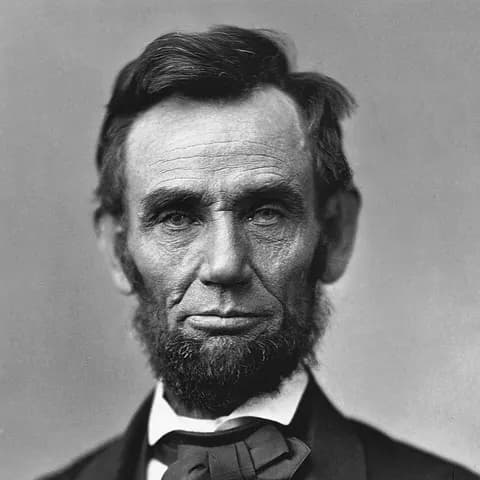
Key facts
- Estimated IQ
- IQ 140+
- Known for
- President of the United States
- Lived
- President of the United States
- Basis
- Cox 1926 historiometric estimate
- Confidence
- Low. No IQ test was ever given. The figure below comes from a 1926 study that rated historical figures from biographies.
Cox's 1926 corrected estimate for Abraham Lincoln was 150. LifeScore lists 140+, which is lower because Cox's old ratio-IQ scale runs higher than modern norms.
What was Abraham Lincoln's IQ?
Abraham Lincoln never took an IQ test. Catharine Cox's 1926 study of 301 eminent people gave a corrected estimate of 150. Adjusted by about 22 points for the Flynn effect that is roughly 130. LifeScore lists 140+, so the working range is 130 to 150.
Where does the 150 figure come from?
The 150 is Catharine Cox's corrected estimate from her 1926 study of 301 eminent people born between 1450 and 1850. She rated each person from biographical records of what they could do as a child and young adult, then corrected for gaps in the record.
Cox's numbers sit on an old ratio-IQ scale. One secondary tabulation subtracts about 22 points for the Flynn effect, which puts Abraham Lincoln near 130.
LifeScore lists 140+, and the working range of 130 to 150 spans both figures. None of them is a test result.
The evidence behind the estimate
An estimate built from the historical record, not a recovered test score.
What supports it
- Catharine Cox's 1926 study of 301 eminent people gave Abraham Lincoln a corrected estimate of 150, based on records of childhood and youth.
- Adjusted by about 22 points for the Flynn effect, that figure falls to roughly 130.
- Documented achievement as a president of the united states is the other half of the evidence, and it is summarised in the profile below.
What it cannot prove
- Cox rated people from biographies, not tests, and her scale is not the modern deviation-IQ scale.
- Thin records pull estimates towards average, which is why Cox added a correction that itself adds uncertainty.
- Achievement reflects education, opportunity, persistence and collaboration as well as ability.
Lincoln compared with Washington, Jefferson, FDR
| Figure | Estimate | Range |
|---|---|---|
| Abraham Lincoln | 140+ | 130–150 |
| George Washington | 120+ | 120–140 |
| Thomas Jefferson | 150+ | 140–160 |
| Franklin D. Roosevelt | 145+ | 130–155 |
Psychological profile
Abraham Lincoln's IQ is represented here by a retrospective estimate of 140+, not a verified test result. Abraham Lincoln is best known for exceptional resilience. The useful question is what the surviving evidence shows, not whether a precise modern score can be recovered.
High emotional stability despite chronic depression. Extraordinary verbal intelligence and ability to synthesize opposing views.
The dominant archetype here is The Statesman. This archetype shapes decision patterns: what feels natural, what creates friction, and what blind spots tend to emerge.
Estimated IQ is 140+. This is a rough estimate based on documented accomplishments and contemporary accounts, not a literal measurement.
Key traits
Resilience
Abraham recovered from setbacks that would have ended most careers. This suggests high distress tolerance and fast emotional recovery.Rhetoric
Abraham used language as a tool of influence, crafting arguments that moved populations and shifted policy.Moral clarity
Abraham displayed notable moral clarity, a trait that shaped their approach to challenges and opportunities.
Historical context
The 19th Century created specific selection pressures that rewarded Abraham's profile. In a different era, the same traits might have produced different outcomes.
Lessons from Lincoln
- Abraham's greatest strength (Resilience and Rhetoric) was also their greatest liability when taken to extremes.
- The The Statesman archetype tends to succeed in environments that reward bold action and long-term vision, but struggles in environments that demand consensus-building.
- One pattern worth noting: Abraham's output was most productive when external constraints forced focus. Without structure, the same traits that enabled greatness sometimes led to overreach.
Abraham Lincoln: common questions
Was Abraham Lincoln a genius?
What personality type was Abraham Lincoln?
What can we learn from Abraham Lincoln?
People with similar IQ estimates
Abraham Lincoln's estimate of 140+ falls in the genius level IQ range. See what an IQ of 140 means, place it on the IQ chart or check how rare it is with the IQ rarity calculator.
 Cleopatra's IQPharaoh of Egypt, estimated 140140
 Catherine the Great's IQEmpress of Russia, estimated 140+140+
- Margaret Thatcher's IQUK Prime Minister, estimated 140+140+
 Charles Darwin's IQNaturalist & Biologist, estimated 140+140+
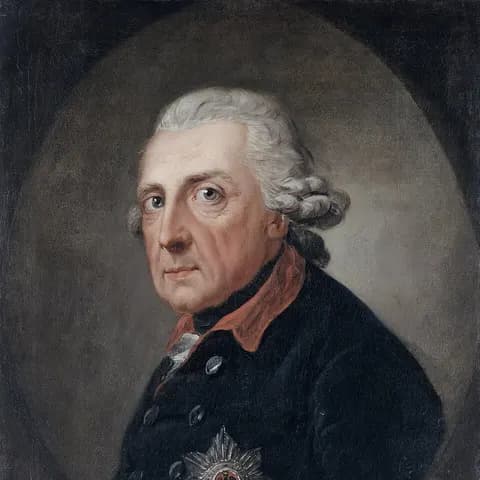 Frederick the Great's IQKing of Prussia, estimated 140+140+
Head-to-head
- Abraham Lincoln vs Nelson MandelaSide-by-side IQ estimates and evidence
Keep exploring
- Seeing Long-Range ImplicationsSign of high intelligence
- Quick Pattern RecognitionSign of high intelligence
- Armin Arlert's IQAttack on Titan, fan estimate 140
- Izaya Orihara's IQDurarara!!, fan estimate 140
People also search for
All 157 historical IQ estimates, ranked with ranges and sources.
Lincoln's IQ is 140+. What's yours?
Lincoln's estimate comes from the historical record. Yours can come from a real test: 25 visual reasoning questions.
25 questions · about 12 minutes
Sources
- The Early Mental Traits of Three Hundred Geniuses (Cox, 1926), Stanford University Press, via Internet Archive. The original historiometric study. Cox rated 301 eminent people born 1450 to 1850 from biographical records of their childhood and youth.
- Cox's IQ estimates of 301 eminent geniuses, IQ Comparison Site. Secondary tabulation of Cox's corrected estimates, with a version adjusted by about 22 points for the Flynn effect.
- Genius 101, Springer Publishing Company. A modern overview of research on achievement, eminence and genius, including the limits of historiometric estimates.
- Cox, C. M. (1926). The Early Mental Traits of Three Hundred Geniuses. Stanford University Press.
- Simonton, D. K. (2009). Genius 101. Springer.
- Cattell, R. B. (1971). Abilities: Their Structure, Growth, and Action. Houghton Mifflin.
- Portrait: Alexander Gardner · Public domain · Wikimedia Commons
Last reviewed September 2026. How we estimate historical IQ