Nikola Tesla IQ
Nikola Tesla's IQ is estimated at 145 to 170. No verified test score exists; LifeScore's 160+ is an estimate from the documented record.
Tesla's IQ is 160+. What's yours?
25 questions · about 12 minutes
Think you're smarter than Nikola Tesla? Try question 1.
Which option completes the grid? One tap, no sign-up.
Key facts
- Estimated IQ
- IQ 160+
- Known for
- Inventor
- Lived
- Inventor
- Basis
- No documented estimate; editorial comparison
- Confidence
- Very low. No verified standardized IQ result is cited for this profile.
160+ is a broad editorial estimate based on the surviving record, not a measured IQ score. No published study gives a number for Nikola Tesla.
What was Nikola Tesla's IQ?
No IQ test result for Nikola Tesla is known. LifeScore lists 160+ as an editorial estimate, with a working range of 145 to 170. It is a comparison marker based on documented achievement as a inventor, not a measured score, and it carries very low confidence.
The evidence behind the estimate
An estimate built from the historical record, not a recovered test score.
What supports it
- Documented achievement as a inventor suggests unusually strong domain expertise.
- Visualization, Obsession, Solitude are recurring themes in the biographical interpretation.
- The estimate is intended as a comparison aid, not as a clinical or historical fact.
What it cannot prove
- No primary standardized test report is available.
- Achievement reflects education, opportunity, persistence and collaboration as well as ability.
- Retrospective estimates cannot be compared precisely with modern normed tests.
Tesla compared with Einstein, Fermi, Feynman
| Figure | Estimate | Range |
|---|---|---|
| Nikola Tesla | 160+ | 145–170 |
| Albert Einstein | 160+ | 150–170 |
| Enrico Fermi | 160+ | 150–170 |
| Richard Feynman | 160+ | 145–170 |
Psychological profile
Nikola Tesla's IQ is represented here by a retrospective estimate of 160+, not a verified test result. Nikola Tesla is best known for exceptional visualization. The useful question is what the surviving evidence shows, not whether a precise modern score can be recovered.
Extreme Openness paired with OCD tendencies. High visual-spatial IQ but low social intelligence.
The dominant archetype here is The Visionary. This archetype shapes decision patterns: what feels natural, what creates friction, and what blind spots tend to emerge.
Estimated IQ is 160+. This is a rough estimate based on documented accomplishments and contemporary accounts, not a literal measurement.
Key traits
Visualization
Nikola could construct and manipulate complex mental models without external aids, a trait associated with exceptional visual-spatial processing.Obsession
Nikola pursued single problems for years at a time, often at the expense of health and relationships. This level of focus is rare and comes with trade-offs.Solitude
Nikola preferred working alone, suggesting either strong introversion or little need for outside validation.
Historical context
The 20th Century created specific selection pressures that rewarded Nikola's profile. In a different era, the same traits might have produced different outcomes.
Lessons from Tesla
- Nikola's greatest strength (Visualization and Obsession) was also their greatest liability when taken to extremes.
- The The Visionary archetype tends to succeed in environments that reward bold action and long-term vision, but struggles in environments that demand consensus-building.
- One pattern worth noting: Nikola's output was most productive when external constraints forced focus. Without structure, the same traits that enabled greatness sometimes led to overreach.
A modern parallel
If Nikola Tesla were alive today, a modern parallel in operating style might be Vitalik Buterin. The comparison is about working style, strengths and blind spots, not accomplishment level or IQ.
Nikola Tesla: common questions
Was Nikola Tesla a genius?
What personality type was Nikola Tesla?
Who is the modern equivalent of Nikola Tesla?
What can we learn from Nikola Tesla?
People with similar IQ estimates
Nikola Tesla's estimate of 160+ falls in the profoundly gifted IQ range. See what an IQ of 160 means, place it on the IQ chart or check how rare it is with the IQ rarity calculator.
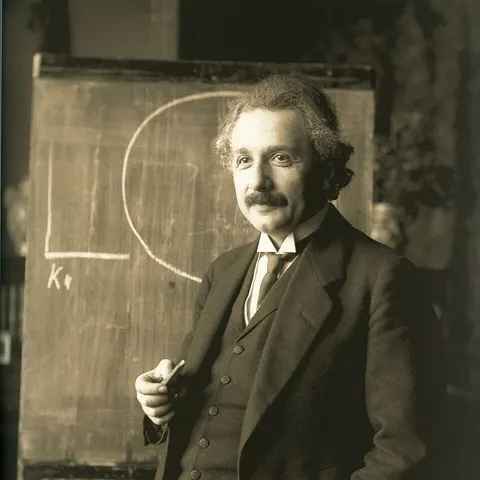 Albert Einstein's IQPhysicist, estimated 160+160+
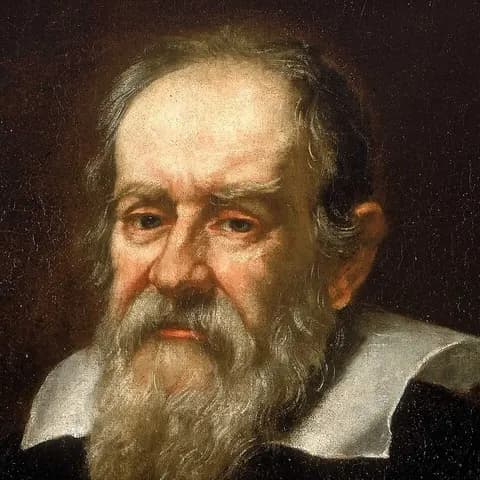 Galileo Galilei's IQAstronomer & Physicist, estimated 160+160+
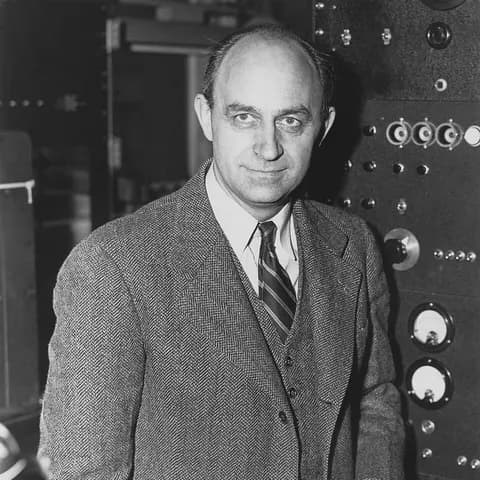 Enrico Fermi's IQPhysicist, estimated 160+160+
- Richard Feynman's IQTheoretical Physicist, estimated 160+160+
 Isaac Newton's IQPhysicist & Mathematician, estimated 160+160+
Head-to-head
- Nikola Tesla vs Steve JobsSide-by-side IQ estimates and evidence
- Nikola Tesla vs Thomas EdisonSide-by-side IQ estimates and evidence
- Nikola Tesla vs Albert EinsteinSide-by-side IQ estimates and evidence
Keep exploring
- Abstract Conceptual ThinkingSign of high intelligence
- Signs of High IQ in ChildrenSign of high intelligence
- L Lawliet's IQDeath Note, fan estimate 160
- Tony Stark's IQIron Man, fan estimate 160
People also search for
All 157 historical IQ estimates, ranked with ranges and sources.
Tesla's IQ is 160+. What's yours?
Tesla's estimate comes from the historical record. Yours can come from a real test: 25 visual reasoning questions.
25 questions · about 12 minutes
Sources
- The Early Mental Traits of Three Hundred Geniuses, Stanford University Press. A foundational but historically dated example of historiometric estimation.
- Genius 101, Springer Publishing Company. A modern overview of research on achievement, eminence and genius, including the limits of historiometric estimates.
- Cox, C. M. (1926). The Early Mental Traits of Three Hundred Geniuses. Stanford University Press.
- Simonton, D. K. (2009). Genius 101. Springer.
- Cattell, R. B. (1971). Abilities: Their Structure, Growth, and Action. Houghton Mifflin.
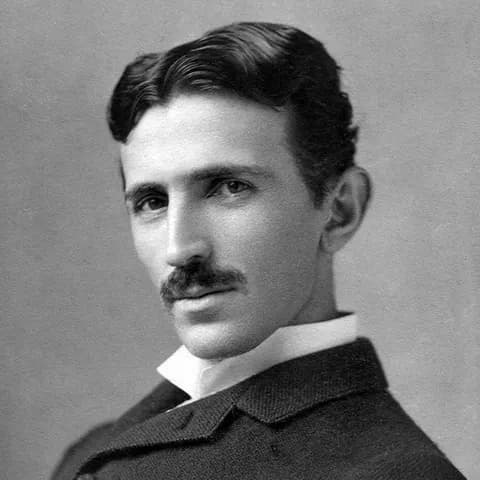
- Portrait: Napoleon Sarony · Public domain · Wikimedia Commons
Last reviewed September 2026. How we estimate historical IQ