Isaac Newton IQ
Isaac Newton's IQ is often quoted as 190. The best historical estimates put it between 160 and 190, and no one ever tested him.
Newton's IQ is 160+. What's yours?
25 questions · about 12 minutes
Think you're smarter than Isaac Newton? Try question 1.
Which option completes the grid? One tap, no sign-up.
Key facts
- Estimated IQ
- IQ 160+
- Range
- IQ 160 to 190
- Known for
- Gravity, calculus, optics
- Lived
- Physicist & Mathematician, 1643–1727
- Basis
- Cox 1926 historiometric estimate
- Confidence
- Low. Newton died in 1727, almost two centuries before IQ tests existed. No score was ever measured.
Newton's record supports one of the highest estimates in history. The 190 often quoted is Cox's 1926 corrected estimate, not a test result.
What was Isaac Newton's IQ?
Nobody measured it. Newton died in 1727, long before IQ tests. Catharine Cox's 1926 study estimated about 170 from his early adult record and gave a corrected 190, the figure most often quoted. Adjusted for the Flynn effect that is nearer 168, so LifeScore uses 160 to 190.
Newton vs Einstein IQ: who was smarter?
Neither was tested, so there is no IQ contest to settle. Cox's 1926 study rated Newton at 190 but did not cover Einstein, born in 1879. On the evidence, both remade physics: Newton built mechanics and gravity from scratch, and Einstein rebuilt them with relativity.
Was Newton smarter than Leibniz?
Cox's 1926 study rated Leibniz higher, 205 against 190, helped by a well-documented prodigy childhood where Newton's early records are thin. Both developed calculus independently, Newton in the 1660s and Leibniz in the 1670s, then fought a bitter priority dispute. Most historians give Newton the larger overall legacy.
Where does the 190 figure come from?
The 190 comes from Catharine Cox's 1926 book The Early Mental Traits of Three Hundred Geniuses. She rated famous people by comparing what biographies said they could do at each age with what an average child could do.
For Newton she estimated about 130 up to age 17, because records of his childhood are thin, and about 170 for ages 17 to 26, the decade of calculus, optics and gravitation. She then corrected for missing data, which produced the 190.
Cox's scale is not today's. One secondary tabulation subtracts about 22 points for the Flynn effect, putting Newton near 168. That is why LifeScore lists 160+ with a working range of 160 to 190.
How smart was Isaac Newton?
- 01
Calculus before 25
In 1665 and 1666, with Cambridge closed by plague, he developed his method of fluxions, an early form of calculus. - 02
Laws of motion and gravity
Principia (1687) explained falling apples, the Moon, the planets, tides and comets with one set of laws. - 03
Light and colour
His prism experiments showed that white light is a mix of colours, overturning centuries of theory. - 04
The reflecting telescope
In 1668 he built the first working reflecting telescope, a design still used by major observatories.
How Newton thought
Newton worked by total immersion. He could hold a problem in mind for weeks, and when asked how he discovered gravitation he reportedly said, by thinking on it continually. He combined geometric intuition with experiment, then wrote results up in the rigorous style of classical geometry.
The evidence behind the estimate
An estimate built from the historical record, not a recovered test score.
What supports it
- In 1665 and 1666, with Cambridge closed by plague, he worked out early calculus, key experiments on light and colour, and first ideas on gravitation, all before he was 25.
- Principia (1687) set out the laws of motion and universal gravitation and used them to explain planetary orbits, tides and comets.
- He built the first working reflecting telescope and showed that white light is a mixture of colours.
- Cox's 1926 study rated him about 130 from his thin childhood record and about 170 for ages 17 to 26, with a corrected estimate of 190.
What it cannot prove
- Cox's figures sit on an old ratio-IQ scale. One secondary tabulation adjusts Newton's 190 to about 168 for the Flynn effect.
- The estimate is built from biographies of a famous adult, which reward known successes and hide the comparison group.
- Newton also spent decades on alchemy and biblical chronology, a reminder that one number flattens a complicated mind.
Newton compared with Einstein, Leibniz, Galileo
| Figure | Estimate | Range |
|---|---|---|
| Isaac Newton | 160+ | 160–190 |
| Albert Einstein | 160+ | 150–170 |
| Gottfried Leibniz | 170+ | 170–205 |
| Galileo Galilei | 160+ | 160–185 |
Psychological profile
Isaac Newton's IQ is represented here by a retrospective estimate of 160+, not a verified test result. Isaac Newton is best known for exceptional deep work. The useful question is what the surviving evidence shows, not whether a precise modern score can be recovered.
Extreme abstraction ability and obsessive focus. Socially withdrawn, highly perfectionistic, and relentlessly systematic.
The dominant archetype here is The Logician. This archetype shapes decision patterns: what feels natural, what creates friction, and what blind spots tend to emerge.
Estimated IQ is 160+. This is a rough estimate based on documented accomplishments and contemporary accounts, not a literal measurement.
Key traits
Deep Work
Isaac displayed notable deep work, a trait that shaped their approach to challenges and opportunities.Precision
Isaac displayed notable precision, a trait that shaped their approach to challenges and opportunities.Obsession
Isaac pursued single problems for years at a time, often at the expense of health and relationships. This level of focus is rare and comes with trade-offs.
One thing most people do not know
Newton spent his last three decades mostly outside research, running the Royal Mint and prosecuting counterfeiters.
A modern parallel
If Isaac Newton were alive today, a modern parallel in operating style might be Terence Tao. The comparison is about working style, strengths and blind spots, not accomplishment level or IQ.
Isaac Newton: common questions
Was Isaac Newton a genius?
What personality type was Isaac Newton?
Who is the modern equivalent of Isaac Newton?
What can we learn from Isaac Newton?
People with similar IQ estimates
Isaac Newton's estimate of 160+ falls in the profoundly gifted IQ range. See what an IQ of 160 means, place it on the IQ chart or check how rare it is with the IQ rarity calculator.
 Stephen Hawking's IQTheoretical Physicist, estimated 160+160+
 Albert Einstein's IQPhysicist, estimated 160+160+
 Galileo Galilei's IQAstronomer & Physicist, estimated 160+160+
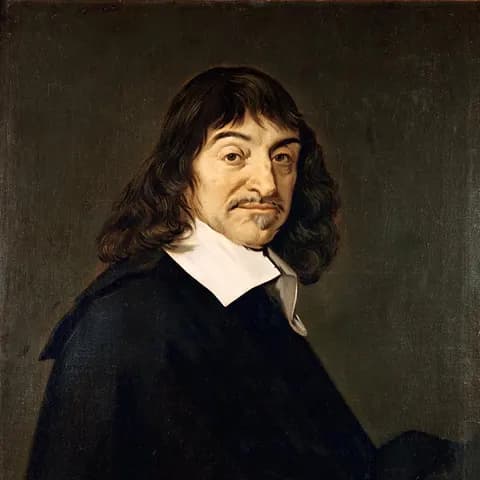 René Descartes' IQPhilosopher & Mathematician, estimated 160+160+
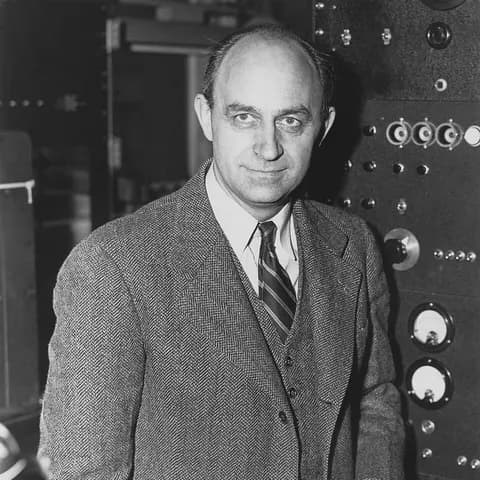 Enrico Fermi's IQPhysicist, estimated 160+160+
Head-to-head
- Albert Einstein vs Isaac NewtonSide-by-side IQ estimates and evidence
- Isaac Newton vs Napoleon BonaparteSide-by-side IQ estimates and evidence
Keep exploring
- Complex Problem DecompositionSign of high intelligence
- Rapid Learning SpeedSign of high intelligence
- L Lawliet's IQDeath Note, fan estimate 160
- Tony Stark's IQIron Man, fan estimate 160
People also search for
All 157 historical IQ estimates, ranked with ranges and sources.
Newton's IQ is 160+. What's yours?
Newton's estimate comes from the historical record. Yours can come from a real test: 25 visual reasoning questions.
25 questions · about 12 minutes
Sources
- Isaac Newton biography, MacTutor, University of St Andrews. Detailed account of his early mathematics, optics, Principia and later career.
- The Newton Project, University of Oxford. Online edition of Newton's scientific, theological and alchemical manuscripts.
- The Early Mental Traits of Three Hundred Geniuses (Cox, 1926), Stanford University Press, via Internet Archive. The original historiometric study. Cox rated 301 eminent people born 1450 to 1850 from biographical records of their childhood and youth.
- Cox's IQ estimates of 301 eminent geniuses, IQ Comparison Site. Secondary tabulation of Cox's corrected estimates, with a version adjusted by about 22 points for the Flynn effect.
- Cox, C. M. (1926). The Early Mental Traits of Three Hundred Geniuses. Stanford University Press.
- Simonton, D. K. (2009). Genius 101. Springer.
- Cattell, R. B. (1971). Abilities: Their Structure, Growth, and Action. Houghton Mifflin.
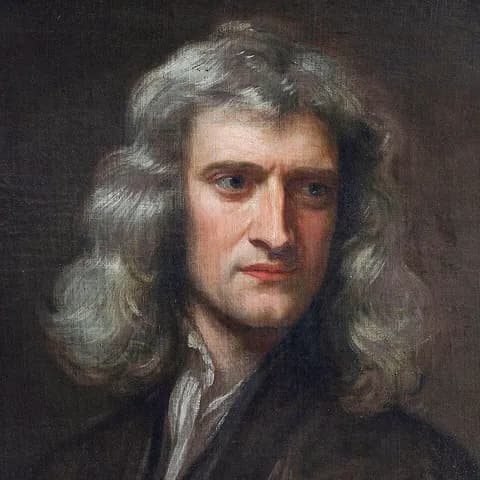
- Portrait: Godfrey Kneller · Public domain · Wikimedia Commons
Last reviewed September 2026. How we estimate historical IQ