Albert Einstein IQ
Albert Einstein's IQ is often quoted as 160, but he never took an IQ test. LifeScore's working range is 150 to 170, based on his scientific record.
Einstein's IQ is 160+. What's yours?
25 questions · about 12 minutes
Think you're smarter than Albert Einstein? Try question 1.
Which option completes the grid? One tap, no sign-up.
Key facts
- Estimated IQ
- IQ 160+
- Known for
- Relativity, E = mc²
- Lived
- Physicist, 1879–1955
- Basis
- Documented research record; no test
- Confidence
- Low. There is no authenticated record that Einstein took a modern standardized IQ test.
Einstein’s exceptional scientific reasoning is directly evidenced; the popular 160 figure is an unverified retrospective estimate.
What was Albert Einstein's IQ?
There is no verified score. Einstein never took a modern IQ test, and the 160 so often quoted has no documented source. He was born in 1879, after the period Cox's 1926 study covered. LifeScore uses 150 to 170 as a working range based on his physics.
Did Einstein take an IQ test?
No authenticated record shows Einstein taking one. Early IQ tests were designed for children and military recruits, and there is no archive evidence he sat any of them as an adult. If you want to try, our Einstein IQ test is built around the visual reasoning he described using.
Einstein vs Newton IQ: who was smarter?
No test can settle it. Newton has a documented Cox 1926 estimate, a corrected 190, while Einstein was born too late for that study. Both remade physics: Newton founded classical mechanics and gravity, and Einstein replaced parts of both with relativity. Physicists usually rank them together.
Was Nikola Tesla smarter than Einstein?
There is no evidence to rank them by IQ, since neither was tested. They were different kinds of genius. Tesla was an inventor with extraordinary visual imagination and about 300 patents worldwide. Einstein was a theorist whose ideas changed physics. Most historians see Einstein's work as more fundamental.
Where does the 160 figure come from?
We could not trace it to any study or test. It is a round 'genius' number repeated across celebrity IQ lists, often next to Hawking, who is given the same score.
Einstein could not have been in Catharine Cox's 1926 study, which only covered people born between 1450 and 1850.
The stronger evidence is the work itself: four landmark papers in 1905, general relativity in 1915 and the 1921 Nobel Prize in Physics.
How smart was Albert Einstein?
- 01
The 1905 papers
In one year he explained the photoelectric effect and Brownian motion, and published special relativity and E = mc². - 02
General relativity
In 1915 he described gravity as the curvature of space and time, confirmed by the 1919 eclipse. - 03
Nobel Prize
He won the 1921 Nobel Prize in Physics for explaining the photoelectric effect. - 04
Stimulated emission
His 1917 work on how atoms emit light laid the ground for the laser.
How Einstein thought
Einstein described thinking in images and 'muscular' sensations before words, in a letter to the mathematician Jacques Hadamard. His thought experiments, such as imagining chasing a beam of light at 16, turned physics puzzles into pictures he could reason about.
The evidence behind the estimate
An estimate built from the historical record, not a recovered test score.
What supports it
- His 1905 papers transformed several areas of physics.
- He developed special and general relativity and made foundational contributions to quantum theory.
- Contemporary biography describes a distinctive visual and independent problem-solving strategy.
What it cannot prove
- Scientific eminence does not map cleanly to a full-scale IQ.
- Published estimates often repeat one another without a test record.
- Very high scores are especially sensitive to test ceiling and norm differences.
Einstein compared with Newton, Hawking, Tesla
| Figure | Estimate | Range |
|---|---|---|
| Albert Einstein | 160+ | 150–170 |
| Isaac Newton | 160+ | 160–190 |
| Stephen Hawking | 160+ | 150–170 |
| Nikola Tesla | 160+ | 145–170 |
Psychological profile
Albert Einstein's IQ is represented here by a retrospective estimate of 160+, not a verified test result. Albert Einstein is best known for exceptional visualization. The useful question is what the surviving evidence shows, not whether a precise modern score can be recovered.
High openness with exceptional visual-spatial reasoning. A slow, deep thinker who solved problems through "thought experiments" rather than rote calculation.
The dominant archetype here is The Sage. This archetype shapes decision patterns: what feels natural, what creates friction, and what blind spots tend to emerge.
Estimated IQ is 160+. This is a rough estimate based on documented accomplishments and contemporary accounts, not a literal measurement.
Key traits
Visualization
Albert could construct and manipulate complex mental models without external aids, a trait associated with exceptional visual-spatial processing.Independence
Albert displayed notable independence, a trait that shaped their approach to challenges and opportunities.Persistence
Albert displayed notable persistence, a trait that shaped their approach to challenges and opportunities.
One thing most people do not know
After Einstein died in 1955, pathologist Thomas Harvey removed his brain, and pieces were studied for decades.
A modern parallel
A modern figure with a similar operating style is Ed Witten. Both fit the The Sage archetype. This is a comparison of style, not of IQ.
Albert Einstein: common questions
Was Albert Einstein a genius?
What personality type was Albert Einstein?
Who is the modern equivalent of Albert Einstein?
What can we learn from Albert Einstein?
People with similar IQ estimates
Albert Einstein's estimate of 160+ falls in the profoundly gifted IQ range. See what an IQ of 160 means, place it on the IQ chart or check how rare it is with the IQ rarity calculator.
 Isaac Newton's IQPhysicist & Mathematician, estimated 160+160+
 Stephen Hawking's IQTheoretical Physicist, estimated 160+160+
 Galileo Galilei's IQAstronomer & Physicist, estimated 160+160+
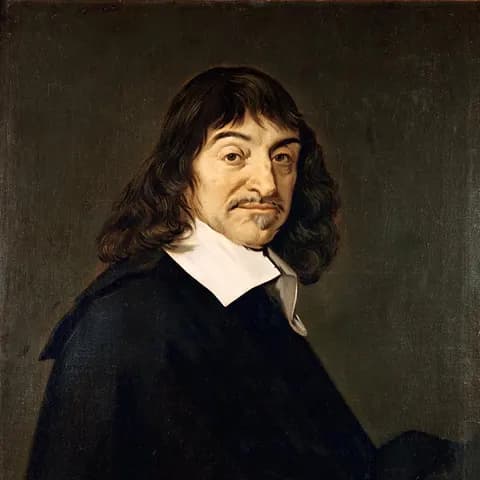 René Descartes' IQPhilosopher & Mathematician, estimated 160+160+
- Richard Feynman's IQTheoretical Physicist, estimated 160+160+
Head-to-head
- Albert Einstein vs Wolfgang Amadeus MozartSide-by-side IQ estimates and evidence
- Nikola Tesla vs Albert EinsteinSide-by-side IQ estimates and evidence
- Albert Einstein vs Isaac NewtonSide-by-side IQ estimates and evidence
- Stephen Hawking vs Albert EinsteinSide-by-side IQ estimates and evidence
- Richard Feynman vs Albert EinsteinSide-by-side IQ estimates and evidence
Keep exploring
- Complex Problem DecompositionSign of high intelligence
- Deep Intellectual CuriositySign of high intelligence
- L Lawliet's IQDeath Note, fan estimate 160
- Tony Stark's IQIron Man, fan estimate 160
- Einstein IQ testA short visual reasoning challenge
People also search for
All 157 historical IQ estimates, ranked with ranges and sources.
Einstein's IQ is 160+. What's yours?
Einstein's estimate comes from the historical record. Yours can come from a real test: 25 visual reasoning questions.
25 questions · about 12 minutes
Sources
- Albert Einstein – Biographical, Nobel Prize. Documents Einstein’s education, research program and problem-solving approach.
- Albert Einstein – Facts, Nobel Prize. Summarizes his Nobel-recognized work and career.
- Cox, C. M. (1926). The Early Mental Traits of Three Hundred Geniuses. Stanford University Press.
- Simonton, D. K. (2009). Genius 101. Springer.
- Cattell, R. B. (1971). Abilities: Their Structure, Growth, and Action. Houghton Mifflin.
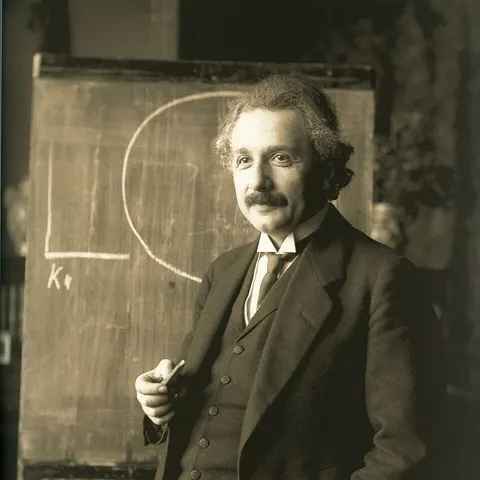
- Portrait: Ferdinand Schmutzer / Adam Cuerden · Public domain · Wikimedia Commons
Last reviewed September 2026. How we estimate historical IQ