Marie Curie IQ
Marie Curie's IQ is estimated at 140 to 160. She was never tested; the estimate rests on two Nobel Prizes in two different sciences.
Marie Curie's IQ is 150. What's yours?
25 questions · about 12 minutes
Think you're smarter than Marie Curie? Try question 1.
Which option completes the grid? One tap, no sign-up.
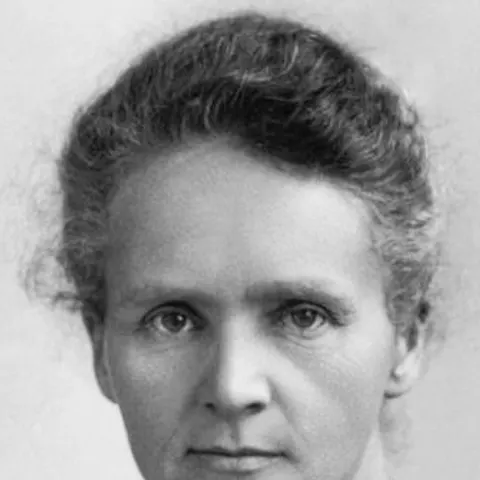
Key facts
- Estimated IQ
- IQ 150
- Known for
- Radioactivity, two Nobel Prizes
- Lived
- Physicist & Chemist, 1867–1934
- Basis
- Documented research record; no test
- Confidence
- Low. Marie Curie died in 1934. No IQ test score for her is known.
Curie's record is unusually concrete: two Nobel Prizes in two different sciences. 150 is still an estimate, not a score.
What was Marie Curie's IQ?
Marie Curie never took an IQ test, and she was born too late for Cox's 1926 study. LifeScore estimates about 150, with a range of 140 to 160. The evidence is concrete: top marks at the Sorbonne in her second language and Nobel Prizes in physics and chemistry.
How smart was Marie Curie?
Exceptionally. She is still the only person to win Nobel Prizes in two different sciences, physics in 1903 and chemistry in 1911. She discovered two elements, polonium and radium, coined the word radioactivity and became the first woman professor at the University of Paris.
Marie Curie's key achievements
- 01
Two Nobel Prizes
Physics in 1903, shared with Pierre Curie and Henri Becquerel, and Chemistry alone in 1911. - 02
Two new elements
She and Pierre discovered polonium, named after Poland, and radium in 1898. - 03
X-rays in the war
In the First World War she set up mobile X-ray units that treated wounded soldiers near the front. - 04
First woman professor
In 1906 she became the first woman to hold a professorship at the University of Paris.
How Marie Curie thought
Curie combined careful measurement with sheer stamina. To isolate radium she and Pierre processed tonnes of pitchblende residue by hand in a leaky shed, tracking the radioactivity at each step with an electrometer Pierre had helped design.
The evidence behind the estimate
An estimate built from the historical record, not a recovered test score.
What supports it
- She won the 1903 Nobel Prize in Physics and the 1911 Nobel Prize in Chemistry, the first person to win in two sciences.
- With Pierre Curie she discovered polonium and radium, and she coined the word radioactivity.
- She studied physics and mathematics at the Sorbonne in her second language and graduated at the top of her physics year.
What it cannot prove
- Her breakthroughs depended on years of physical laboratory labour and on collaboration.
- Barriers facing women in science shaped her path and the surviving record.
- No psychometric data exists.
Marie Curie compared with Einstein, Rosalind Franklin, Pasteur
| Figure | Estimate | Range |
|---|---|---|
| Marie Curie | 150 | 140–160 |
| Albert Einstein | 160+ | 150–170 |
| Rosalind Franklin | 150+ | 140–160 |
| Louis Pasteur | 155+ | 140–165 |
Psychological profile
Marie Curie's IQ is represented here by a retrospective estimate of 150, not a verified test result. Marie Curie is best known for exceptional grit. The useful question is what the surviving evidence shows, not whether a precise modern score can be recovered.
High conscientiousness paired with intellectual bravery. Tolerant of uncertainty and hardship in pursuit of truth.
The dominant archetype here is The Scholar. This archetype shapes decision patterns: what feels natural, what creates friction, and what blind spots tend to emerge.
Estimated IQ is 150. This is a rough estimate based on documented accomplishments and contemporary accounts, not a literal measurement.
Key traits
Grit
Marie displayed notable grit, a trait that shaped their approach to challenges and opportunities.Curiosity
Marie pursued knowledge across domains with little regard for "usefulness". This polymathic drive is rare and hard to sustain.Resilience
Marie recovered from setbacks that would have ended most careers. This suggests high distress tolerance and fast emotional recovery.
One thing most people do not know
Her notebooks are still radioactive and are kept in lead-lined boxes; readers sign a waiver to see them.
A modern parallel
Jennifer Doudna shows a contemporary version of Marie's working style. The era is different, but patterns such as risk tolerance and social strategy look similar. This is not an IQ comparison.
Marie Curie: common questions
Was Marie Curie a genius?
What personality type was Marie Curie?
Who is the modern equivalent of Marie Curie?
What can we learn from Marie Curie?
People with similar IQ estimates
Marie Curie's estimate of 150 falls in the genius level IQ range. See what an IQ of 150 means, place it on the IQ chart or check how rare it is with the IQ rarity calculator.
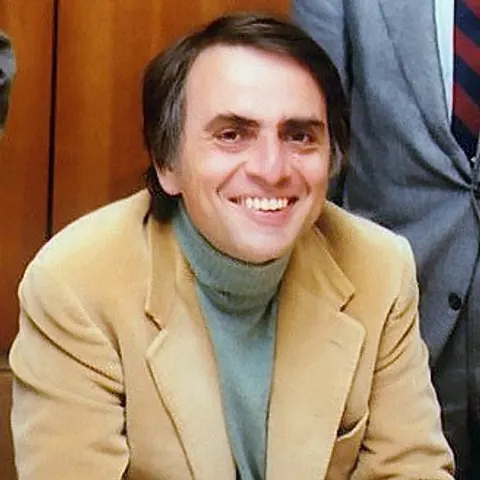 Carl Sagan's IQAstronomer & Science Communicator, estimated 150+150+
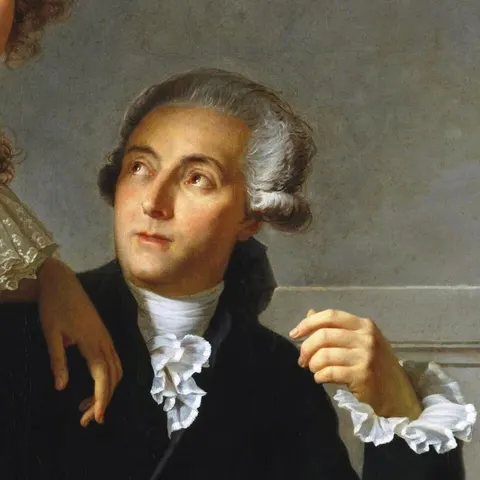 Antoine Lavoisier's IQChemist, estimated 150+150+
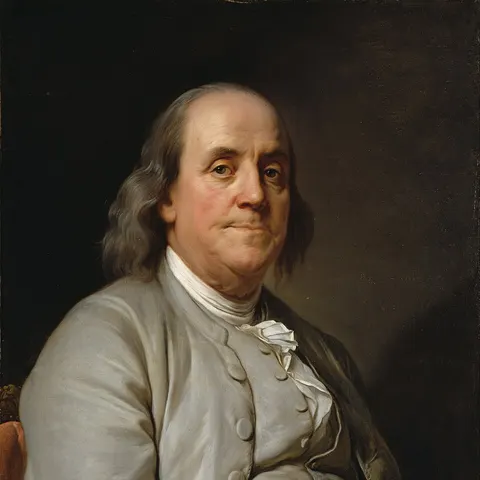 Benjamin Franklin's IQPolymath & Founding Father, estimated 150+150+
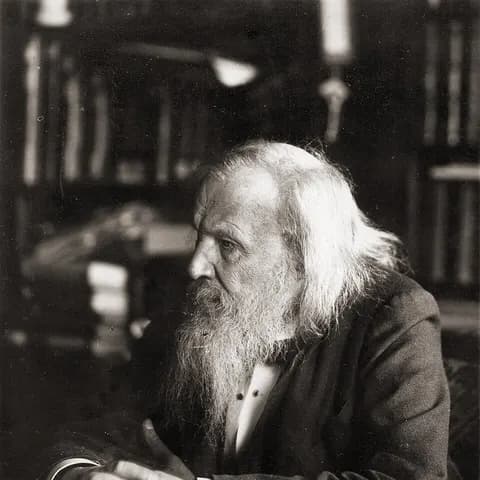 Dmitri Mendeleev's IQChemist, estimated 150+150+
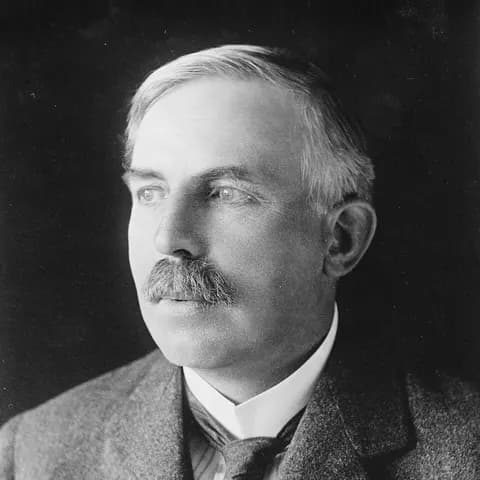 Ernest Rutherford's IQPhysicist, estimated 150+150+
Head-to-head
- Napoleon Bonaparte vs Marie CurieSide-by-side IQ estimates and evidence
- Cleopatra vs Marie CurieSide-by-side IQ estimates and evidence
Keep exploring
- Efficient Information ProcessingSign of high intelligence
- Complex Problem DecompositionSign of high intelligence
- Tyrion Lannister's IQGame of Thrones, fan estimate 150
- Erwin Smith's IQAttack on Titan, fan estimate 150
People also search for
All 157 historical IQ estimates, ranked with ranges and sources.
Marie Curie's IQ is 150. What's yours?
Marie Curie's estimate comes from the historical record. Yours can come from a real test: 25 visual reasoning questions.
25 questions · about 12 minutes
Sources
- Marie Curie – Biographical, Nobel Prize. Official biography covering her education, research and both prizes.
- Marie Curie – Facts (Chemistry 1911), Nobel Prize. Summarises the discovery of radium and polonium recognised by her second prize.
- Cox, C. M. (1926). The Early Mental Traits of Three Hundred Geniuses. Stanford University Press.
- Simonton, D. K. (2009). Genius 101. Springer.
- Cattell, R. B. (1971). Abilities: Their Structure, Growth, and Action. Houghton Mifflin.
- Portrait: Unknown authorUnknown author · Public domain · Wikimedia Commons
Last reviewed September 2026. How we estimate historical IQ