Martin Luther King Jr. IQ
Martin Luther King Jr.'s IQ is estimated at 120 to 140. No IQ score was ever published; the estimate rests on his education, writing and leadership.
MLK's IQ is 130+. What's yours?
25 questions · about 12 minutes
Think you're smarter than Martin Luther King Jr? Try question 1.
Which option completes the grid? One tap, no sign-up.
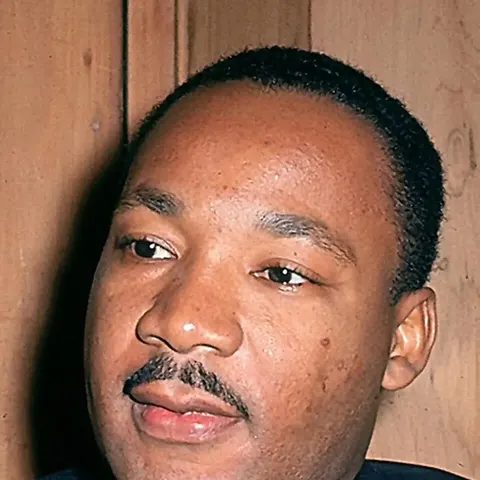
Key facts
- Estimated IQ
- IQ 130+
- Known for
- Civil rights leadership
- Lived
- Civil Rights Leader, 1929–1968
- Basis
- Documented education and writing; no test
- Confidence
- Low. No verified public full-scale IQ score is available.
King’s accelerated education, doctoral work, strategic leadership and rhetoric show exceptional verbal and social reasoning; 130+ is not a measured result.
What was Martin Luther King Jr.'s IQ?
No IQ score for King has been published, and he was born too late for Cox's 1926 study. LifeScore uses 130+ as an editorial marker, with a range of 120 to 140, based on his early start at college, his doctorate and a body of writing still studied today.
How smart was MLK?
Very, in verbal and strategic terms. He skipped two grades, entered Morehouse College at 15, earned a doctorate in systematic theology from Boston University at 26 and won the Nobel Peace Prize at 35. His campaigns combined moral argument with careful planning of timing and pressure.
What did MLK study?
King studied sociology at Morehouse College, then divinity at Crozer Theological Seminary, where he was class valedictorian, and finally systematic theology at Boston University. His doctoral dissertation compared the ideas of God in the theologians Paul Tillich and Henry Nelson Wieman.
Martin Luther King Jr.'s key achievements
- 01
College at 15
He skipped two grades and entered Morehouse College in 1944. - 02
A doctorate at 26
He completed a PhD in systematic theology at Boston University in 1955. - 03
Letter from Birmingham Jail
His 1963 open letter answered critics point by point and became a classic of political writing. - 04
Nobel Peace Prize
In 1964, at 35, he became the youngest Nobel Peace laureate up to that time.
How MLK thought
King built bridges between traditions: the Bible, America's founding documents, Gandhi's non-violence and philosophers he studied in graduate school. His Letter from Birmingham Jail answers eight clergymen point by point, and he began it in the margins of a newspaper.
The evidence behind the estimate
An estimate built from the historical record, not a recovered test score.
What supports it
- He entered college at fifteen and later completed doctoral study.
- His speeches and books combined moral argument, rhetoric and coalition strategy.
- He became the youngest Nobel Peace Prize laureate at the time of the award.
What it cannot prove
- Academic acceleration and rhetorical skill do not yield a precise IQ.
- Leadership reflects social, moral and emotional capacities not captured by IQ.
- The surviving record does not include a standardized score report.
MLK compared with Gandhi, Mandela, Lincoln
| Figure | Estimate | Range |
|---|---|---|
| Martin Luther King Jr. | 130+ | 120–140 |
| Mahatma Gandhi | 125+ | 110–135 |
| Nelson Mandela | 130+ | 115–140 |
| Abraham Lincoln | 140+ | 130–150 |
Psychological profile
Martin Luther King Jr.'s IQ is represented here by a retrospective estimate of 130+, not a verified test result. Martin Luther King Jr. is best known for exceptional moral conviction. The useful question is what the surviving evidence shows, not whether a precise modern score can be recovered.
High empathy with strategic courage. Translated moral clarity into action through rhetoric and coalition-building.
The dominant archetype here is The Hero. This archetype shapes decision patterns: what feels natural, what creates friction, and what blind spots tend to emerge.
Estimated IQ is 130+. This is a rough estimate based on documented accomplishments and contemporary accounts, not a literal measurement.
Key traits
Moral conviction
Martin displayed notable moral conviction, a trait that shaped their approach to challenges and opportunities.Rhetoric
Martin used language as a tool of influence, crafting arguments that moved populations and shifted policy.Coalition building
Martin displayed notable coalition building, a trait that shaped their approach to challenges and opportunities.
One thing most people do not know
The 'I Have a Dream' passage was largely improvised; it was not in his prepared text for the March on Washington.
Martin Luther King Jr.: common questions
Was Martin Luther King Jr. a genius?
What personality type was Martin Luther King Jr.?
What can we learn from Martin Luther King Jr.?
People with similar IQ estimates
Martin Luther King Jr.'s estimate of 130+ falls in the gifted IQ range. See what an IQ of 130 means, place it on the IQ chart or check how rare it is with the IQ rarity calculator.
- Nelson Mandela's IQAnti-Apartheid Revolutionary, estimated 130+130+
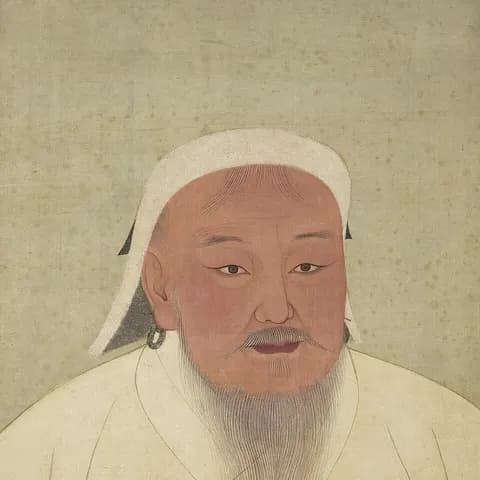 Genghis Khan's IQFounder of the Mongol Empire, estimated 130+130+
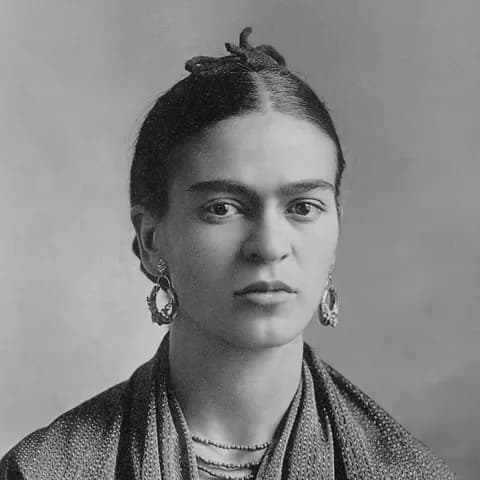 Frida Kahlo's IQArtist, estimated 130+130+
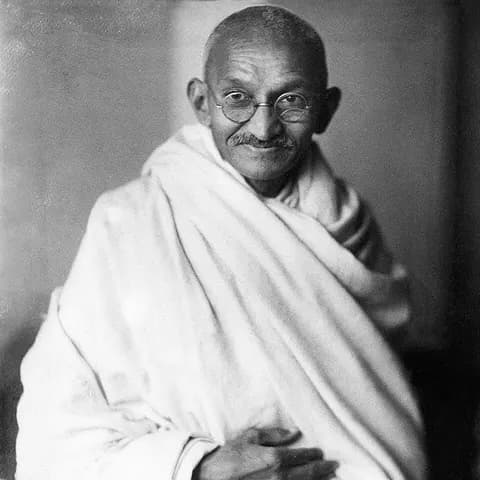 Mahatma Gandhi's IQLeader of Indian Independence, estimated 125+125+
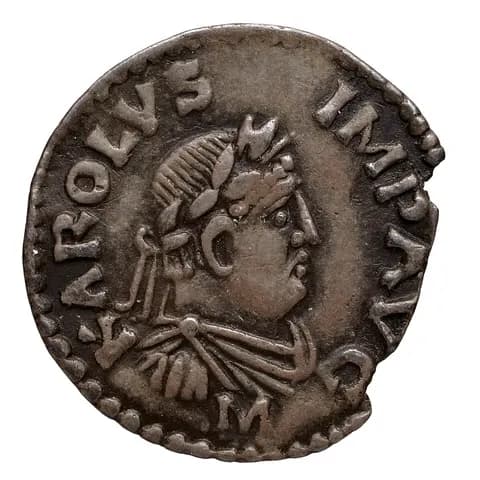 Charlemagne's IQKing of the Franks & Emperor, estimated 130+130+
Keep exploring
- Strong Metacognitive AwarenessSign of high intelligence
- Strong Self-Teaching AbilitySign of high intelligence
- Darth Vader (Anakin Skywalker)'s IQStar Wars, fan estimate 130
- Abed Nadir's IQCommunity, fan estimate 130
People also search for
All 157 historical IQ estimates, ranked with ranges and sources.
MLK's IQ is 130+. What's yours?
MLK's estimate comes from the historical record. Yours can come from a real test: 25 visual reasoning questions.
25 questions · about 12 minutes
Sources
- Martin Luther King Jr. – Biographical, Nobel Prize. Documents King’s accelerated education, doctorate, writing and leadership.
- The Papers of Martin Luther King, Jr., Stanford University. Provides a scholarly archive for evaluating his writing and intellectual development.
- Cox, C. M. (1926). The Early Mental Traits of Three Hundred Geniuses. Stanford University Press.
- Simonton, D. K. (2009). Genius 101. Springer.
- Cattell, R. B. (1971). Abilities: Their Structure, Growth, and Action. Houghton Mifflin.
- Portrait: Associated Press · Public domain · Wikimedia Commons
Last reviewed September 2026. How we estimate historical IQ