Frederick Douglass IQ
Frederick Douglass's IQ is unknown; no test or confirmed study figure exists. LifeScore uses about 150 (range 135 to 165) as an editorial marker for the man who taught himself to read while enslaved and became America's leading abolitionist voice.
Douglass' IQ is 150. What's yours?
25 questions · about 12 minutes
Think you're smarter than Frederick Douglass? Try question 1.
Which option completes the grid? One tap, no sign-up.
Key facts
- Estimated IQ
- IQ 150
- Known for
- His Narrative and his oratory against slavery
- Lived
- Abolitionist & Writer, c. 1818–1895
- Basis
- No documented estimate; editorial marker from the record
- Confidence
- Very low. Born inside the period Cox 1926 covered, but we could not confirm a Cox figure from an accessible tabulation, so none is quoted. No IQ test was ever given.
Douglass has no test and no Cox figure we could confirm. 150 is an editorial marker for a self-taught man who became one of the great orators and writers in American history.
Frederick Douglass in brief
Frederick Douglass was born into slavery in Maryland around 1818. As a boy in Baltimore he was taught the alphabet by his enslaver's wife until her husband forbade it, and he secretly taught himself to read and write. He escaped to freedom in 1838. A brilliant speaker, he became the leading Black abolitionist, published his Narrative in 1845, ran his own newspaper and advised Abraham Lincoln. He later served as US Marshal and minister to Haiti. He died in 1895.
What was Frederick Douglass's IQ?
No figure exists. LifeScore lists about 150 as an editorial marker, range 135 to 165. It rests on his secret self-education under slavery and his achievements as an orator, author and editor, reached with no schooling at all.
How did Frederick Douglass learn to read?
His enslaver's wife, Sophia Auld, began teaching him the alphabet until her husband stopped her, saying learning would make him unfit for slavery. Douglass took that as a key to freedom, learned from white children in exchange for bread and practised writing by copying.
What is "What to the Slave Is the Fourth of July?"
A speech Douglass gave in Rochester, New York, on 5 July 1852. He argued that celebrations of liberty were a hollow mockery to enslaved people. It is widely regarded as one of the greatest speeches in American history.
How smart was Frederick Douglass?
- 01
Narrative of the Life (1845)
A best-selling autobiography and indictment of slavery. - 02
The North Star
His abolitionist newspaper, founded in 1847. - 03
Oratory
Thousands of speeches across the US and Britain. - 04
Public office
US Marshal and minister to Haiti.
How Douglass thought
Douglass reasoned through argument and evidence, turning his own experience into a case against slavery that opponents could not easily answer. Teaching yourself literacy in secret, under threat, reflects extraordinary motivation and verbal learning ability.
The evidence behind the estimate
An estimate built from the historical record, not a recovered test score.
What supports it
- His three autobiographies document his life and learning.
- His speeches were widely printed in his lifetime.
- He held federal posts under several presidents.
What it cannot prove
- Severe barriers of race, slavery or disability shaped what records exist and what achievements were possible.
- He had no formal schooling, so there are no school records.
- An editorial marker is a comparison aid built from achievement, not a measurement, and two careful readers could place it ten points apart.
Douglass compared with Harriet Tubman, Lincoln, Washington
| Figure | Estimate | Range |
|---|---|---|
| Frederick Douglass | 150 | 135–165 |
| Harriet Tubman | 125+ | 110–135 |
| Abraham Lincoln | 140+ | 130–150 |
| Booker T. Washington | 140 | 125–155 |
How would you score?
Where would you land next to Frederick Douglass?
Frederick Douglass' 150 is an estimate from the historical record, with a working range of 135 to 165. On the standard IQ scale an IQ of 150 sits at the 99.96th percentile: about 1 in 2,330 people score that high. Nobody can test Douglass now. You can find out where you sit on the same scale.
- 100Average adult50th percentile
- 130Gifted linetop 2%, about 1 in 44
- 150Douglass'99.96th percentile, about 1 in 2,330
- ?Youscored on the same scale
25 questions · about 12 minutes
Psychological profile
Frederick Douglass's IQ is represented here by a retrospective estimate of 150, not a verified test result. Frederick Douglass is best known for exceptional eloquence. The useful question is what the surviving evidence shows, not whether a precise modern score can be recovered.
Commanding, eloquent and unyielding. A man who taught himself to read in secret and argued with presidents.
The dominant archetype here is The Orator. This archetype shapes decision patterns: what feels natural, what creates friction, and what blind spots tend to emerge.
Estimated IQ is 150. This is a rough estimate based on documented accomplishments and contemporary accounts, not a literal measurement.
Key traits
Eloquence
He traded bread with white boys in Baltimore for reading lessons.Self-education
He studied speeches in The Columbian Orator, bought for 50 cents.Courage
He was the most photographed American of the 19th century.
One thing most people do not know
He never knew his exact birthday and chose 14 February to celebrate it.
Frederick Douglass: common questions
Was Frederick Douglass a genius?
What personality type was Frederick Douglass?
What can we learn from Frederick Douglass?
The IQ-style test the NFL used
Frederick Douglass' IQ is an estimate. Yours could be real.
Before the draft, NFL teams gave prospects the Wonderlic: 50 questions in 12 minutes, and almost nobody finishes. We collected 241 reported player scores, each with its source. The average working adult scores about 21.
People with similar IQ estimates
Frederick Douglass' estimate of 150 falls in the genius level IQ range. Want your own number rather than Frederick's? Take the free IQ test or the quick IQ test. See what an IQ of 150 means, place it on the IQ chart or check how rare it is with the IQ rarity calculator.
- Jeff Bezos' IQAmazon Founder, estimated 150+150+
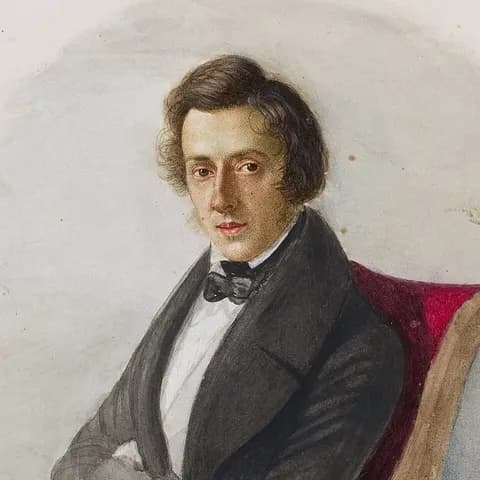 Frédéric Chopin's IQComposer & Pianist, estimated 150+150+
- Mark Zuckerberg's IQMeta CEO, estimated 150+150+
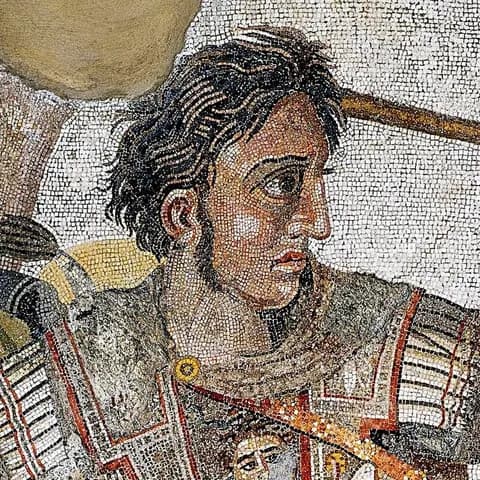 Alexander the Great's IQKing of Macedonia, estimated 150+150+
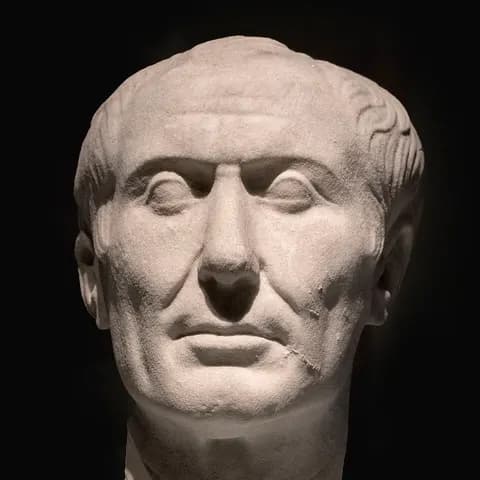 Julius Caesar's IQRoman Dictator & General, estimated 150+150+
Keep exploring
- Strong Metacognitive AwarenessSign of high intelligence
- Strong Self-Teaching AbilitySign of high intelligence
- Tyrion Lannister's IQGame of Thrones, fan estimate 150
- Erwin Smith's IQAttack on Titan, fan estimate 150
People also search for
All 307 historical IQ estimates, ranked with ranges and sources.
Douglass' IQ is 150. What's yours?
Douglass' estimate comes from the historical record. Yours can come from a real test: 25 visual reasoning questions.
25 questions · about 12 minutes
Sources
- Frederick Douglass, Encyclopaedia Britannica. Summarises his life, escape and career.
- Frederick Douglass National Historic Site, US National Park Service. Biography covering his self-education, escape and career.
- Cox, C. M. (1926). The Early Mental Traits of Three Hundred Geniuses. Stanford University Press.
- Simonton, D. K. (2009). Genius 101. Springer.
- Cattell, R. B. (1971). Abilities: Their Structure, Growth, and Action. Houghton Mifflin.
Last reviewed October 2026. How we estimate historical IQ