Joseph Haydn IQ
Joseph Haydn's IQ is unknown; no test or confirmed study figure exists. LifeScore uses about 145 (range 130 to 160) as an editorial marker for the wheelwright's son who taught himself composition and wrote 104 symphonies.
Haydn's IQ is 145. What's yours?
25 questions · about 12 minutes
Think you're smarter than Joseph Haydn? Try question 1.
Which option completes the grid? One tap, no sign-up.
Key facts
- Estimated IQ
- IQ 145
- Known for
- Father of the symphony and the string quartet
- Lived
- Composer, 1732–1809
- Basis
- No documented estimate; editorial marker from the record
- Confidence
- Very low. Born inside the period Cox 1926 covered, but we could not confirm a Cox figure from an accessible tabulation, so none is quoted. No IQ test was ever given.
Haydn has no test and no Cox figure we could confirm. 145 is an editorial marker for the largely self-taught composer who shaped the classical forms.
Joseph Haydn in brief
Joseph Haydn was born in 1732 in Rohrau, Austria, the son of a wheelwright. He sang as a choirboy at St Stephen's Cathedral in Vienna until his voice broke, then taught himself composition from textbooks while scraping a living. In 1761 he joined the Esterházy princes and spent nearly 30 years as their music director, far from Vienna, where he developed the symphony and string quartet. Two triumphant visits to London followed in the 1790s. He died in Vienna in 1809.
What was Joseph Haydn's IQ?
No figure exists. LifeScore lists about 145 as an editorial marker, range 130 to 160. It rests on his self-teaching in composition and his role in developing the symphony and quartet, forms built on long-range logical structure.
Why is Haydn called the father of the symphony?
He did not invent it, but over 40 years he turned it from a light overture into a substantial four-movement form with developed themes. Mozart and Beethoven built on his model, and Beethoven briefly studied with him.
What is the Farewell Symphony?
Symphony No. 45 (1772). The prince had kept the musicians at his summer palace too long. In the finale, players stop one by one, snuff their candles and leave, until two violins remain. The prince took the hint and let them go home.
How smart was Joseph Haydn?
- 01
104 symphonies
Including the Surprise, Military, Clock and London symphonies. - 02
String quartets
About 68, establishing the form. - 03
The Creation (1798)
An oratorio modelled on Handel. - 04
Austrian anthem
His melody became the Austrian imperial anthem and later the German national anthem.
How Haydn thought
Haydn thought in development: take a short idea and transform it through many keys and textures. That is pattern manipulation over a long span, a musical cousin of sequence reasoning. His humour, setting up an expectation and breaking it, shows the same structural awareness.
The evidence behind the estimate
An estimate built from the historical record, not a recovered test score.
What supports it
- His catalogue of works is documented.
- His self-teaching from Fux is described in early biographies.
- Oxford awarded him an honorary doctorate in 1791.
What it cannot prove
- Musical output reflects long training and a stable court post.
- Musical and visual genius draw on abilities, such as pitch memory and visual imagination, that an IQ test only partly samples.
- An editorial marker is a comparison aid built from achievement, not a measurement, and two careful readers could place it ten points apart.
Haydn compared with Mozart, Beethoven, Bach
| Figure | Estimate | Range |
|---|---|---|
| Joseph Haydn | 145 | 130–160 |
| Wolfgang Amadeus Mozart | 165+ | 145–175 |
| Ludwig van Beethoven | 155+ | 145–165 |
| Johann Sebastian Bach | 160+ | 145–170 |
How would you score?
Where would you land next to Joseph Haydn?
Joseph Haydn's 145 is an estimate from the historical record, with a working range of 130 to 160. On the standard IQ scale an IQ of 145 sits at the 99.87th percentile: about 1 in 741 people score that high. Nobody can test Haydn now. You can find out where you sit on the same scale.
- 100Average adult50th percentile
- 130Gifted linetop 2%, about 1 in 44
- 145Haydn's99.87th percentile, about 1 in 741
- ?Youscored on the same scale
25 questions · about 12 minutes
Psychological profile
Joseph Haydn's IQ is represented here by a retrospective estimate of 145, not a verified test result. Joseph Haydn is best known for exceptional structural invention. The useful question is what the surviving evidence shows, not whether a precise modern score can be recovered.
Cheerful, industrious and witty. A craftsman who put jokes into his music.
The dominant archetype here is The Craftsman. This archetype shapes decision patterns: what feels natural, what creates friction, and what blind spots tend to emerge.
Estimated IQ is 145. This is a rough estimate based on documented accomplishments and contemporary accounts, not a literal measurement.
Key traits
Structural Invention
He wrote 104 numbered symphonies and about 68 string quartets.Diligence
He taught himself counterpoint from Fux's textbook Gradus ad Parnassum.Wit
His Surprise Symphony has a sudden loud chord in a quiet movement.
One thing most people do not know
Grave robbers stole his head after burial; it was reunited with his body only in 1954.
Joseph Haydn: common questions
Was Joseph Haydn a genius?
What personality type was Joseph Haydn?
What can we learn from Joseph Haydn?
The IQ-style test the NFL used
Joseph Haydn's IQ is an estimate. Yours could be real.
Before the draft, NFL teams gave prospects the Wonderlic: 50 questions in 12 minutes, and almost nobody finishes. We collected 241 reported player scores, each with its source. The average working adult scores about 21.
People with similar IQ estimates
Joseph Haydn's estimate of 145 falls in the genius level IQ range. Want your own number rather than Joseph's? Take the free IQ test or the quick IQ test. See what an IQ of 145 means, place it on the IQ chart or check how rare it is with the IQ rarity calculator.
- Johannes Brahms' IQComposer & Pianist, estimated 145145
- Pyotr Ilyich Tchaikovsky's IQComposer, estimated 145145
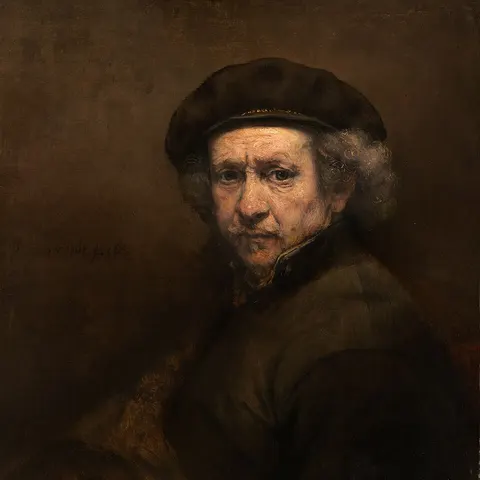 Rembrandt van Rijn's IQPainter, estimated 145+145+
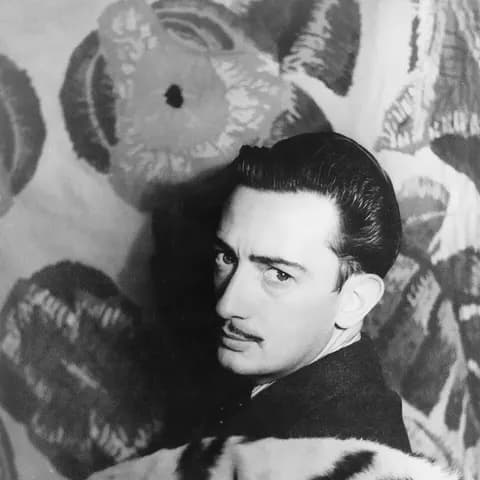 Salvador Dalí's IQSurrealist Artist, estimated 145+145+
- Claude Debussy's IQComposer, estimated 145145
Rankings that include Haydn
- The highest IQ composers in historyRanked 10 of 12
Keep exploring
- Creative Divergent ThinkingSign of high intelligence
- Preference for ComplexitySign of high intelligence
- Dexter (Dexter's Laboratory)'s IQDexter's Laboratory, fan estimate 145
- Doctor Strange's IQMarvel Cinematic Universe, fan estimate 145
People also search for
All 307 historical IQ estimates, ranked with ranges and sources.
Haydn's IQ is 145. What's yours?
Haydn's estimate comes from the historical record. Yours can come from a real test: 25 visual reasoning questions.
25 questions · about 12 minutes
Sources
- Joseph Haydn, Encyclopaedia Britannica. Summarises his life, posts and works.
- Joseph Haydn, Wikipedia. Covers his training, Esterházy years and London visits.
- Cox, C. M. (1926). The Early Mental Traits of Three Hundred Geniuses. Stanford University Press.
- Simonton, D. K. (2009). Genius 101. Springer.
- Cattell, R. B. (1971). Abilities: Their Structure, Growth, and Action. Houghton Mifflin.
Last reviewed October 2026. How we estimate historical IQ