Johannes Brahms IQ
Johannes Brahms's IQ is unknown; no test or confirmed study figure exists. LifeScore uses about 145 (range 130 to 160) as an editorial marker for the Hamburg-born composer whose symphonies are models of musical architecture.
Brahms' IQ is 145. What's yours?
25 questions · about 12 minutes
Think you're smarter than Johannes Brahms? Try question 1.
Which option completes the grid? One tap, no sign-up.
Key facts
- Estimated IQ
- IQ 145
- Known for
- Four symphonies, A German Requiem and the Lullaby
- Lived
- Composer & Pianist, 1833–1897
- Basis
- No documented estimate; editorial marker from the record
- Confidence
- Very low. Born inside the period Cox 1926 covered, but we could not confirm a Cox figure from an accessible tabulation, so none is quoted. No IQ test was ever given.
Brahms has no test and no Cox figure we could confirm. 145 is an editorial marker for a self-critical master of musical structure.
Johannes Brahms in brief
Johannes Brahms was born in Hamburg in 1833, the son of a double-bass player. As a boy he played piano in taverns to help his poor family. In 1853 Robert Schumann hailed him in print as the coming genius of German music, and he became a lifelong friend of Clara Schumann. Settling in Vienna, he wrote four symphonies, concertos, chamber music and A German Requiem, combining classical forms with Romantic feeling. He died in Vienna in 1897.
What was Johannes Brahms's IQ?
No figure exists. LifeScore lists about 145 as an editorial marker, range 130 to 160. It rests on his structural mastery, his scholarly editing of older music and an output that set a standard for symphonic form.
Why did Brahms take so long to write a symphony?
He felt the weight of Beethoven, saying you could not know what it was like to hear such a giant marching behind you. He worked on his First Symphony from the 1850s and finished it in 1876.
Were Brahms and Clara Schumann in love?
He was devoted to Clara, 14 years older, especially after Robert Schumann's breakdown in 1854. Their letters show deep affection; whether it was ever a romance is unknown. They remained close friends for over 40 years.
What does Brahms's Lullaby say?
Brahms set a German folk poem beginning "Guten Abend, gut' Nacht", wishing a child good night under a cover of roses. He wrote it in 1868 for his friend Bertha Faber's second son, weaving in a waltz she used to sing to him years before.
How smart was Johannes Brahms?
- 01
Four symphonies
Pillars of the orchestral repertoire. - 02
A German Requiem (1868)
A choral work on texts of comfort. - 03
Concertos
Two piano concertos and the Violin Concerto. - 04
Hungarian Dances
Popular pieces for piano duet and orchestra.
How Brahms thought
Brahms built music from small motifs that he varied with great economy, an approach Schoenberg later praised as "developing variation". That is pattern reasoning: tracking how one idea transforms across a large structure.
The evidence behind the estimate
An estimate built from the historical record, not a recovered test score.
What supports it
- His works and his editions of earlier composers are documented.
- Schumann's 1853 article "New Paths" announced him.
- His letters record his self-critical revisions.
What it cannot prove
- Self-criticism and craft reflect temperament as well as ability.
- Musical and visual genius draw on abilities, such as pitch memory and visual imagination, that an IQ test only partly samples.
- An editorial marker is a comparison aid built from achievement, not a measurement, and two careful readers could place it ten points apart.
Brahms compared with Beethoven, Bach, Tchaikovsky
| Figure | Estimate | Range |
|---|---|---|
| Johannes Brahms | 145 | 130–160 |
| Ludwig van Beethoven | 155+ | 145–165 |
| Johann Sebastian Bach | 160+ | 145–170 |
| Pyotr Ilyich Tchaikovsky | 145 | 130–160 |
How would you score?
Where would you land next to Johannes Brahms?
Johannes Brahms' 145 is an estimate from the historical record, with a working range of 130 to 160. On the standard IQ scale an IQ of 145 sits at the 99.87th percentile: about 1 in 741 people score that high. Nobody can test Brahms now. You can find out where you sit on the same scale.
- 100Average adult50th percentile
- 130Gifted linetop 2%, about 1 in 44
- 145Brahms'99.87th percentile, about 1 in 741
- ?Youscored on the same scale
25 questions · about 12 minutes
Psychological profile
Johannes Brahms's IQ is represented here by a retrospective estimate of 145, not a verified test result. Johannes Brahms is best known for exceptional structural mastery. The useful question is what the surviving evidence shows, not whether a precise modern score can be recovered.
Gruff, private and perfectionist. A composer who burned works he thought unworthy.
The dominant archetype here is The Perfectionist. This archetype shapes decision patterns: what feels natural, what creates friction, and what blind spots tend to emerge.
Estimated IQ is 145. This is a rough estimate based on documented accomplishments and contemporary accounts, not a literal measurement.
Key traits
Structural Mastery
He took about 20 years to finish his First Symphony, feeling Beethoven's shadow.Self-criticism
He edited early music and collected old manuscripts.Scholarship
He destroyed many of his own drafts and early works.
One thing most people do not know
His Lullaby, "Wiegenlied", was written for the baby of a friend.
Johannes Brahms: common questions
Was Johannes Brahms a genius?
What personality type was Johannes Brahms?
What can we learn from Johannes Brahms?
The IQ-style test the NFL used
Johannes Brahms' IQ is an estimate. Yours could be real.
Before the draft, NFL teams gave prospects the Wonderlic: 50 questions in 12 minutes, and almost nobody finishes. We collected 241 reported player scores, each with its source. The average working adult scores about 21.
People with similar IQ estimates
Johannes Brahms' estimate of 145 falls in the genius level IQ range. Want your own number rather than Johannes's? Take the free IQ test or the quick IQ test. See what an IQ of 145 means, place it on the IQ chart or check how rare it is with the IQ rarity calculator.
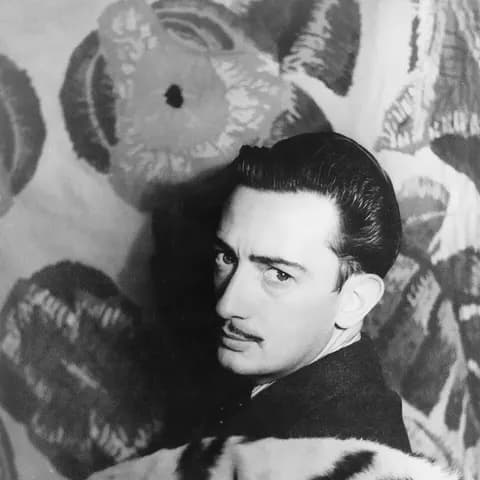 Salvador Dalí's IQSurrealist Artist, estimated 145+145+
- Claude Debussy's IQComposer, estimated 145145
- Franz Schubert's IQComposer, estimated 145145
- Joseph Haydn's IQComposer, estimated 145145
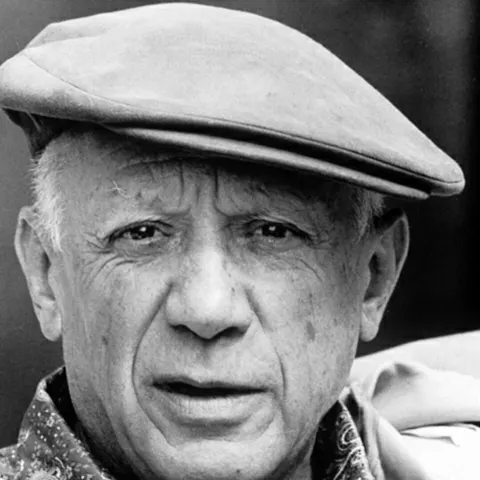 Pablo Picasso's IQArtist, estimated 145+145+
Rankings that include Brahms
- The highest IQ composers in historyRanked 9 of 12
Keep exploring
- Preference for ComplexitySign of high intelligence
- High Tolerance for AmbiguitySign of high intelligence
- Dexter (Dexter's Laboratory)'s IQDexter's Laboratory, fan estimate 145
- Doctor Strange's IQMarvel Cinematic Universe, fan estimate 145
People also search for
All 307 historical IQ estimates, ranked with ranges and sources.
Brahms' IQ is 145. What's yours?
Brahms' estimate comes from the historical record. Yours can come from a real test: 25 visual reasoning questions.
25 questions · about 12 minutes
Sources
- Johannes Brahms, Encyclopaedia Britannica. Summarises his life and works.
- Johannes Brahms, Wikipedia. Covers his early life, the Schumanns and his music.
- Cox, C. M. (1926). The Early Mental Traits of Three Hundred Geniuses. Stanford University Press.
- Simonton, D. K. (2009). Genius 101. Springer.
- Cattell, R. B. (1971). Abilities: Their Structure, Growth, and Action. Houghton Mifflin.
Last reviewed October 2026. How we estimate historical IQ