Franz Schubert IQ
Franz Schubert's IQ is unknown; no test or confirmed study figure exists. LifeScore uses about 145 (range 130 to 160) as an editorial marker for the Viennese composer who wrote over 600 songs before dying at 31.
Schubert's IQ is 145. What's yours?
25 questions · about 12 minutes
Think you're smarter than Franz Schubert? Try question 1.
Which option completes the grid? One tap, no sign-up.
Key facts
- Estimated IQ
- IQ 145
- Known for
- Over 600 songs and the Unfinished Symphony
- Lived
- Composer, 1797–1828
- Basis
- No documented estimate; editorial marker from the record
- Confidence
- Very low. Born inside the period Cox 1926 covered, but we could not confirm a Cox figure from an accessible tabulation, so none is quoted. No IQ test was ever given.
Schubert has no test and no Cox figure we could confirm. 145 is an editorial marker for a composer of astonishing speed and melodic invention.
Franz Schubert in brief
Franz Schubert was born in Vienna in 1797, the son of a schoolmaster. He won a place as a choirboy in the imperial chapel and studied with Antonio Salieri. He taught in his father's school, then lived precariously among a circle of friends who staged evenings of his music. In his short life he wrote over 600 songs, nine symphonies, chamber music and piano works, including Erlkönig at 17. He died in Vienna in 1828, aged 31.
What was Franz Schubert's IQ?
No figure exists. LifeScore lists about 145 as an editorial marker, range 130 to 160. It rests on his phenomenal speed and fluency of composition, his training with Salieri and works that became central to the repertoire.
Why is the Unfinished Symphony unfinished?
Schubert wrote two complete movements in 1822 and sketched a third, then stopped. Nobody knows why; theories include his illness, a lost finale or simply moving on. The manuscript stayed with a friend and was first performed in 1865.
How did Schubert die?
He died in November 1828, probably of typhoid fever, though he had also suffered from syphilis for several years. He was 31 and was buried, as he wished, near Beethoven.
Did Schubert meet Beethoven?
They lived in Vienna at the same time, and Schubert revered Beethoven, but there is no reliable evidence that they had a real conversation. Schubert was a torchbearer at Beethoven's funeral in 1827 and died the following year.
How smart was Franz Schubert?
- 01
Lieder
Over 600 songs, including Erlkönig and Gretchen am Spinnrade. - 02
Song cycles
Die schöne Müllerin and Winterreise. - 03
Symphonies
Including the Unfinished and the Great C major. - 04
Chamber music
The Trout Quintet and the String Quintet in C.
How Schubert thought
Schubert worked fast and intuitively, often composing a song at one sitting. His gift was melodic: finding the tune and harmony that fit a poem's meaning exactly. That depends on musical memory and verbal sensitivity working together.
The evidence behind the estimate
An estimate built from the historical record, not a recovered test score.
What supports it
- His works are catalogued in the Deutsch catalogue, with nearly 1,000 entries.
- He studied with Salieri as a teenager.
- Dated manuscripts document his speed of composition.
What it cannot prove
- Speed of composition is a musical skill, not a direct sign of IQ.
- Musical and visual genius draw on abilities, such as pitch memory and visual imagination, that an IQ test only partly samples.
- An editorial marker is a comparison aid built from achievement, not a measurement, and two careful readers could place it ten points apart.
Schubert compared with Beethoven, Mozart, Chopin
| Figure | Estimate | Range |
|---|---|---|
| Franz Schubert | 145 | 130–160 |
| Ludwig van Beethoven | 155+ | 145–165 |
| Wolfgang Amadeus Mozart | 165+ | 145–175 |
| Frédéric Chopin | 150+ | 135–160 |
How would you score?
Where would you land next to Franz Schubert?
Franz Schubert's 145 is an estimate from the historical record, with a working range of 130 to 160. On the standard IQ scale an IQ of 145 sits at the 99.87th percentile: about 1 in 741 people score that high. Nobody can test Schubert now. You can find out where you sit on the same scale.
- 100Average adult50th percentile
- 130Gifted linetop 2%, about 1 in 44
- 145Schubert's99.87th percentile, about 1 in 741
- ?Youscored on the same scale
25 questions · about 12 minutes
Psychological profile
Franz Schubert's IQ is represented here by a retrospective estimate of 145, not a verified test result. Franz Schubert is best known for exceptional melodic invention. The useful question is what the surviving evidence shows, not whether a precise modern score can be recovered.
Shy, sociable and prolific. A composer who wrote masterpieces between card games with friends.
The dominant archetype here is The Melodist. This archetype shapes decision patterns: what feels natural, what creates friction, and what blind spots tend to emerge.
Estimated IQ is 145. This is a rough estimate based on documented accomplishments and contemporary accounts, not a literal measurement.
Key traits
Melodic Invention
He wrote Erlkönig, setting Goethe's poem, at 17.Speed
In 1815 alone he composed about 140 songs.Lyric Sensitivity
Only one public concert of his music took place in his lifetime.
One thing most people do not know
His friends held parties called Schubertiads, built around performances of his music.
Franz Schubert: common questions
Was Franz Schubert a genius?
What personality type was Franz Schubert?
What can we learn from Franz Schubert?
The IQ-style test the NFL used
Franz Schubert's IQ is an estimate. Yours could be real.
Before the draft, NFL teams gave prospects the Wonderlic: 50 questions in 12 minutes, and almost nobody finishes. We collected 241 reported player scores, each with its source. The average working adult scores about 21.
People with similar IQ estimates
Franz Schubert's estimate of 145 falls in the genius level IQ range. Want your own number rather than Franz's? Take the free IQ test or the quick IQ test. See what an IQ of 145 means, place it on the IQ chart or check how rare it is with the IQ rarity calculator.
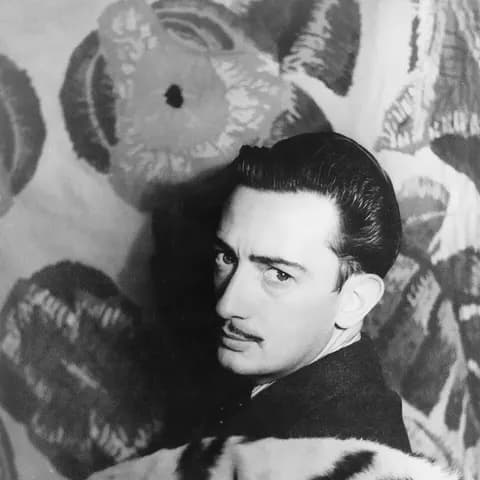 Salvador Dalí's IQSurrealist Artist, estimated 145+145+
- Claude Debussy's IQComposer, estimated 145145
- Joseph Haydn's IQComposer, estimated 145145
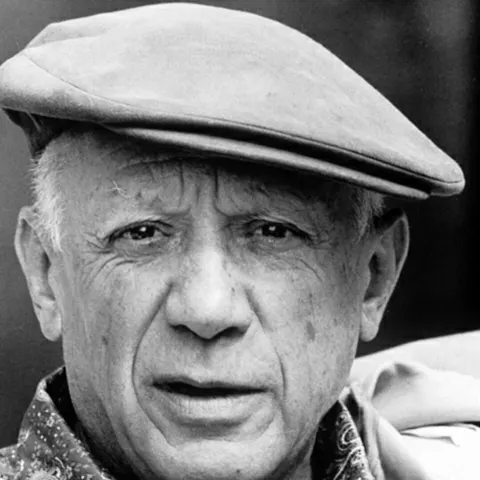 Pablo Picasso's IQArtist, estimated 145+145+
- Pyotr Ilyich Tchaikovsky's IQComposer, estimated 145145
Rankings that include Schubert
- The highest IQ composers in historyRanked 8 of 12
Keep exploring
- Quick Pattern RecognitionSign of high intelligence
- Seeing Long-Range ImplicationsSign of high intelligence
- Dexter (Dexter's Laboratory)'s IQDexter's Laboratory, fan estimate 145
- Doctor Strange's IQMarvel Cinematic Universe, fan estimate 145
People also search for
All 307 historical IQ estimates, ranked with ranges and sources.
Schubert's IQ is 145. What's yours?
Schubert's estimate comes from the historical record. Yours can come from a real test: 25 visual reasoning questions.
25 questions · about 12 minutes
Sources
- Franz Schubert, Encyclopaedia Britannica. Summarises his life and works.
- Franz Schubert, Wikipedia. Covers his training, songs and death.
- Cox, C. M. (1926). The Early Mental Traits of Three Hundred Geniuses. Stanford University Press.
- Simonton, D. K. (2009). Genius 101. Springer.
- Cattell, R. B. (1971). Abilities: Their Structure, Growth, and Action. Houghton Mifflin.
Last reviewed October 2026. How we estimate historical IQ