Josiah Willard Gibbs IQ
Josiah Willard Gibbs' IQ is unknown; no test or confirmed study figure exists. LifeScore uses about 160 (range 145 to 175) as an editorial marker for the founder of chemical thermodynamics.
Gibbs' IQ is 160. What's yours?
25 questions · about 12 minutes
Think you're smarter than Josiah Willard Gibbs? Try question 1.
Which option completes the grid? One tap, no sign-up.
Key facts
- Estimated IQ
- IQ 160
- Range
- IQ 145 to 175
- Known for
- Chemical thermodynamics, Gibbs free energy and vector analysis
- Lived
- Physicist & Chemist, 1839–1903
- Basis
- No documented estimate; editorial marker from the record
- Confidence
- Very low. Born inside the period Cox 1926 covered, but we could not confirm a Cox figure from an accessible tabulation, so none is quoted. No IQ test was ever given.
Gibbs has no test or confirmed Cox figure. 160 is an editorial marker for the theorist Einstein called the greatest mind in American history.
Josiah Willard Gibbs in brief
Josiah Willard Gibbs was born in New Haven, Connecticut, in 1839 and spent almost his whole life there. He earned the first American doctorate in engineering from Yale in 1863, studied in Paris, Berlin and Heidelberg, and became Yale's professor of mathematical physics in 1871, initially unpaid. His papers on chemical thermodynamics and his book on statistical mechanics were rigorous and terse, and European scientists recognised them before Americans did.
What was Willard Gibbs' IQ?
No figure exists. LifeScore lists about 160 as an editorial marker with a range of 145 to 175. It rests on chemical thermodynamics, his statistical mechanics and vector analysis, much of it done alone at Yale with little contact with other theorists.
What is Gibbs free energy?
It is the energy available to do useful work in a chemical reaction at constant temperature and pressure. If it falls during a reaction, the reaction can happen on its own. Chemists and engineers use it every day to predict whether reactions will run.
Why was Gibbs little known in his lifetime?
He published in the Transactions of the Connecticut Academy, a small journal, and wrote in a dense mathematical style. Maxwell in Britain and Ostwald in Germany understood his importance and promoted him, but most Americans learned of him later.
How smart was Josiah Willard Gibbs?
- 01
On the Equilibrium of Heterogeneous Substances
His 1870s papers that founded chemical thermodynamics. - 02
Gibbs free energy
The quantity that predicts whether a reaction will proceed. - 03
Statistical mechanics
His 1902 book named and systematised the field. - 04
Vector analysis
He developed the modern notation of vectors used in physics.
How Gibbs thought
Gibbs looked for the most general and compact statement of a law. He reduced whole areas of chemistry to a few equations and geometric surfaces, leaving readers to work out the consequences. That taste for economy and generality is a hallmark of abstract reasoning.
The evidence behind the estimate
An estimate built from the historical record, not a recovered test score.
What supports it
- His thermodynamic papers founded physical chemistry as a quantitative science.
- Maxwell built a physical model of his thermodynamic surface and sent him a copy.
- His statistical mechanics book remains a classic.
What it cannot prove
- He worked largely in isolation, so contemporary assessments are few.
- Achievement reflects education, opportunity, persistence and collaboration as well as raw reasoning ability.
- An editorial marker is a comparison aid built from achievement, not a measurement, and two careful readers could place it ten points apart.
Gibbs compared with Boltzmann, Maxwell, Lavoisier
| Figure | Estimate | Range |
|---|---|---|
| Josiah Willard Gibbs | 160 | 145–175 |
| Ludwig Boltzmann | 160 | 145–175 |
| James Clerk Maxwell | 165+ | 155–175 |
| Antoine Lavoisier | 150+ | 150–170 |
How would you score?
Where would you land next to Josiah Willard Gibbs?
Josiah Willard Gibbs' 160 is an estimate from the historical record, with a working range of 145 to 175. On the standard IQ scale an IQ of 160 sits at the 99.997th percentile: about 1 in 31,600 people score that high. Nobody can test Gibbs now. You can find out where you sit on the same scale.
- 100Average adult50th percentile
- 130Gifted linetop 2%, about 1 in 44
- 160Gibbs'99.997th percentile, about 1 in 31,600
- ?Youscored on the same scale
25 questions · about 12 minutes
Psychological profile
Josiah Willard Gibbs's IQ is represented here by a retrospective estimate of 160, not a verified test result. Josiah Willard Gibbs is best known for exceptional abstraction. The useful question is what the surviving evidence shows, not whether a precise modern score can be recovered.
Reserved, modest and precise. He lived quietly in New Haven and wrote work so compressed that few could follow it.
The dominant archetype here is The Theorist. This archetype shapes decision patterns: what feels natural, what creates friction, and what blind spots tend to emerge.
Estimated IQ is 160. This is a rough estimate based on documented accomplishments and contemporary accounts, not a literal measurement.
Key traits
Abstraction
His first Yale doctorate was the first in engineering awarded in the United States.Rigour
He taught at Yale without salary for his first nine years as professor.Economy
Einstein reportedly called him the greatest mind in American history.
One thing most people do not know
Maxwell made a plaster model of a Gibbs thermodynamic surface and sent a cast to Gibbs in New Haven.
Josiah Willard Gibbs: common questions
Was Josiah Willard Gibbs a genius?
What personality type was Josiah Willard Gibbs?
What can we learn from Josiah Willard Gibbs?
The IQ-style test the NFL used
Josiah Willard Gibbs' IQ is an estimate. Yours could be real.
Before the draft, NFL teams gave prospects the Wonderlic: 50 questions in 12 minutes, and almost nobody finishes. We collected 241 reported player scores, each with its source. The average working adult scores about 21.
People with similar IQ estimates
Josiah Willard Gibbs' estimate of 160 falls in the profoundly gifted IQ range. Want your own number rather than Josiah's? Take the free IQ test or the quick IQ test. See what an IQ of 160 means, place it on the IQ chart or check how rare it is with the IQ rarity calculator.
- Richard Feynman's IQTheoretical Physicist, estimated 160+160+
- Robert Hooke's IQNatural Philosopher & Architect, estimated 160160
- Subrahmanyan Chandrasekhar's IQAstrophysicist, estimated 160160
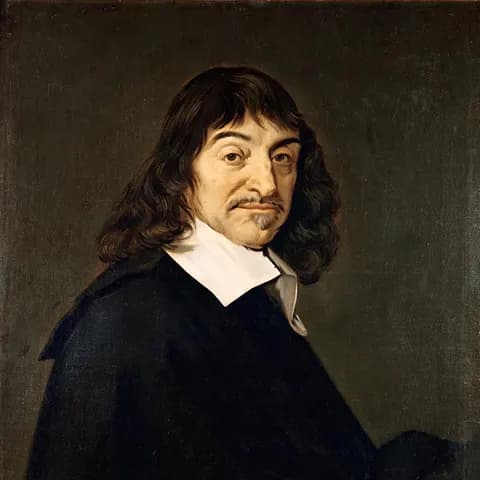 René Descartes' IQPhilosopher & Mathematician, estimated 160+160+
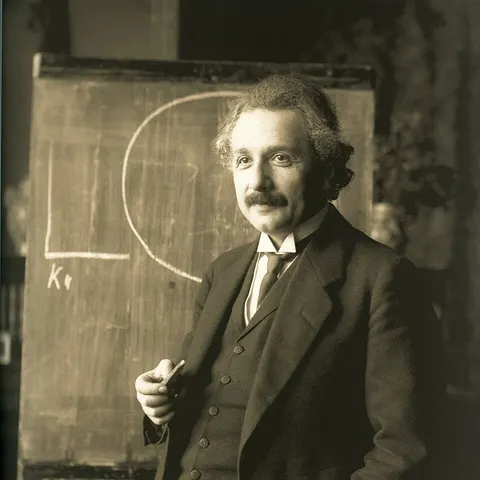 Albert Einstein's IQPhysicist, estimated 160+160+
Rankings that include Gibbs
- The highest IQ scientists in historyRanked 24 of 74
Keep exploring
- Abstract Conceptual ThinkingSign of high intelligence
- Subtle Signs Someone is Smarter Than You ThinkSign of high intelligence
- L Lawliet's IQDeath Note, fan estimate 160
- Tony Stark's IQIron Man, fan estimate 160
People also search for
All 307 historical IQ estimates, ranked with ranges and sources.
Gibbs' IQ is 160. What's yours?
Gibbs' estimate comes from the historical record. Yours can come from a real test: 25 visual reasoning questions.
25 questions · about 12 minutes
Sources
- Josiah Willard Gibbs biography, MacTutor, University of St Andrews. Covers his life at Yale and his main works.
- J. Willard Gibbs, Encyclopaedia Britannica. Summarises his thermodynamics and statistical mechanics.
- Cox, C. M. (1926). The Early Mental Traits of Three Hundred Geniuses. Stanford University Press.
- Simonton, D. K. (2009). Genius 101. Springer.
- Cattell, R. B. (1971). Abilities: Their Structure, Growth, and Action. Houghton Mifflin.
Last reviewed October 2026. How we estimate historical IQ