Socrates IQ
Socrates' IQ is estimated at 145 to 165, with very low confidence. He wrote nothing down, so everything rests on Plato and Xenophon.
Socrates' IQ is 155+. What's yours?
25 questions · about 12 minutes
Think you're smarter than Socrates? Try question 1.
Which option completes the grid? One tap, no sign-up.
Key facts
- Estimated IQ
- IQ 155+
- Known for
- The Socratic method
- Lived
- Philosopher, c. 470–399 BC
- Basis
- Accounts by Plato and Xenophon; no test
- Confidence
- Very low. Impossible: Socrates died in 399 BC and left no writing of his own.
Everything we know about Socrates' mind comes from Plato, Xenophon and Aristophanes, so 155+ is a label for his influence, not a measurement.
What was Socrates' IQ?
Nobody can know. Socrates died in 399 BC, wrote nothing and is known only through Plato, Xenophon and the playwright Aristophanes. LifeScore uses 155+ as an editorial marker with a range of 145 to 165, reflecting the lasting power of his method, not a measurement.
How smart was Socrates?
Smart enough that philosophy is still divided into before and after him. His method of questioning, testing a definition until it breaks, shaped Plato, Aristotle and modern teaching. The Delphic oracle reportedly said no one was wiser; he concluded it was because he knew how little he knew.
Socrates' key achievements
- 01
The Socratic method
His habit of testing beliefs through questions is still how law schools and seminars teach. - 02
Teacher of Plato
Plato's dialogues, and through them Aristotle, grew out of conversations with Socrates. - 03
His defence at trial
Charged with impiety and corrupting the young in 399 BC, he argued his case rather than beg, as Plato records in the Apology. - 04
Soldier and citizen
He served as a heavy infantryman in several campaigns and was praised for his courage.
How Socrates thought
Socrates claimed to know nothing and asked questions instead. In Plato's dialogues he gets a confident speaker to define a virtue, then asks follow-ups until the definition contradicts itself. The aim was not to win but to expose what nobody really understood.
The evidence behind the estimate
An estimate built from the historical record, not a recovered test score.
What supports it
- His method of questioning, the elenchus, became the model for philosophical argument and for modern Socratic teaching.
- Plato's dialogues show him taking apart definitions of justice, courage and piety one step at a time.
- His trial and his refusal to escape, described in the Apology and the Crito, made him a lasting model of arguing to the end.
What it cannot prove
- We cannot fully separate the historical Socrates from the character Plato wrote.
- No text by Socrates survives.
- Philosophical influence is not a measure of reasoning speed or memory.
Psychological profile
Socrates's IQ is represented here by a retrospective estimate of 155+, not a verified test result. Socrates is best known for exceptional critical thinking. The useful question is what the surviving evidence shows, not whether a precise modern score can be recovered.
Extreme openness with low need for social approval. The gadfly of Athens: valued truth over popularity, questions over answers.
The dominant archetype here is The Sage. This archetype shapes decision patterns: what feels natural, what creates friction, and what blind spots tend to emerge.
Estimated IQ is 155+. This is a rough estimate based on documented accomplishments and contemporary accounts, not a literal measurement.
Key traits
Critical thinking
Socrates displayed notable critical thinking, a trait that shaped their approach to challenges and opportunities.Intellectual humility
Socrates displayed notable intellectual humility, a trait that shaped their approach to challenges and opportunities.Courage
Socrates displayed notable courage, a trait that shaped their approach to challenges and opportunities.
One thing most people do not know
His friends described him, fondly, as strikingly ugly, with a snub nose and bulging eyes.
A modern parallel
Noam Chomsky shows a contemporary version of Socrates's working style. The era is different, but patterns such as risk tolerance and social strategy look similar. This is not an IQ comparison.
Socrates: common questions
Was Socrates a genius?
What personality type was Socrates?
Who is the modern equivalent of Socrates?
What can we learn from Socrates?
People with similar IQ estimates
Socrates' estimate of 155+ falls in the genius level IQ range. See what an IQ of 155 means, place it on the IQ chart or check how rare it is with the IQ rarity calculator.
 Adam Smith's IQEconomist & Philosopher, estimated 155+155+
 Baruch Spinoza's IQPhilosopher, estimated 155+155+
- Bill Gates' IQMicrosoft Co-founder, estimated 155+155+
 Friedrich Nietzsche's IQPhilosopher, estimated 155+155+
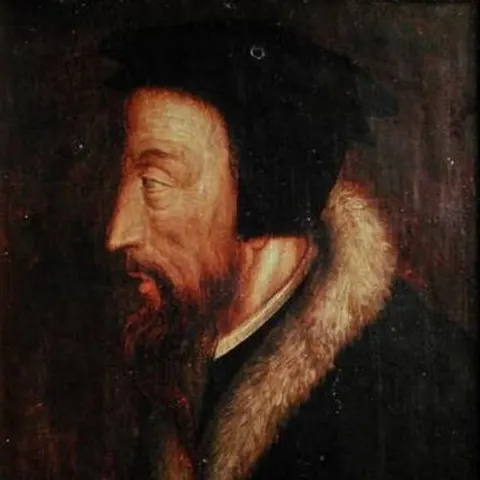 John Calvin's IQTheologian & Reformer, estimated 155+155+
Head-to-head
- Friedrich Nietzsche vs SocratesSide-by-side IQ estimates and evidence
Keep exploring
- Cross-Domain Pattern TransferSign of high intelligence
- Creative Divergent ThinkingSign of high intelligence
- Light Yagami's IQDeath Note, fan estimate 155
- Kurisu Makise's IQSteins;Gate, fan estimate 155
People also search for
All 157 historical IQ estimates, ranked with ranges and sources.
Socrates' IQ is 155+. What's yours?
Socrates' estimate comes from the historical record. Yours can come from a real test: 25 visual reasoning questions.
25 questions · about 12 minutes
Sources
- Socrates, Stanford Encyclopedia of Philosophy. Scholarly account of the sources on Socrates and the "Socratic problem".
- Socrates, Encyclopaedia Britannica. Biography covering his life, method, trial and death.
- Cox, C. M. (1926). The Early Mental Traits of Three Hundred Geniuses. Stanford University Press.
- Simonton, D. K. (2009). Genius 101. Springer.
- Cattell, R. B. (1971). Abilities: Their Structure, Growth, and Action. Houghton Mifflin.
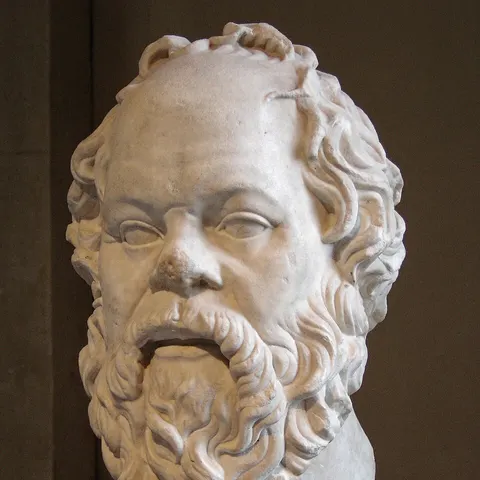
- Portrait: Copy of Lysippos (?) · Public domain · Wikimedia Commons
Last reviewed September 2026. How we estimate historical IQ