John Calvin IQ
John Calvin's IQ is estimated at 153 to 175. Catharine Cox's 1926 study gave him a corrected 175; he never took a test. He published the first edition of his main work, the Institutes, at 26.
Calvin's IQ is 155+. What's yours?
25 questions · about 12 minutes
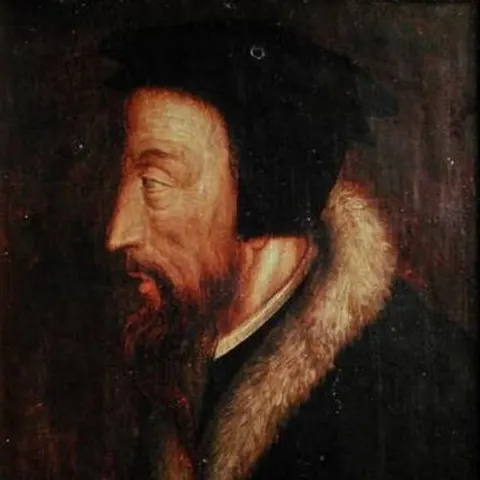
Key facts
- Estimated IQ
- 155+
- Known for
- The Institutes of the Christian Religion and the Geneva reforms
- Lived
- Theologian & Reformer, 1509–1564
- Basis
- Cox 1926 historiometric estimate
- Confidence
- Low. Calvin died in 1564. No IQ test was ever given; the figure comes from a 1926 study that rated historical figures from biographies.
Cox's corrected estimate for Calvin was 175. The Institutes and his commentaries are the documented evidence.
What was John Calvin's IQ?
Calvin never took an IQ test. Catharine Cox's 1926 study gave him a corrected estimate of 175. Adjusted for the Flynn effect that is about 153, so LifeScore uses a range of 153 to 175, with 155+ as the marker. His writing speed and range are documented.
How old was Calvin when he wrote the Institutes?
He was 26 when the first edition appeared in 1536, as a short handbook. He kept revising it, and the final Latin edition of 1559 was several times longer. He also wrote commentaries on most books of the Bible, and preached and taught almost daily in Geneva.
Luther or Calvin: who was smarter?
Cox's 1926 figures give Calvin 175 and Luther 170, a five-point gap that is well inside her uncertainty. They had different strengths: Luther was the bolder public figure and writer, while Calvin was the more systematic organiser of doctrine and church government.
Where does the 175 figure come from?
The 175 is Catharine Cox's corrected estimate from her 1926 study of 301 eminent people born between 1450 and 1850. She rated each person from biographical records of what they could do as a child and young adult, then corrected for gaps in the record.
Cox's numbers sit on an old ratio-IQ scale. One secondary tabulation subtracts about 22 points for the Flynn effect, which puts John Calvin near 155.
LifeScore lists 155+, and the working range of 155 to 175 spans both figures. None of them is a test result.
How smart was John Calvin?
- 01
The Institutes
Its first edition appeared in 1536, when he was 26, and it grew through five Latin editions to 1559. - 02
Biblical commentaries
He wrote commentaries on most books of the Bible, widely read for their clear style. - 03
Reforming Geneva
From 1541 he helped build a church structure and schools, including the Geneva Academy in 1559. - 04
Training as a lawyer
He studied law at Orléans, which shows in the precise structure of his writing.
How Calvin thought
Calvin worked by laying out a system and defending each part with text and logic. He revised the Institutes again and again to tighten the argument, and his French prose helped set a standard for clear writing in that language.
The evidence behind the estimate
An estimate built from the historical record, not a recovered test score.
What supports it
- Cox's 1926 study gave Calvin a corrected estimate of 175, which falls to about 153 after a Flynn-effect adjustment.
- He published the first edition of the Institutes at 26 and revised it through 1559.
- He wrote commentaries on most books of the Bible and helped found the Geneva Academy in 1559.
What it cannot prove
- Writing output depends on years of work and an organised church around him.
- His role in the Servetus execution is a reminder that ability is not the same as judgement.
- Cox's scale runs higher than modern deviation IQ, by roughly 22 points in one tabulation.
Calvin compared with Luther, More, Machiavelli
| Figure | Estimate | Range |
|---|---|---|
| John Calvin | 155+ | 155–175 |
| Martin Luther | 150+ | 150–170 |
| Thomas More | 135+ | 135–155 |
| Niccolò Machiavelli | 145+ | 135–155 |
Psychological profile
John Calvin's IQ is represented here by a retrospective estimate of 155+, not a verified test result. John Calvin is best known for exceptional systematic writing. The useful question is what the surviving evidence shows, not whether a precise modern score can be recovered.
Precise, disciplined and exacting. A lawyer by training who organised Protestant doctrine into a clear system.
The dominant archetype here is The Architect. This archetype shapes decision patterns: what feels natural, what creates friction, and what blind spots tend to emerge.
Estimated IQ is 155+. This is a rough estimate based on documented accomplishments and contemporary accounts, not a literal measurement.
Key traits
Systematic Writing
He studied in Paris, Orléans and Bourges, and was trained in both theology and law.Discipline
He was often ill but kept a punishing schedule of sermons, lectures and letters.Legal Training
He supported the 1553 execution of Michael Servetus for heresy, which remains a major criticism of him.
One thing most people do not know
Calvin was a refugee in Geneva, driven out in 1538 and recalled in 1541.
John Calvin: common questions
Was John Calvin a genius?
What personality type was John Calvin?
What can we learn from John Calvin?
More famous IQs
 Martin Luther IQTheologian & Reformer150+
 Thomas More IQLawyer, Writer & Statesman135+
 Niccolò Machiavelli IQPolitical Philosopher & Diplomat145+
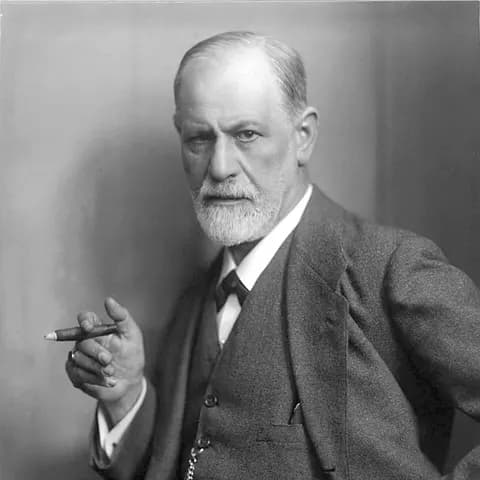 Sigmund Freud IQFather of Psychoanalysis140+
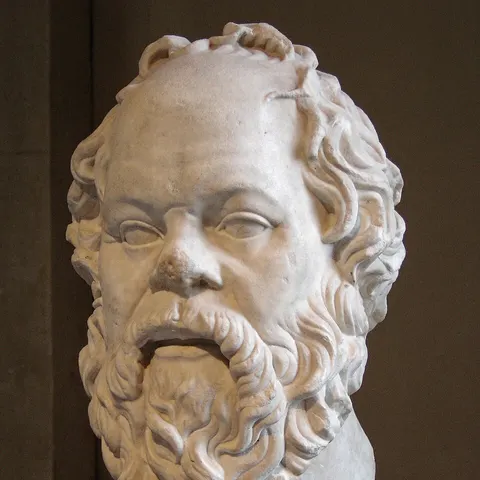 Socrates IQPhilosopher155+
- Confucius IQPhilosopher145+
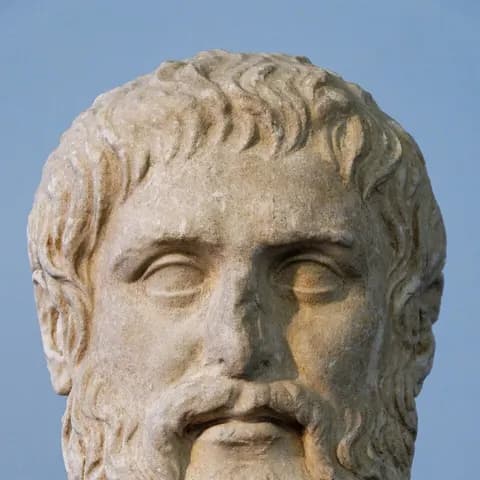 Plato IQPhilosopher160+
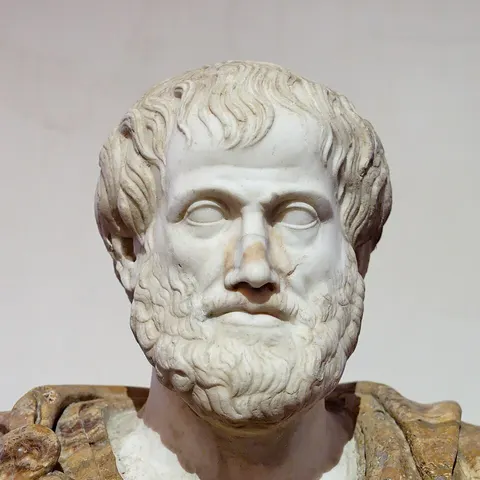 Aristotle IQPhilosopher & Polymath160+
Keep exploring
- All famous IQs, ranked157 figures with ranges and sources
- What an IQ of 155 meansPercentile, rarity and classification
- What an IQ of 175 meansPercentile, rarity and classification
- Quick Pattern RecognitionSigns of high intelligence
- Rapid Learning SpeedSigns of high intelligence
- Einstein IQ testA short visual reasoning challenge
Calvin's IQ is 155+. What's yours?
Calvin's estimate comes from the historical record. Yours can come from a real test: 25 visual reasoning questions.
25 questions · about 12 minutes
Sources
- John Calvin, Stanford Encyclopedia of Philosophy. Scholarly account of his life, writing and theology.
- The Early Mental Traits of Three Hundred Geniuses (Cox, 1926), Stanford University Press, via Internet Archive. The original historiometric study. Cox rated 301 eminent people born 1450 to 1850 from records of their childhood and youth.
- Cox's IQ estimates of 301 eminent geniuses, IQ Comparison Site. Secondary tabulation of Cox's corrected estimates, with a version adjusted by about 22 points for the Flynn effect.
- Cox, C. M. (1926). The Early Mental Traits of Three Hundred Geniuses. Stanford University Press.
- Simonton, D. K. (2009). Genius 101. Springer.
- Cattell, R. B. (1971). Abilities: Their Structure, Growth, and Action. Houghton Mifflin.
- Portrait: Portrait_john_calvin.jpg: Anonymous · Public domain · Wikimedia Commons
Last reviewed September 2026. How we estimate historical IQ