Desiderius Erasmus IQ
Erasmus's IQ is unknown; no test or confirmed study figure exists. LifeScore uses about 155 (range 140 to 170) as an editorial marker for the humanist who edited the Greek New Testament and wrote In Praise of Folly.
Erasmus' IQ is 155. What's yours?
25 questions · about 12 minutes
Think you're smarter than Desiderius Erasmus? Try question 1.
Which option completes the grid? One tap, no sign-up.
Key facts
- Estimated IQ
- IQ 155
- Known for
- In Praise of Folly and his Greek New Testament
- Lived
- Humanist Scholar, c. 1466–1536
- Basis
- No documented estimate; editorial marker from the record
- Confidence
- Very low. Born inside the period Cox 1926 covered, but we could not confirm a Cox figure from an accessible tabulation, so none is quoted. No IQ test was ever given.
Erasmus has no test and no Cox figure we could confirm. 155 is an editorial marker for the most celebrated scholar of the Northern Renaissance.
Desiderius Erasmus in brief
Erasmus was born in Rotterdam around 1466, the illegitimate son of a priest. Orphaned young, he became an Augustinian canon, then studied in Paris and travelled across Europe as a scholar. He taught at Cambridge and befriended Thomas More. He published a new Greek New Testament in 1516, the satire In Praise of Folly and widely used textbooks of Latin. He criticised church abuses but refused to join Luther's break. He died in Basel in 1536.
What was Erasmus's IQ?
No figure exists. LifeScore lists about 155 as an editorial marker, range 140 to 170. It rests on his mastery of Latin and Greek, a huge scholarly output and works of satire that are still read five centuries later.
Why was Erasmus's New Testament important?
His 1516 edition printed the Greek text alongside a fresh Latin translation, inviting comparison with the official Vulgate. It became the basis of the Textus Receptus used for Protestant translations, including Luther's German Bible.
Did Erasmus support Luther?
At first he shared many of Luther's criticisms of church abuses, and people said he laid the egg that Luther hatched. But he valued unity and moderation, refused to leave the Catholic Church and debated Luther on free will in 1524.
Where did Erasmus live?
Almost everywhere in Western Europe: Paris, England, Italy, Leuven, Basel and Freiburg. He wanted to stay independent of any one patron or country and called himself a citizen of the world. The European Union's student exchange programme, Erasmus, is named after him.
How smart was Desiderius Erasmus?
- 01
Novum Instrumentum (1516)
The first published Greek New Testament. - 02
In Praise of Folly (1511)
A satire of church and society. - 03
Adagia
A collection of over 4,000 classical proverbs. - 04
Educational works
Textbooks of Latin style used for centuries.
How Erasmus thought
Erasmus reasoned by returning to sources: compare texts, find errors and correct them. His satire shows the other side of his mind, the ability to see the absurdity in respected customs. Both rest on very high verbal intelligence.
The evidence behind the estimate
An estimate built from the historical record, not a recovered test score.
What supports it
- His editions and letters, over 3,000 of them, survive.
- He was the best-selling author in Europe in the 1520s.
- He taught Greek at Cambridge.
What it cannot prove
- Printing gave his work unusual reach.
- Influence in philosophy depends on timing, institutions and readers as well as on the power of the reasoning.
- An editorial marker is a comparison aid built from achievement, not a measurement, and two careful readers could place it ten points apart.
Erasmus compared with More, Luther, Montaigne
| Figure | Estimate | Range |
|---|---|---|
| Desiderius Erasmus | 155 | 140–170 |
| Thomas More | 135+ | 135–155 |
| Martin Luther | 150+ | 150–170 |
| Michel de Montaigne | 155 | 140–170 |
How would you score?
Where would you land next to Desiderius Erasmus?
Desiderius Erasmus' 155 is an estimate from the historical record, with a working range of 140 to 170. On the standard IQ scale an IQ of 155 sits at the 99.99th percentile: about 1 in 8,137 people score that high. Nobody can test Erasmus now. You can find out where you sit on the same scale.
- 100Average adult50th percentile
- 130Gifted linetop 2%, about 1 in 44
- 155Erasmus'99.99th percentile, about 1 in 8,137
- ?Youscored on the same scale
25 questions · about 12 minutes
Psychological profile
Desiderius Erasmus's IQ is represented here by a retrospective estimate of 155, not a verified test result. Desiderius Erasmus is best known for exceptional philological skill. The useful question is what the surviving evidence shows, not whether a precise modern score can be recovered.
Witty, cautious and cosmopolitan. A scholar of peace in an age of religious war.
The dominant archetype here is The Humanist. This archetype shapes decision patterns: what feels natural, what creates friction, and what blind spots tend to emerge.
Estimated IQ is 155. This is a rough estimate based on documented accomplishments and contemporary accounts, not a literal measurement.
Key traits
Philological Skill
His Greek New Testament was used by Luther and by the translators of the King James Bible.Satire
He wrote In Praise of Folly in about a week while staying with Thomas More.Moderation
His Adages collected and explained thousands of classical proverbs.
One thing most people do not know
He chose his own name: Desiderius and Erasmus both mean "beloved" or "desired", in Latin and Greek.
Desiderius Erasmus: common questions
Was Desiderius Erasmus a genius?
What personality type was Desiderius Erasmus?
What can we learn from Desiderius Erasmus?
The IQ-style test the NFL used
Desiderius Erasmus' IQ is an estimate. Yours could be real.
Before the draft, NFL teams gave prospects the Wonderlic: 50 questions in 12 minutes, and almost nobody finishes. We collected 241 reported player scores, each with its source. The average working adult scores about 21.
People with similar IQ estimates
Desiderius Erasmus' estimate of 155 falls in the genius level IQ range. Want your own number rather than Desiderius's? Take the free IQ test or the quick IQ test. See what an IQ of 155 means, place it on the IQ chart or check how rare it is with the IQ rarity calculator.
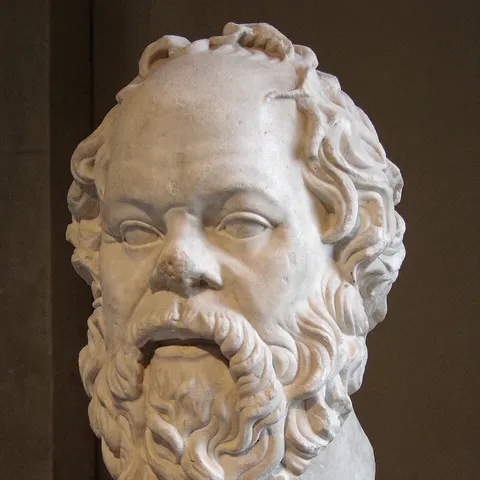 Socrates' IQPhilosopher, estimated 155+155+
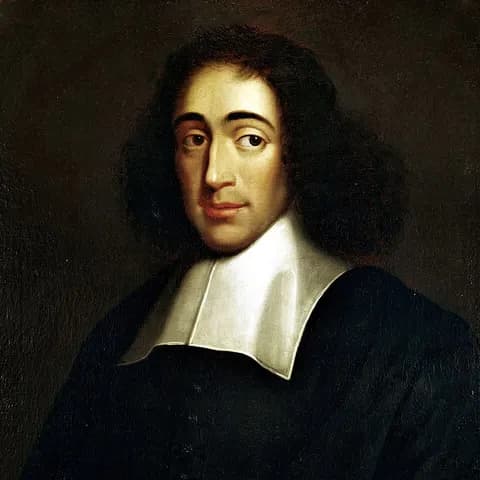 Baruch Spinoza's IQPhilosopher, estimated 155+155+
 Friedrich Nietzsche's IQPhilosopher, estimated 155+155+
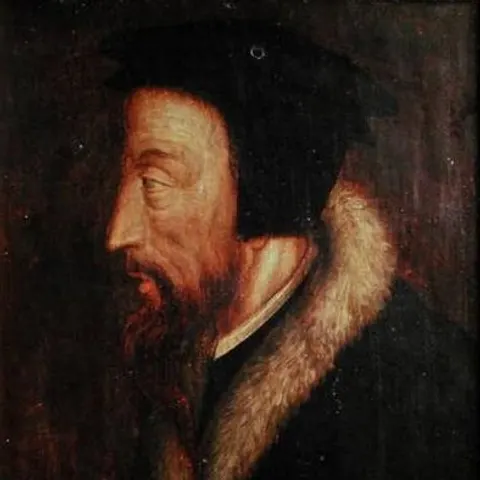 John Calvin's IQTheologian & Reformer, estimated 155+155+
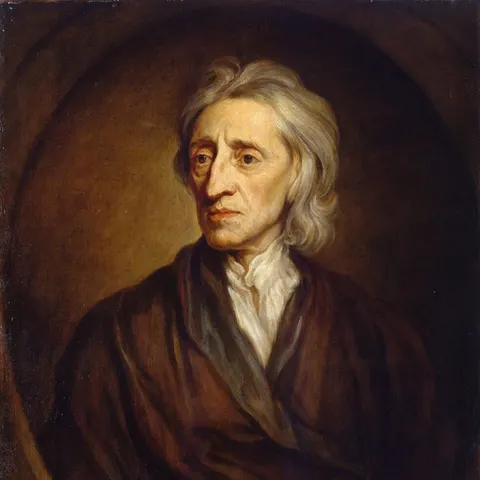 John Locke's IQPhilosopher, estimated 155+155+
Rankings that include Erasmus
- The highest IQ philosophers in historyRanked 17 of 43
Keep exploring
- Cross-Domain Pattern TransferSign of high intelligence
- Preference for ComplexitySign of high intelligence
- Light Yagami's IQDeath Note, fan estimate 155
- Kurisu Makise's IQSteins;Gate, fan estimate 155
People also search for
All 307 historical IQ estimates, ranked with ranges and sources.
Erasmus' IQ is 155. What's yours?
Erasmus' estimate comes from the historical record. Yours can come from a real test: 25 visual reasoning questions.
25 questions · about 12 minutes
Sources
- Desiderius Erasmus, Stanford Encyclopedia of Philosophy. Covers his life, scholarship and thought.
- Desiderius Erasmus, Encyclopaedia Britannica. Summarises his life and works.
- Cox, C. M. (1926). The Early Mental Traits of Three Hundred Geniuses. Stanford University Press.
- Simonton, D. K. (2009). Genius 101. Springer.
- Cattell, R. B. (1971). Abilities: Their Structure, Growth, and Action. Houghton Mifflin.
Last reviewed October 2026. How we estimate historical IQ