Michel de Montaigne IQ
Michel de Montaigne's IQ is unknown; no test or confirmed study figure exists. LifeScore uses about 155 (range 140 to 170) as an editorial marker for the magistrate and mayor who invented the essay.
Montaigne's IQ is 155. What's yours?
25 questions · about 12 minutes
Think you're smarter than Michel de Montaigne? Try question 1.
Which option completes the grid? One tap, no sign-up.
Key facts
- Estimated IQ
- IQ 155
- Known for
- Inventing the essay as a literary form
- Lived
- Essayist, 1533–1592
- Basis
- No documented estimate; editorial marker from the record
- Confidence
- Very low. Born inside the period Cox 1926 covered, but we could not confirm a Cox figure from an accessible tabulation, so none is quoted. No IQ test was ever given.
Montaigne has no test and no Cox figure we could confirm. 155 is an editorial marker for a Latin-speaking child who became the inventor of the personal essay.
Michel de Montaigne in brief
Michel de Montaigne was born near Bordeaux in 1533 to a wealthy family. His father had him taught Latin as his first language, with servants forbidden to speak French to him. He studied law and served as a magistrate in the Bordeaux parliament. At 38 he retired to his tower library and began writing the Essays, short explorations of his own mind and of human nature. He served two terms as mayor of Bordeaux during the Wars of Religion. He died in 1592.
What was Montaigne's IQ?
No figure exists. LifeScore lists about 155 as an editorial marker, range 140 to 170. It rests on his native Latin, his wide classical reading and the Essays, which invented a form and an honest, sceptical way of thinking on the page.
What does "essay" mean?
Montaigne called his pieces essais, French for "attempts" or "trials". Each one tests an idea, such as friendship, cannibals or experience, by turning it over from different angles, with no claim to a final answer.
Who did Montaigne influence?
Shakespeare seems to have read him in translation, Descartes and Pascal argued with him, and writers from Emerson and Nietzsche to Virginia Woolf admired him. The modern personal essay descends directly from his work.
How smart was Michel de Montaigne?
- 01
The Essays
Three books published between 1580 and 1588. - 02
Mayor of Bordeaux
Two terms, 1581 to 1585. - 03
Political mediation
Negotiated between Catholic and Protestant leaders. - 04
Travel journal
An account of his 1580 to 1581 journey through Europe.
How Montaigne thought
Montaigne reasoned by doubt. He questioned customs, beliefs and his own reliability, noting how often reason contradicts itself. Willingness to test your own thinking is a key part of good reasoning, and rarer than raw speed.
The evidence behind the estimate
An estimate built from the historical record, not a recovered test score.
What supports it
- The Essays went through several revised editions in his lifetime.
- He served as a magistrate and as mayor of Bordeaux.
- His Latin-first education is described in his own writing.
What it cannot prove
- An unusual education gave him a large head start.
- Influence in philosophy depends on timing, institutions and readers as well as on the power of the reasoning.
- An editorial marker is a comparison aid built from achievement, not a measurement, and two careful readers could place it ten points apart.
Montaigne compared with Descartes, Pascal, Erasmus
| Figure | Estimate | Range |
|---|---|---|
| Michel de Montaigne | 155 | 140–170 |
| René Descartes | 160+ | 160–180 |
| Blaise Pascal | 165+ | 165–195 |
| Desiderius Erasmus | 155 | 140–170 |
How would you score?
Where would you land next to Michel de Montaigne?
Michel de Montaigne's 155 is an estimate from the historical record, with a working range of 140 to 170. On the standard IQ scale an IQ of 155 sits at the 99.99th percentile: about 1 in 8,137 people score that high. Nobody can test Montaigne now. You can find out where you sit on the same scale.
- 100Average adult50th percentile
- 130Gifted linetop 2%, about 1 in 44
- 155Montaigne's99.99th percentile, about 1 in 8,137
- ?Youscored on the same scale
25 questions · about 12 minutes
Psychological profile
Michel de Montaigne's IQ is represented here by a retrospective estimate of 155, not a verified test result. Michel de Montaigne is best known for exceptional self-observation. The useful question is what the surviving evidence shows, not whether a precise modern score can be recovered.
Curious, sceptical and humane. A man who studied himself to understand everyone.
The dominant archetype here is The Sceptic. This archetype shapes decision patterns: what feels natural, what creates friction, and what blind spots tend to emerge.
Estimated IQ is 155. This is a rough estimate based on documented accomplishments and contemporary accounts, not a literal measurement.
Key traits
Self-observation
He spoke Latin before French, thanks to his father's experiment in education.Scepticism
His motto was "Que sais-je?", meaning "What do I know?".Verbal Range
He painted quotations from classical authors on the beams of his library.
One thing most people do not know
He wrote that when he played with his cat, he could not be sure whether he was playing with her or she with him.
Michel de Montaigne: common questions
Was Michel de Montaigne a genius?
What personality type was Michel de Montaigne?
What can we learn from Michel de Montaigne?
The IQ-style test the NFL used
Michel de Montaigne's IQ is an estimate. Yours could be real.
Before the draft, NFL teams gave prospects the Wonderlic: 50 questions in 12 minutes, and almost nobody finishes. We collected 241 reported player scores, each with its source. The average working adult scores about 21.
People with similar IQ estimates
Michel de Montaigne's estimate of 155 falls in the genius level IQ range. Want your own number rather than Michel's? Take the free IQ test or the quick IQ test. See what an IQ of 155 means, place it on the IQ chart or check how rare it is with the IQ rarity calculator.
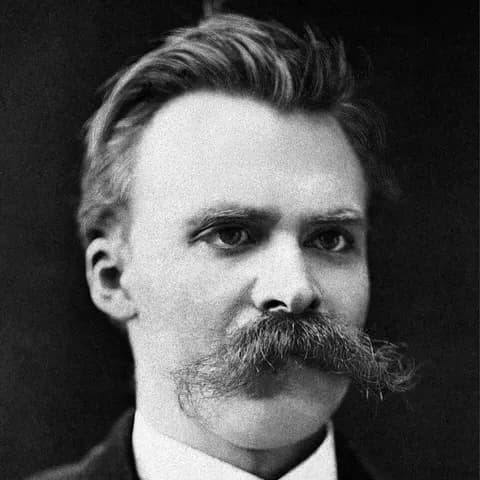 Friedrich Nietzsche's IQPhilosopher, estimated 155+155+
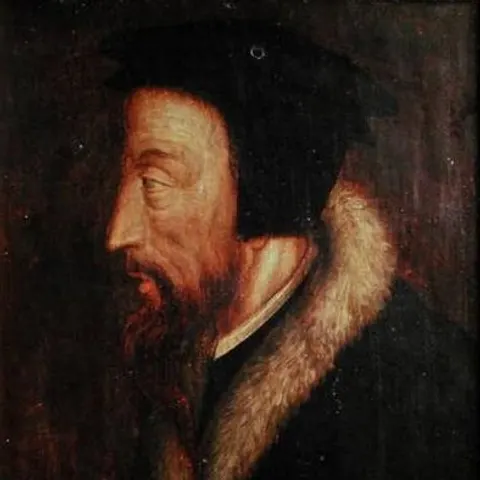 John Calvin's IQTheologian & Reformer, estimated 155+155+
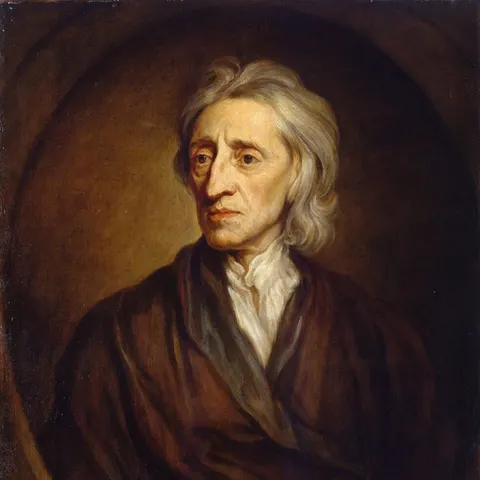 John Locke's IQPhilosopher, estimated 155+155+
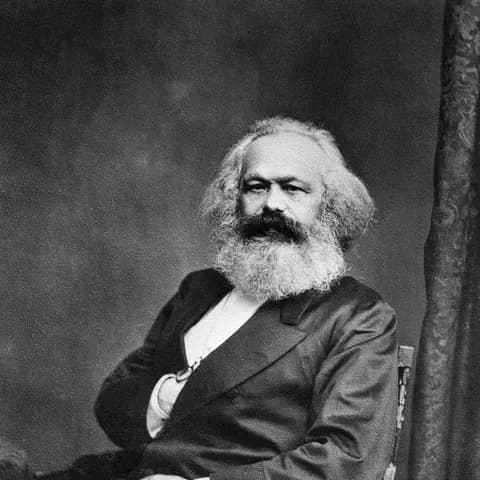 Karl Marx's IQPhilosopher & Economist, estimated 155+155+
- Saint Augustine's IQTheologian & Philosopher, estimated 155155
Rankings that include Montaigne
- The highest IQ philosophers in historyRanked 22 of 43
Keep exploring
- Abstract Conceptual ThinkingSign of high intelligence
- Deep Intellectual CuriositySign of high intelligence
- Light Yagami's IQDeath Note, fan estimate 155
- Kurisu Makise's IQSteins;Gate, fan estimate 155
People also search for
All 307 historical IQ estimates, ranked with ranges and sources.
Montaigne's IQ is 155. What's yours?
Montaigne's estimate comes from the historical record. Yours can come from a real test: 25 visual reasoning questions.
25 questions · about 12 minutes
Sources
- Michel de Montaigne, Stanford Encyclopedia of Philosophy. Covers his life, scepticism and the Essays.
- Michel de Montaigne, Encyclopaedia Britannica. Summarises his life and works.
- Cox, C. M. (1926). The Early Mental Traits of Three Hundred Geniuses. Stanford University Press.
- Simonton, D. K. (2009). Genius 101. Springer.
- Cattell, R. B. (1971). Abilities: Their Structure, Growth, and Action. Houghton Mifflin.
Last reviewed October 2026. How we estimate historical IQ