Saint Augustine IQ
Saint Augustine's IQ is unknown; he died in 430. LifeScore uses about 155 (range 140 to 170) as an editorial marker for the rhetoric professor turned bishop whose Confessions and City of God shaped Western thought.
Augustine's IQ is 155. What's yours?
25 questions · about 12 minutes
Think you're smarter than Saint Augustine? Try question 1.
Which option completes the grid? One tap, no sign-up.
Key facts
- Estimated IQ
- IQ 155
- Known for
- The Confessions and The City of God
- Lived
- Theologian & Philosopher, 354–430
- Basis
- No documented estimate; editorial marker from the record
- Confidence
- Very low. Lived long before IQ testing and before the period Cox 1926 covered. No test or published estimate exists.
Augustine has no test or estimate. 155 is an editorial marker for a professor of rhetoric whose writing shaped Western theology and introspection.
Saint Augustine in brief
Augustine was born in 354 in Thagaste, in Roman North Africa, to a pagan father and a Christian mother, Monica. He studied rhetoric at Carthage, taught it in Rome and Milan and followed Manichaeism and then Neoplatonism. In 386 he converted to Christianity, an experience told in his Confessions. He became bishop of Hippo in 395 and wrote The City of God after the sack of Rome. He died in 430 as Vandals besieged the city.
What was Saint Augustine's IQ?
No figure exists, and he lived over a thousand years before the Cox 1926 period. LifeScore lists about 155 as an editorial marker, range 140 to 170. It rests on his rhetorical career, his vast output of around five million words and the originality of his ideas on time, memory and the self.
What did Augustine say about time?
In Book 11 of the Confessions he asks what time is and finds that the past no longer exists and the future does not yet exist. He concludes that time lives in the mind as memory, attention and expectation. Philosophers still discuss the argument.
Why did Augustine write The City of God?
After the Visigoths sacked Rome in 410, pagans blamed Christianity for the disaster. Augustine replied over 13 years and 22 books, contrasting the earthly city with the City of God and giving a Christian view of history.
How smart was Saint Augustine?
- 01
Confessions
An intimate account of his life and conversion. - 02
The City of God
A Christian philosophy of history in 22 books. - 03
On the Trinity
A major work of theology using analogies of the mind. - 04
Doctor of the Church
One of the most influential theologians in Christianity.
How Augustine thought
Augustine turned argument inward. He used the tools of a professional rhetorician to examine memory, will and time in his own experience. That self-observation, then generalisation to all minds, is a distinctive and powerful style of reasoning.
The evidence behind the estimate
An estimate built from the historical record, not a recovered test score.
What supports it
- He held the imperial chair of rhetoric in Milan.
- More of his writing survives than of almost any other ancient author.
- His arguments on time and the self are still discussed by philosophers.
What it cannot prove
- Ancient biographies were written by followers.
- Influence in philosophy depends on timing, institutions and readers as well as on the power of the reasoning.
- An editorial marker is a comparison aid built from achievement, not a measurement, and two careful readers could place it ten points apart.
Augustine compared with Aquinas, Plato, Aurelius
| Figure | Estimate | Range |
|---|---|---|
| Saint Augustine | 155 | 140–170 |
| Thomas Aquinas | 160 | 145–175 |
| Plato | 160+ | 145–170 |
| Marcus Aurelius | 145+ | 130–155 |
How would you score?
Where would you land next to Saint Augustine?
Saint Augustine's 155 is an estimate from the historical record, with a working range of 140 to 170. On the standard IQ scale an IQ of 155 sits at the 99.99th percentile: about 1 in 8,137 people score that high. Nobody can test Augustine now. You can find out where you sit on the same scale.
- 100Average adult50th percentile
- 130Gifted linetop 2%, about 1 in 44
- 155Augustine's99.99th percentile, about 1 in 8,137
- ?Youscored on the same scale
25 questions · about 12 minutes
Psychological profile
Saint Augustine's IQ is represented here by a retrospective estimate of 155, not a verified test result. Saint Augustine is best known for exceptional verbal mastery. The useful question is what the surviving evidence shows, not whether a precise modern score can be recovered.
Restless, introspective and eloquent. A former sceptic who examined his own mind as no one had before.
The dominant archetype here is The Introspector. This archetype shapes decision patterns: what feels natural, what creates friction, and what blind spots tend to emerge.
Estimated IQ is 155. This is a rough estimate based on documented accomplishments and contemporary accounts, not a literal measurement.
Key traits
Verbal Mastery
He held the prestigious public chair of rhetoric in Milan, the imperial capital, at about 30.Introspection
His Confessions is often called the first Western autobiography.Argument
He anticipated Descartes' "I think, therefore I am" with "if I am mistaken, I exist".
One thing most people do not know
As a teenager he stole pears he did not even want, and spent pages of the Confessions analysing why.
Saint Augustine: common questions
Was Saint Augustine a genius?
What personality type was Saint Augustine?
What can we learn from Saint Augustine?
The IQ-style test the NFL used
Saint Augustine's IQ is an estimate. Yours could be real.
Before the draft, NFL teams gave prospects the Wonderlic: 50 questions in 12 minutes, and almost nobody finishes. We collected 241 reported player scores, each with its source. The average working adult scores about 21.
People with similar IQ estimates
Saint Augustine's estimate of 155 falls in the genius level IQ range. Want your own number rather than Saint's? Take the free IQ test or the quick IQ test. See what an IQ of 155 means, place it on the IQ chart or check how rare it is with the IQ rarity calculator.
- Michel de Montaigne's IQEssayist, estimated 155155
- William James' IQPsychologist & Philosopher, estimated 155155
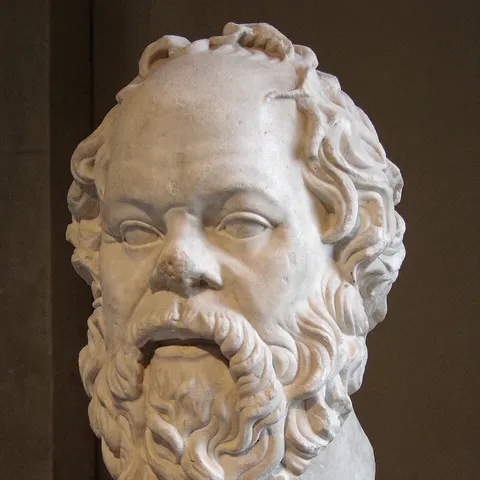 Socrates' IQPhilosopher, estimated 155+155+
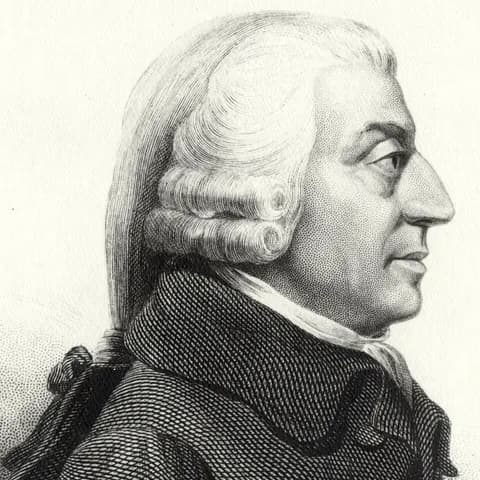 Adam Smith's IQEconomist & Philosopher, estimated 155+155+
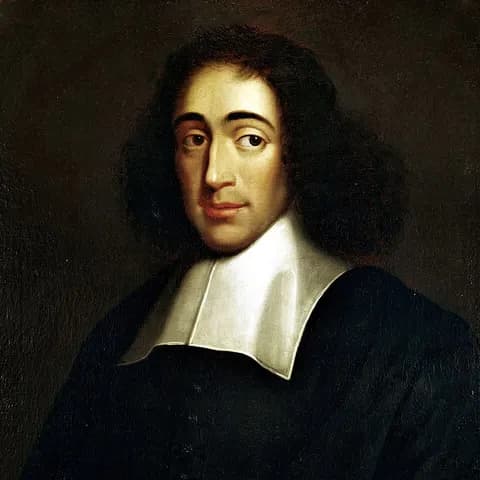 Baruch Spinoza's IQPhilosopher, estimated 155+155+
Rankings that include Augustine
- The highest IQ philosophers in historyRanked 23 of 43
Keep exploring
- Cross-Domain Pattern TransferSign of high intelligence
- Strong Self-Teaching AbilitySign of high intelligence
- Light Yagami's IQDeath Note, fan estimate 155
- Kurisu Makise's IQSteins;Gate, fan estimate 155
People also search for
All 307 historical IQ estimates, ranked with ranges and sources.
Augustine's IQ is 155. What's yours?
Augustine's estimate comes from the historical record. Yours can come from a real test: 25 visual reasoning questions.
25 questions · about 12 minutes
Sources
- Saint Augustine, Stanford Encyclopedia of Philosophy. Covers his life, philosophy of time and theology.
- Saint Augustine, Encyclopaedia Britannica. Summarises his life, conversion and works.
- Cox, C. M. (1926). The Early Mental Traits of Three Hundred Geniuses. Stanford University Press.
- Simonton, D. K. (2009). Genius 101. Springer.
- Cattell, R. B. (1971). Abilities: Their Structure, Growth, and Action. Houghton Mifflin.
Last reviewed October 2026. How we estimate historical IQ