Thomas More IQ
Thomas More's IQ is estimated at 133 to 155. Catharine Cox's 1926 study gave him a corrected 155; he never took a test. His book Utopia (1516) gave the English language the word, and his trial is a standard case study in legal argument.
More's IQ is 135+. What's yours?
25 questions · about 12 minutes
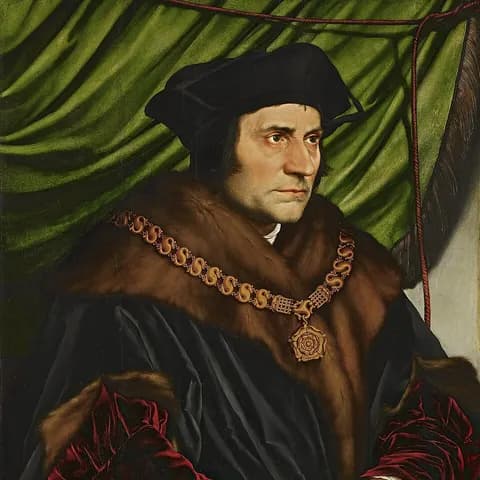
Key facts
- Estimated IQ
- 135+
- Known for
- Utopia and refusing to endorse Henry VIII's break with Rome
- Lived
- Lawyer, Writer & Statesman, 1478–1535
- Basis
- Cox 1926 historiometric estimate
- Confidence
- Low. More died in 1535. No IQ test was ever given; the figure comes from a 1926 study that rated historical figures from biographies.
Cox's corrected estimate for More was 155. His writing, his legal career and his trial are well documented, and they matter more than the number.
What was Thomas More's IQ?
More never took an IQ test. Catharine Cox's 1926 study gave him a corrected estimate of 155. Adjusted for the Flynn effect that is about 133, so LifeScore uses a range of 133 to 155, with 135+ as the marker. Utopia and his legal career are the evidence.
What is Utopia about?
Utopia (1516) describes an island society with no private property, religious toleration and a six-hour working day. The name means no place. Scholars still debate whether More meant it as a plan, a joke or a criticism of Europe, and it may be all three.
Why was Thomas More executed?
He resigned as Lord Chancellor in 1532 and refused to swear the Oath of Supremacy recognising Henry VIII as head of the English church. He was convicted of treason and beheaded on 6 July 1535. The Catholic Church canonised him in 1935.
Where does the 155 figure come from?
The 155 is Catharine Cox's corrected estimate from her 1926 study of 301 eminent people born between 1450 and 1850. She rated each person from biographical records of what they could do as a child and young adult, then corrected for gaps in the record.
Cox's numbers sit on an old ratio-IQ scale. One secondary tabulation subtracts about 22 points for the Flynn effect, which puts Thomas More near 135.
LifeScore lists 135+, and the working range of 135 to 155 spans both figures. None of them is a test result.
How smart was Thomas More?
- 01
Utopia
His 1516 book invented a genre and a word. - 02
Lord Chancellor of England
He held the highest legal office in England from 1529 to 1532. - 03
Friendship with Erasmus
He and Desiderius Erasmus were close friends, and Erasmus wrote In Praise of Folly in his house in 1509. - 04
Standing on principle
He refused the Oath of Supremacy and went to his death in 1535 rather than swear it.
How More thought
More trained as a lawyer at Lincoln's Inn and argued by careful reading of texts and precedents. At his trial he used the letter of the law to show that silence was not treason, and he lost only because Henry's government changed the rules.
The evidence behind the estimate
An estimate built from the historical record, not a recovered test score.
What supports it
- Cox's 1926 study gave More a corrected estimate of 155, which falls to about 133 after a Flynn-effect adjustment.
- He published Utopia in 1516 and served as Lord Chancellor from 1529 to 1532.
- He defended himself in his 1535 treason trial before refusing to swear the Oath of Supremacy.
What it cannot prove
- Literary and legal success depends on education, patrons and position as well as ability.
- As Chancellor he approved the punishment of Protestants, which complicates his image.
- Cox's scale runs higher than modern deviation IQ, by roughly 22 points in one tabulation.
More compared with Machiavelli, Bacon, Luther
| Figure | Estimate | Range |
|---|---|---|
| Thomas More | 135+ | 135–155 |
| Niccolò Machiavelli | 145+ | 135–155 |
| Francis Bacon | 160+ | 160–180 |
| Martin Luther | 150+ | 150–170 |
Psychological profile
Thomas More's IQ is represented here by a retrospective estimate of 135+, not a verified test result. Thomas More is best known for exceptional legal mind. The useful question is what the surviving evidence shows, not whether a precise modern score can be recovered.
Witty, learned and principled. A lawyer and humanist who rose to high office and went to the block over a point of conscience.
The dominant archetype here is The Statesman. This archetype shapes decision patterns: what feels natural, what creates friction, and what blind spots tend to emerge.
Estimated IQ is 135+. This is a rough estimate based on documented accomplishments and contemporary accounts, not a literal measurement.
Key traits
Legal Mind
He educated his daughters as well as his sons, which was unusual in Tudor England.Humanist Learning
He wrote with dry humour, even about his own execution.Conscience
As Chancellor he also persecuted Protestants as heretics, which is a serious part of his record.
One thing most people do not know
More is said to have joked to his executioner that his beard had committed no treason before moving it aside.
Thomas More: common questions
Was Thomas More a genius?
What personality type was Thomas More?
What can we learn from Thomas More?
More famous IQs
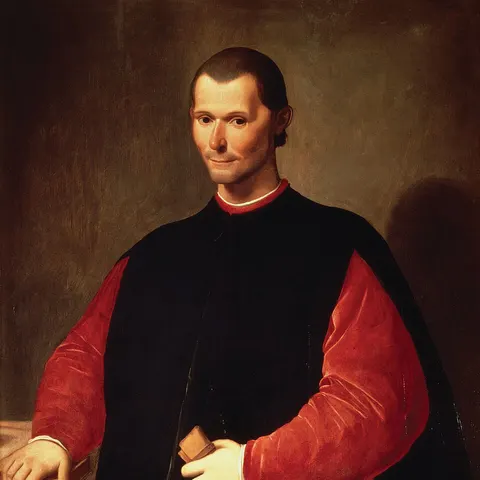 Niccolò Machiavelli IQPolitical Philosopher & Diplomat145+
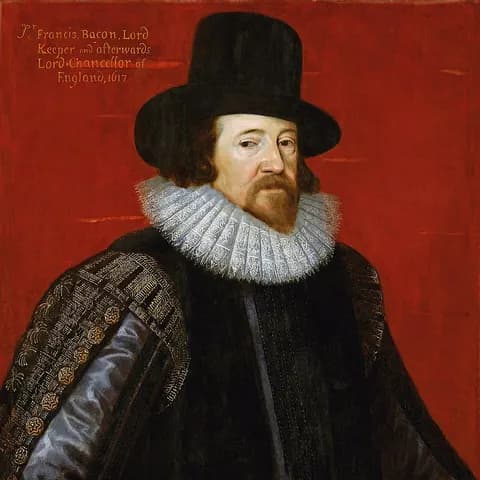 Francis Bacon IQPhilosopher & Statesman160+
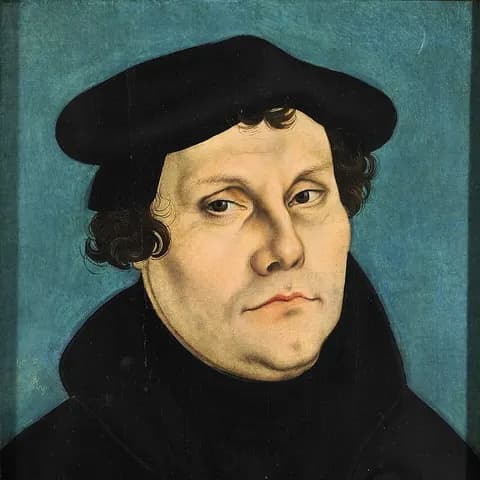 Martin Luther IQTheologian & Reformer150+
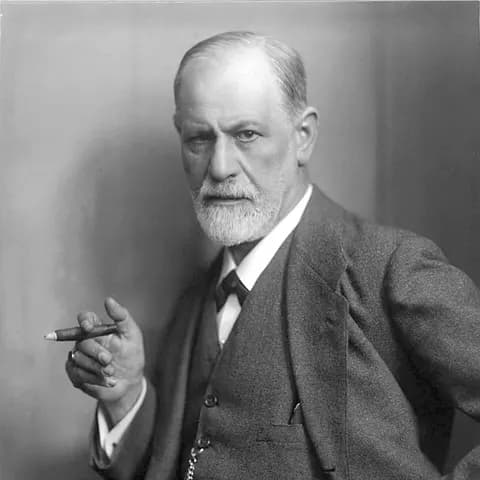 Sigmund Freud IQFather of Psychoanalysis140+
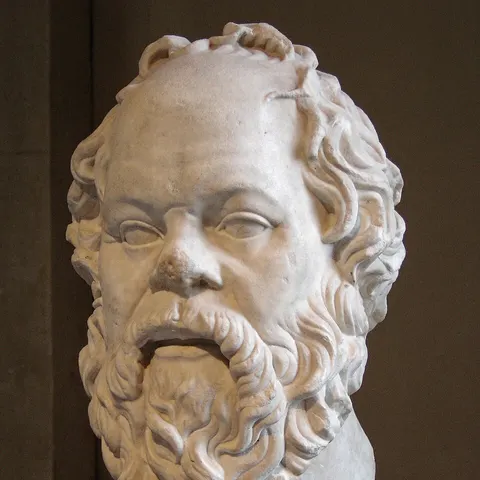 Socrates IQPhilosopher155+
- Confucius IQPhilosopher145+
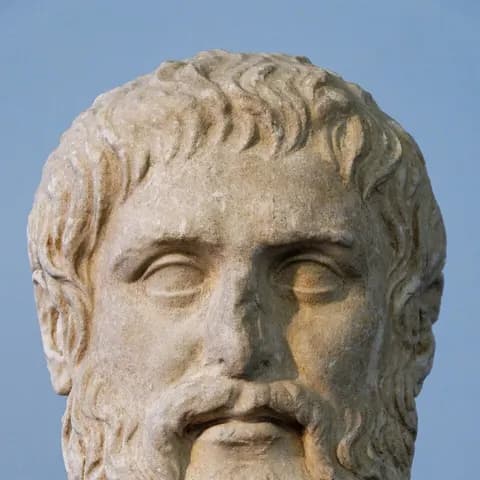 Plato IQPhilosopher160+
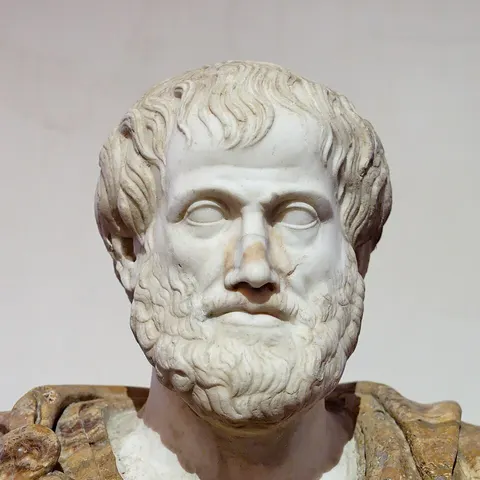 Aristotle IQPhilosopher & Polymath160+
Keep exploring
- All famous IQs, ranked157 figures with ranges and sources
- What an IQ of 135 meansPercentile, rarity and classification
- What an IQ of 155 meansPercentile, rarity and classification
- Quick Pattern RecognitionSigns of high intelligence
- Rapid Learning SpeedSigns of high intelligence
- Einstein IQ testA short visual reasoning challenge
More's IQ is 135+. What's yours?
More's estimate comes from the historical record. Yours can come from a real test: 25 visual reasoning questions.
25 questions · about 12 minutes
Sources
- Thomas More, Stanford Encyclopedia of Philosophy. Scholarly account of his life, Utopia and his political and legal career.
- The Early Mental Traits of Three Hundred Geniuses (Cox, 1926), Stanford University Press, via Internet Archive. The original historiometric study. Cox rated 301 eminent people born 1450 to 1850 from records of their childhood and youth.
- Cox's IQ estimates of 301 eminent geniuses, IQ Comparison Site. Secondary tabulation of Cox's corrected estimates, with a version adjusted by about 22 points for the Flynn effect.
- Cox, C. M. (1926). The Early Mental Traits of Three Hundred Geniuses. Stanford University Press.
- Simonton, D. K. (2009). Genius 101. Springer.
- Cattell, R. B. (1971). Abilities: Their Structure, Growth, and Action. Houghton Mifflin.
- Portrait: Hans Holbein the Younger · Public domain · Wikimedia Commons
Last reviewed September 2026. How we estimate historical IQ