Walt Disney IQ
Walt Disney's IQ is unknown. LifeScore uses about 135 (range 120 to 150) as an editorial marker for the animator who left school at 16, created Mickey Mouse and won 22 competitive Academy Awards.
Disney's IQ is 135. What's yours?
25 questions · about 12 minutes
Think you're smarter than Walt Disney? Try question 1.
Which option completes the grid? One tap, no sign-up.
Key facts
- Estimated IQ
- IQ 135
- Known for
- Mickey Mouse, Snow White and Disneyland
- Lived
- Animator & Entrepreneur, 1901–1966
- Basis
- No documented estimate; editorial marker from the record
- Confidence
- Very low. Born after 1850, so outside the Cox 1926 study. No IQ test result is known.
Disney has no test score. 135 is an editorial marker for a storyteller and organiser who repeatedly bet his company on new technology.
Walt Disney in brief
Walt Disney was born in Chicago in 1901 and grew up in Missouri. He left school at 16, served as a Red Cross ambulance driver after the First World War and started an animation studio in Kansas City that went bankrupt. In Hollywood with his brother Roy he created Mickey Mouse in 1928, the first full-length animated feature with sound, Snow White, in 1937, and Disneyland in 1955. He died in 1966.
What was Walt Disney's IQ?
No figure exists. LifeScore lists about 135 as an editorial marker, range 120 to 150. It rests on his creative vision and organisational drive, which built a studio that pioneered sound cartoons, colour animation and feature-length animated films.
How many Oscars did Walt Disney win?
He won 22 competitive Academy Awards from 59 nominations, plus four honorary awards. Both are records for an individual. Most were for animated and documentary short films produced by his studio.
Was Walt Disney a good artist?
He drew the early cartoons himself, but by the late 1920s other animators, especially Ub Iwerks, did most of the drawing. Disney's strength was story, character and direction; he acted out scenes for his animators and pushed them to make characters feel alive.
Was Walt Disney frozen?
No. The rumour that his body was cryogenically frozen is a myth. He died of lung cancer in December 1966 and was cremated; his ashes are at Forest Lawn Memorial Park in Glendale, California. The story spread partly because the first human cryonic preservation took place a few weeks later.
How smart was Walt Disney?
- 01
Steamboat Willie (1928)
Mickey Mouse in one of the first cartoons with synchronised sound. - 02
Snow White (1937)
The first full-length cel-animated feature with sound. - 03
Disneyland (1955)
A new kind of theme park. - 04
22 competitive Oscars
The most won by any individual.
How Disney thought
Disney reasoned in stories and experiences. He pictured how an audience would feel scene by scene, then organised technology and people to produce that feeling. That is creative, goal-directed planning more than abstract logic.
The evidence behind the estimate
An estimate built from the historical record, not a recovered test score.
What supports it
- His studio's technical and artistic firsts are well documented.
- He holds the record for Academy Awards won by an individual.
- He built a company that remains one of the largest media businesses.
What it cannot prove
- Much of the creative work was done by large teams of artists.
- Business success depends heavily on timing, capital, teams and luck, so it is a weak guide to reasoning ability.
- An editorial marker is a comparison aid built from achievement, not a measurement, and two careful readers could place it ten points apart.
Disney compared with Steve Jobs, Edison, Ford
| Figure | Estimate | Range |
|---|---|---|
| Walt Disney | 135 | 120–150 |
| Steve Jobs | 150+ | 135–160 |
| Thomas Edison | 145 | 130–155 |
| Henry Ford | 125 | 110–140 |
How would you score?
Where would you land next to Walt Disney?
Walt Disney's 135 is an estimate from the historical record, with a working range of 120 to 150. On the standard IQ scale an IQ of 135 sits at the 99th percentile: about 1 in 102 people score that high. Nobody can test Disney now. You can find out where you sit on the same scale.
- 100Average adult50th percentile
- 130Gifted linetop 2%, about 1 in 44
- 135Disney's99th percentile, about 1 in 102
- ?Youscored on the same scale
25 questions · about 12 minutes
Psychological profile
Walt Disney's IQ is represented here by a retrospective estimate of 135, not a verified test result. Walt Disney is best known for exceptional imagination. The useful question is what the surviving evidence shows, not whether a precise modern score can be recovered.
Imaginative, driven and controlling. A perfectionist who could see a finished film or park before it existed.
The dominant archetype here is The Dreamer. This archetype shapes decision patterns: what feels natural, what creates friction, and what blind spots tend to emerge.
Estimated IQ is 135. This is a rough estimate based on documented accomplishments and contemporary accounts, not a literal measurement.
Key traits
Imagination
His first studio, Laugh-O-Gram, went bankrupt in 1923.Risk-taking
Snow White was mocked as "Disney's folly" before release and became a huge success.Storytelling
He won more Academy Awards than any other individual: 22 competitive Oscars.
One thing most people do not know
He provided the original voice of Mickey Mouse himself until 1947.
Walt Disney: common questions
Was Walt Disney a genius?
What personality type was Walt Disney?
What can we learn from Walt Disney?
The IQ-style test the NFL used
Walt Disney's IQ is an estimate. Yours could be real.
Before the draft, NFL teams gave prospects the Wonderlic: 50 questions in 12 minutes, and almost nobody finishes. We collected 241 reported player scores, each with its source. The average working adult scores about 21.
People with similar IQ estimates
Walt Disney's estimate of 135 falls in the gifted IQ range. Want your own number rather than Walt's? Take the free IQ test or the quick IQ test. See what an IQ of 135 means, place it on the IQ chart or check how rare it is with the IQ rarity calculator.
- Andrew Carnegie's IQIndustrialist & Philanthropist, estimated 135135
- John D. Rockefeller's IQIndustrialist & Philanthropist, estimated 135135
- Samuel Morse's IQPainter & Inventor, estimated 135135
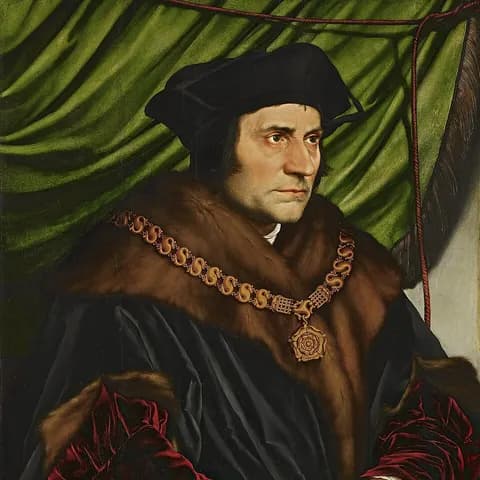 Thomas More's IQLawyer, Writer & Statesman, estimated 135+135+
- Vincent van Gogh's IQArtist, estimated 135+135+
Keep exploring
- Hidden Signs You're Highly IntelligentSign of high intelligence
- Signs of High IQ in ChildrenSign of high intelligence
- Atticus Finch's IQTo Kill a Mockingbird, fan estimate 135
- Kaguya Shinomiya's IQKaguya-sama: Love Is War, fan estimate 135
People also search for
All 307 historical IQ estimates, ranked with ranges and sources.
Disney's IQ is 135. What's yours?
Disney's estimate comes from the historical record. Yours can come from a real test: 25 visual reasoning questions.
25 questions · about 12 minutes
Sources
- Walt Disney, Encyclopaedia Britannica. Summarises his life, films and parks.
- Walt Disney, Wikipedia. Covers his early studios, Oscars and Disneyland.
- Cox, C. M. (1926). The Early Mental Traits of Three Hundred Geniuses. Stanford University Press.
- Simonton, D. K. (2009). Genius 101. Springer.
- Cattell, R. B. (1971). Abilities: Their Structure, Growth, and Action. Houghton Mifflin.
Last reviewed October 2026. How we estimate historical IQ