Henry Ford IQ
Henry Ford's IQ is unknown. LifeScore uses about 125 (range 110 to 140) as an editorial marker for the machinist who built the moving assembly line, but who struggled with history questions in his 1919 libel trial.
Ford's IQ is 125. What's yours?
25 questions · about 12 minutes
Think you're smarter than Henry Ford? Try question 1.
Which option completes the grid? One tap, no sign-up.
Key facts
- Estimated IQ
- IQ 125
- Known for
- The Model T and the moving assembly line
- Lived
- Industrialist, 1863–1947
- Basis
- No documented estimate; editorial marker from the record
- Confidence
- Very low. Born after 1850, so outside the Cox 1926 study. No IQ test result is known.
Ford has no test score. 125 is an editorial marker: a practical genius at production who performed poorly on general knowledge when questioned in court.
Henry Ford in brief
Henry Ford was born on a farm near Dearborn, Michigan, in 1863 and left school at 15 to work as a machinist. He became an engineer at the Edison Illuminating Company and built his first car in 1896. He founded the Ford Motor Company in 1903, launched the Model T in 1908 and introduced the moving assembly line in 1913. He also published antisemitic material in the 1920s, a lasting stain. He died in 1947.
What was Henry Ford's IQ?
No test score exists. LifeScore lists about 125 as an editorial marker with a range of 110 to 140. It weighs brilliant practical engineering and production design against weak general knowledge, shown when he was quizzed in court in 1919.
What happened in Henry Ford's libel trial?
Ford sued the Chicago Tribune for calling him an ignorant idealist. The paper's lawyers questioned him on history and civics, and he gave wrong or vague answers on several basic facts. The jury found for Ford but awarded him six cents in damages.
Did Henry Ford invent the car or the assembly line?
Neither from scratch. Cars existed before his, and assembly lines were used in meatpacking. Ford combined interchangeable parts, specialised work and a moving line to cut the time to build a Model T chassis from about 12 hours to about 90 minutes.
How smart was Henry Ford?
- 01
The Model T
Launched in 1908; about 15 million were built. - 02
Moving assembly line
Introduced at Highland Park in 1913. - 03
The five-dollar day
A 1914 pay rise that reshaped industrial wages. - 04
Ford Motor Company
Founded in 1903 and still one of the largest carmakers.
How Ford thought
Ford thought in processes. He watched how work flowed and asked how to bring the work to the worker rather than the worker to the work. His intelligence was concrete and practical, and he openly distrusted book learning, which shows how unevenly abilities can be spread in one person.
The evidence behind the estimate
An estimate built from the historical record, not a recovered test score.
What supports it
- Production records document the effect of the moving assembly line.
- The 1919 trial transcript and press coverage record his answers on general knowledge.
- He left school at 15 and trained as a machinist.
What it cannot prove
- A courtroom quiz under hostile questioning is a poor measure of reasoning.
- Business success depends heavily on timing, capital, teams and luck, so it is a weak guide to reasoning ability.
- His published antisemitism is documented and is not evidence about intelligence either way.
Ford compared with Edison, Carnegie, Rockefeller
| Figure | Estimate | Range |
|---|---|---|
| Henry Ford | 125 | 110–140 |
| Thomas Edison | 145 | 130–155 |
| Andrew Carnegie | 135 | 120–150 |
| John D. Rockefeller | 135 | 120–150 |
How would you score?
Where would you land next to Henry Ford?
Henry Ford's 125 is an estimate from the historical record, with a working range of 110 to 140. On the standard IQ scale an IQ of 125 sits at the 95.2nd percentile: about 1 in 21 people score that high. Nobody can test Ford now. You can find out where you sit on the same scale.
- 100Average adult50th percentile
- 130Gifted linetop 2%, about 1 in 44
- 125Ford's95.2nd percentile, about 1 in 21
- ?Youscored on the same scale
25 questions · about 12 minutes
Psychological profile
Henry Ford's IQ is represented here by a retrospective estimate of 125, not a verified test result. Henry Ford is best known for exceptional practical problem solving. The useful question is what the surviving evidence shows, not whether a precise modern score can be recovered.
Practical, stubborn and suspicious of experts. A brilliant organiser of production with narrow and often ugly views.
The dominant archetype here is The Organiser. This archetype shapes decision patterns: what feels natural, what creates friction, and what blind spots tend to emerge.
Estimated IQ is 125. This is a rough estimate based on documented accomplishments and contemporary accounts, not a literal measurement.
Key traits
Practical Problem Solving
In 1919 he sued the Chicago Tribune for calling him an ignorant idealist, and lawyers spent days quizzing him on history.Mechanical Skill
He reportedly said he could find a man within five minutes who could answer any question he needed.Stubbornness
He doubled his workers' daily pay to five dollars in 1914 to cut staff turnover.
One thing most people do not know
He said customers could have a Model T in any colour, so long as it was black.
Henry Ford: common questions
Was Henry Ford a genius?
What personality type was Henry Ford?
What can we learn from Henry Ford?
The IQ-style test the NFL used
Henry Ford's IQ is an estimate. Yours could be real.
Before the draft, NFL teams gave prospects the Wonderlic: 50 questions in 12 minutes, and almost nobody finishes. We collected 241 reported player scores, each with its source. The average working adult scores about 21.
People with similar IQ estimates
Henry Ford's estimate of 125 falls in the superior IQ range. Want your own number rather than Henry's? Take the free IQ test or the quick IQ test. See what an IQ of 125 means, place it on the IQ chart or check how rare it is with the IQ rarity calculator.
 Mahatma Gandhi's IQLeader of Indian Independence, estimated 125+125+
 Harriet Tubman's IQAbolitionist & Conductor, estimated 125+125+
- Rosa Parks' IQCivil Rights Activist, estimated 125+125+
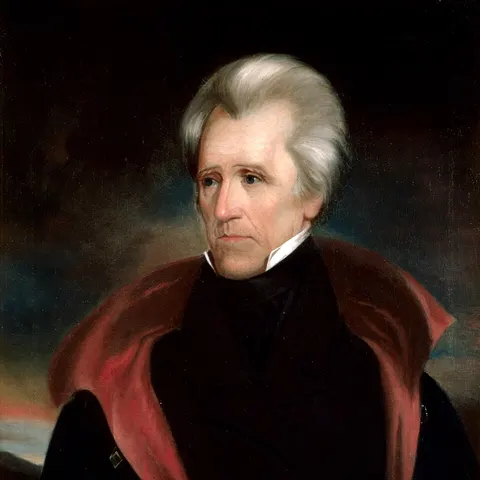 Andrew Jackson's IQ7th US President, estimated 125+125+
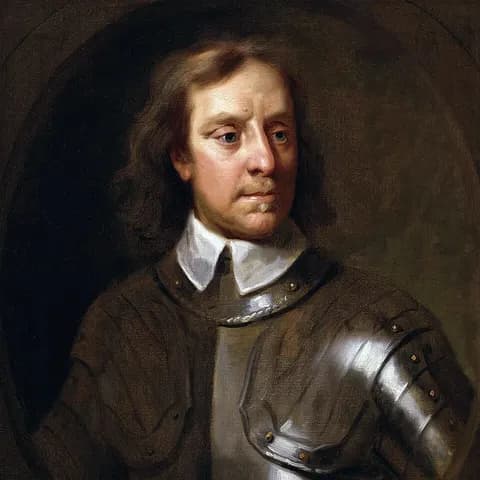 Oliver Cromwell's IQLord Protector of England, estimated 125+125+
Rankings that include Ford
- The highest IQ inventors in historyRanked 21 of 21
Keep exploring
- Efficient Information ProcessingSign of high intelligence
- Signs of High Emotional Intelligence (EQ)Sign of high intelligence
- Rintaro Okabe's IQSteins;Gate, fan estimate 128
- Darth Vader (Anakin Skywalker)'s IQStar Wars, fan estimate 130
People also search for
All 307 historical IQ estimates, ranked with ranges and sources.
Ford's IQ is 125. What's yours?
Ford's estimate comes from the historical record. Yours can come from a real test: 25 visual reasoning questions.
25 questions · about 12 minutes
Sources
- Henry Ford, Encyclopaedia Britannica. Summarises his life, the Model T and his views.
- Henry Ford, Wikipedia. Covers the assembly line, the 1919 libel trial and the Dearborn Independent.
- Cox, C. M. (1926). The Early Mental Traits of Three Hundred Geniuses. Stanford University Press.
- Simonton, D. K. (2009). Genius 101. Springer.
- Cattell, R. B. (1971). Abilities: Their Structure, Growth, and Action. Houghton Mifflin.
Last reviewed October 2026. How we estimate historical IQ