Oliver Cromwell IQ
Oliver Cromwell's IQ is estimated at 113 to 135. Catharine Cox's 1926 study gave him a corrected 135, among the lower figures in her study; he never took a test. His record shows leadership and judgement more than test-style ability.
Cromwell's IQ is 125+. What's yours?
25 questions · about 12 minutes
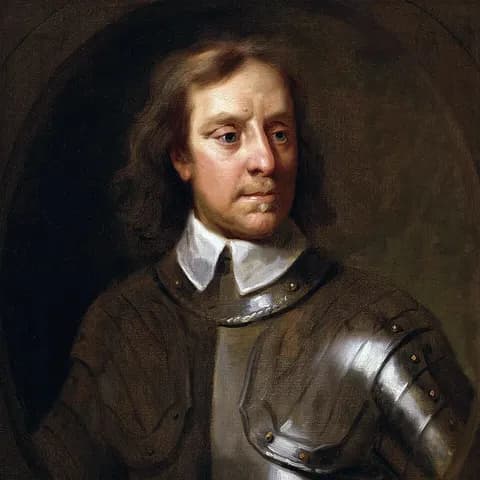
Key facts
- Estimated IQ
- 125+
- Known for
- Leading the Parliamentary army and ruling as Lord Protector
- Lived
- Lord Protector of England, 1599–1658
- Basis
- Cox 1926 historiometric estimate
- Confidence
- Low. Cromwell died in 1658. No IQ test was ever given; the figure comes from a 1926 study that rated historical figures from biographies.
Cox's corrected estimate for Cromwell was 135, low for such an important figure. That tells us more about her method, which favours early prodigies, than about his ability.
What was Oliver Cromwell's IQ?
Cromwell never took an IQ test. Catharine Cox's 1926 study gave him a corrected estimate of 135. Adjusted for the Flynn effect that is about 113, so LifeScore uses a range of 113 to 135, with 125+ as the marker. His career is the evidence.
Why is Cromwell rated lower than other leaders?
Cox rated people from records of their childhood and youth. Cromwell was a country gentleman with an ordinary early life, and he rose to prominence only in his forties. A method built on early signs of brilliance will score a late bloomer lower.
How did Cromwell win the English Civil War?
He built the New Model Army in 1645, promoting officers on merit and drilling the troops. He fought at Marston Moor in 1644, Naseby in 1645 and later at Preston and Worcester. The Parliamentary army beat the Royalists and Charles I was executed in 1649.
Where does the 135 figure come from?
The 135 is Catharine Cox's corrected estimate from her 1926 study of 301 eminent people born between 1450 and 1850. She rated each person from biographical records of what they could do as a child and young adult, then corrected for gaps in the record.
Cox's numbers sit on an old ratio-IQ scale. One secondary tabulation subtracts about 22 points for the Flynn effect, which puts Oliver Cromwell near 115.
LifeScore lists 125+, and the working range of 115 to 135 spans both figures. None of them is a test result.
How smart was Oliver Cromwell?
- 01
Ironsides at Marston Moor
His disciplined cavalry helped win the 1644 battle that broke Royalist power in the north. - 02
The New Model Army
He helped shape the 1645 professional army that won the war, promoting officers on merit. - 03
The Commonwealth
After Charles I's execution in 1649 he became the leading figure in a republic. - 04
Lord Protector
He ruled England, Scotland and Ireland as Lord Protector from 1653 until he died in 1658.
How Cromwell thought
Cromwell learned war by doing it. He picked officers for ability and religious conviction, drilled his horsemen to charge in good order and rally, and made decisions fast on the battlefield. He was less sure in politics, where his regime relied on the army.
The evidence behind the estimate
An estimate built from the historical record, not a recovered test score.
What supports it
- Cox's 1926 study gave Cromwell a corrected estimate of 135, which falls to about 113 after a Flynn-effect adjustment.
- He helped create and lead the New Model Army, which won the English Civil War.
- He ruled the three kingdoms as Lord Protector from 1653 to 1658.
What it cannot prove
- A late bloomer with an unremarkable early record will score low on a method built from childhood evidence.
- Military and political success depended on his army, allies and the weakness of his enemies.
- Cox's scale runs higher than modern deviation IQ, by roughly 22 points in one tabulation.
Cromwell compared with Napoleon, Washington, Elizabeth I
| Figure | Estimate | Range |
|---|---|---|
| Oliver Cromwell | 125+ | 115–135 |
| Napoleon Bonaparte | 145 | 125–155 |
| George Washington | 120+ | 120–140 |
| Queen Elizabeth I | 145+ | 130–155 |
Psychological profile
Oliver Cromwell's IQ is represented here by a retrospective estimate of 125+, not a verified test result. Oliver Cromwell is best known for exceptional organisation. The useful question is what the surviving evidence shows, not whether a precise modern score can be recovered.
Practical, determined and late to the top. A landowner and MP who became a cavalry commander and then head of state.
The dominant archetype here is The Warrior. This archetype shapes decision patterns: what feels natural, what creates friction, and what blind spots tend to emerge.
Estimated IQ is 125+. This is a rough estimate based on documented accomplishments and contemporary accounts, not a literal measurement.
Key traits
Organisation
He entered Parliament in 1628 and had no military training before the war began in 1642.Determination
He supported religious toleration for most Protestant groups, though not for Catholics.Battlefield Judgement
His campaign in Ireland, including the sack of Drogheda in 1649, remains bitterly remembered.
One thing most people do not know
After the monarchy returned in 1660, Cromwell's body was dug up and put on trial, and his head was displayed on a pole in London.
Oliver Cromwell: common questions
Was Oliver Cromwell a genius?
What personality type was Oliver Cromwell?
What can we learn from Oliver Cromwell?
More famous IQs
 Napoleon Bonaparte IQEmperor of the French145
 George Washington IQUS Founding Father & President120+
 Queen Elizabeth I IQQueen of England145+
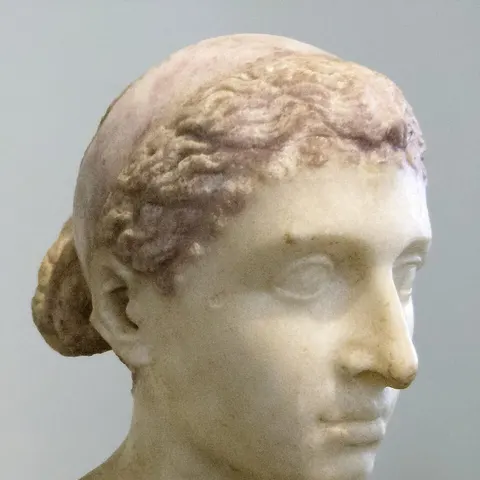 Cleopatra IQPharaoh of Egypt140
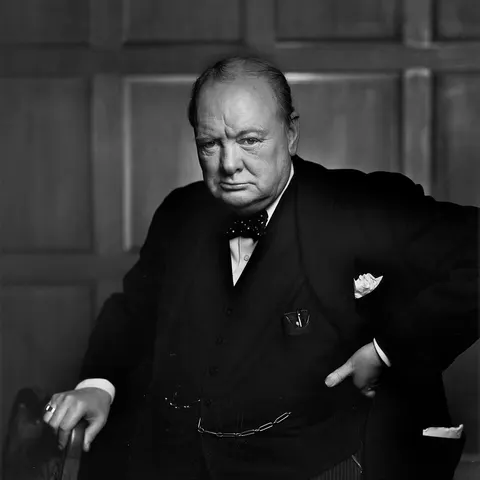 Winston Churchill IQPrime Minister135
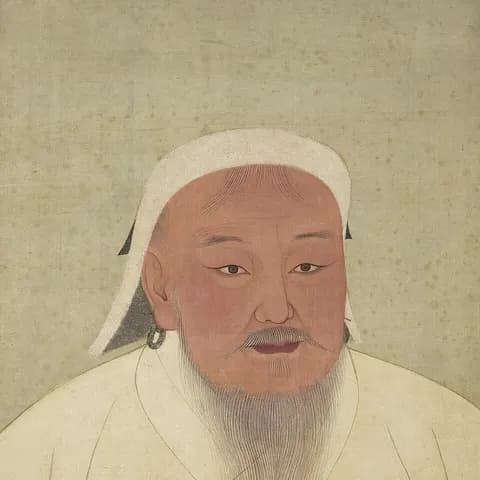 Genghis Khan IQFounder of the Mongol Empire130+
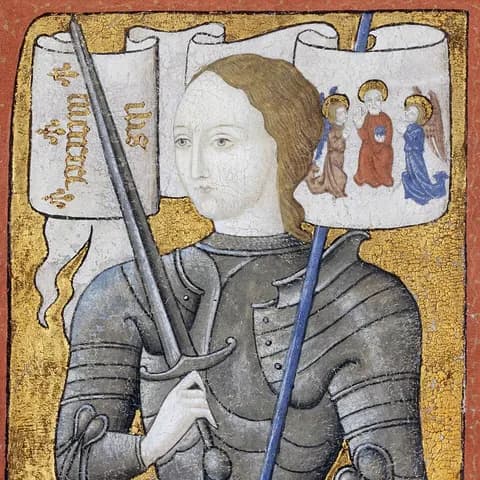 Joan of Arc IQFrench Military Leader120+
 Alexander the Great IQKing of Macedonia150+
Keep exploring
- All famous IQs, ranked157 figures with ranges and sources
- What an IQ of 115 meansPercentile, rarity and classification
- What an IQ of 125 meansPercentile, rarity and classification
- What an IQ of 135 meansPercentile, rarity and classification
- Quick Pattern RecognitionSigns of high intelligence
- Rapid Learning SpeedSigns of high intelligence
- Einstein IQ testA short visual reasoning challenge
Cromwell's IQ is 125+. What's yours?
Cromwell's estimate comes from the historical record. Yours can come from a real test: 25 visual reasoning questions.
25 questions · about 12 minutes
Sources
- Oliver Cromwell, Encyclopaedia Britannica. Biography covering the Civil War, the Commonwealth and the Protectorate.
- The Early Mental Traits of Three Hundred Geniuses (Cox, 1926), Stanford University Press, via Internet Archive. The original historiometric study. Cox rated 301 eminent people born 1450 to 1850 from records of their childhood and youth.
- Cox's IQ estimates of 301 eminent geniuses, IQ Comparison Site. Secondary tabulation of Cox's corrected estimates, with a version adjusted by about 22 points for the Flynn effect.
- Cox, C. M. (1926). The Early Mental Traits of Three Hundred Geniuses. Stanford University Press.
- Simonton, D. K. (2009). Genius 101. Springer.
- Cattell, R. B. (1971). Abilities: Their Structure, Growth, and Action. Houghton Mifflin.
- Portrait: After Samuel Cooper · Public domain · Wikimedia Commons
Last reviewed September 2026. How we estimate historical IQ