Arthur Schopenhauer IQ
Arthur Schopenhauer's IQ is unknown; no test or confirmed study figure exists. LifeScore uses about 160 (range 145 to 175) as an editorial marker for the philosopher who published his whole system at 30.
Schopenhauer's IQ is 160. What's yours?
25 questions · about 12 minutes
Think you're smarter than Arthur Schopenhauer? Try question 1.
Which option completes the grid? One tap, no sign-up.
Key facts
- Estimated IQ
- IQ 160
- Range
- IQ 145 to 175
- Known for
- The World as Will and Representation and philosophical pessimism
- Lived
- Philosopher, 1788–1860
- Basis
- No documented estimate; editorial marker from the record
- Confidence
- Very low. Born inside the period Cox 1926 covered, but we could not confirm a Cox figure from an accessible tabulation, so none is quoted. No IQ test was ever given.
Schopenhauer has no test and no Cox figure we could confirm. 160 is an editorial marker for a philosopher who built a complete system by 30 and influenced Nietzsche, Wagner and Freud.
Arthur Schopenhauer in brief
Arthur Schopenhauer was born in Danzig in 1788 to a wealthy merchant father and a novelist mother. He trained in business, then after his father's death studied at Göttingen and Berlin and earned a doctorate in 1813. His main work, The World as Will and Representation, appeared in 1818 and was largely ignored. He scheduled his Berlin lectures against Hegel's and drew few students. Fame came only in his sixties. He died in Frankfurt in 1860.
What was Arthur Schopenhauer's IQ?
No figure exists. LifeScore lists about 160 as an editorial marker, range 145 to 175. It rests on The World as Will and Representation, completed at 30, his languages and the clarity of prose that later writers admired.
What did Schopenhauer believe?
That behind the world we perceive lies a blind, striving force he called will. Because will is never satisfied, life is mostly suffering. Relief comes through art, especially music, compassion and the quieting of desire, ideas close to Buddhist thought.
Did Schopenhauer really hate Hegel?
Yes. He called Hegel a charlatan and deliberately scheduled his own Berlin lectures at the same hour as Hegel's. Almost no students came, and he abandoned his academic career.
How smart was Arthur Schopenhauer?
- 01
The World as Will and Representation
Published in 1818 and expanded in 1844. - 02
On the Fourfold Root
His 1813 doctoral thesis on the principle of sufficient reason. - 03
Parerga and Paralipomena
Essays of 1851 that finally made him famous. - 04
Influence
Shaped Nietzsche, Wagner, Tolstoy, Freud and Wittgenstein.
How Schopenhauer thought
Schopenhauer reasoned from one master idea, the will, and applied it consistently to nature, art, ethics and sex. That unifying move is ambitious abstract reasoning. His clear, concrete prose also shows how high-level ideas can be stated plainly.
The evidence behind the estimate
An estimate built from the historical record, not a recovered test score.
What supports it
- He earned a doctorate from the University of Jena in 1813.
- His influence on later thinkers and artists is well documented.
- He read major works in several languages.
What it cannot prove
- His independent wealth shaped his career and freedom.
- Influence in philosophy depends on timing, institutions and readers as well as on the power of the reasoning.
- An editorial marker is a comparison aid built from achievement, not a measurement, and two careful readers could place it ten points apart.
Schopenhauer compared with Kant, Nietzsche, Hegel
| Figure | Estimate | Range |
|---|---|---|
| Arthur Schopenhauer | 160 | 145–175 |
| Immanuel Kant | 160+ | 155–175 |
| Friedrich Nietzsche | 155+ | 140–165 |
| Georg Wilhelm Friedrich Hegel | 145+ | 145–165 |
How would you score?
Where would you land next to Arthur Schopenhauer?
Arthur Schopenhauer's 160 is an estimate from the historical record, with a working range of 145 to 175. On the standard IQ scale an IQ of 160 sits at the 99.997th percentile: about 1 in 31,600 people score that high. Nobody can test Schopenhauer now. You can find out where you sit on the same scale.
- 100Average adult50th percentile
- 130Gifted linetop 2%, about 1 in 44
- 160Schopenhauer's99.997th percentile, about 1 in 31,600
- ?Youscored on the same scale
25 questions · about 12 minutes
Psychological profile
Arthur Schopenhauer's IQ is represented here by a retrospective estimate of 160, not a verified test result. Arthur Schopenhauer is best known for exceptional systematic thought. The useful question is what the surviving evidence shows, not whether a precise modern score can be recovered.
Pessimistic, sharp-tongued and lucid. A prose stylist who thought life was mostly suffering.
The dominant archetype here is The Pessimist. This archetype shapes decision patterns: what feels natural, what creates friction, and what blind spots tend to emerge.
Estimated IQ is 160. This is a rough estimate based on documented accomplishments and contemporary accounts, not a literal measurement.
Key traits
Systematic Thought
He learned French and English fluently as a teenager and later read Sanskrit texts in translation.Clarity
He was among the first Western philosophers to engage seriously with Buddhist and Hindu thought.Independence
He wrote a witty guide called The Art of Being Right, listing 38 tricks of argument.
One thing most people do not know
He owned a series of poodles, all named Atma, a Sanskrit word for the soul.
Arthur Schopenhauer: common questions
Was Arthur Schopenhauer a genius?
What personality type was Arthur Schopenhauer?
What can we learn from Arthur Schopenhauer?
The IQ-style test the NFL used
Arthur Schopenhauer's IQ is an estimate. Yours could be real.
Before the draft, NFL teams gave prospects the Wonderlic: 50 questions in 12 minutes, and almost nobody finishes. We collected 241 reported player scores, each with its source. The average working adult scores about 21.
People with similar IQ estimates
Arthur Schopenhauer's estimate of 160 falls in the profoundly gifted IQ range. Want your own number rather than Arthur's? Take the free IQ test or the quick IQ test. See what an IQ of 160 means, place it on the IQ chart or check how rare it is with the IQ rarity calculator.
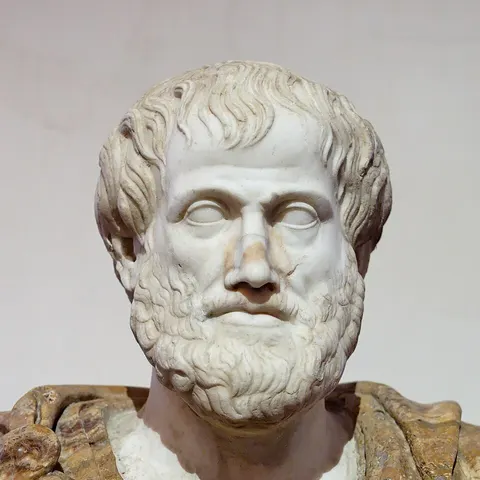 Aristotle's IQPhilosopher & Polymath, estimated 160+160+
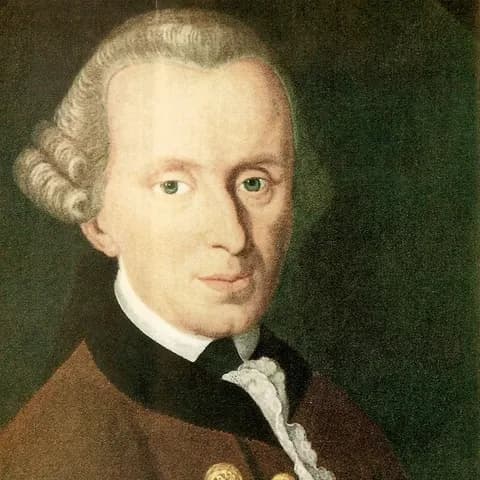 Immanuel Kant's IQPhilosopher, estimated 160+160+
- Noam Chomsky's IQLinguist & Activist, estimated 160+160+
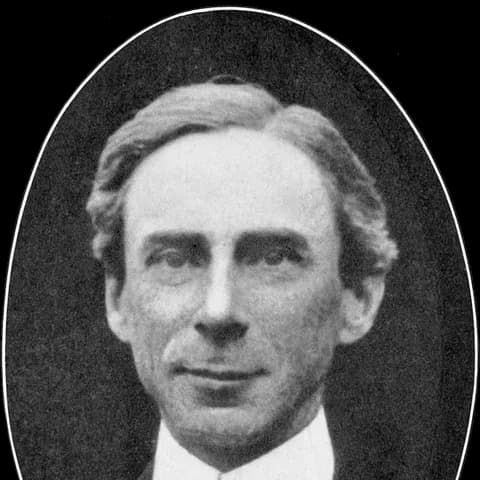 Bertrand Russell's IQPhilosopher & Logician, estimated 160+160+
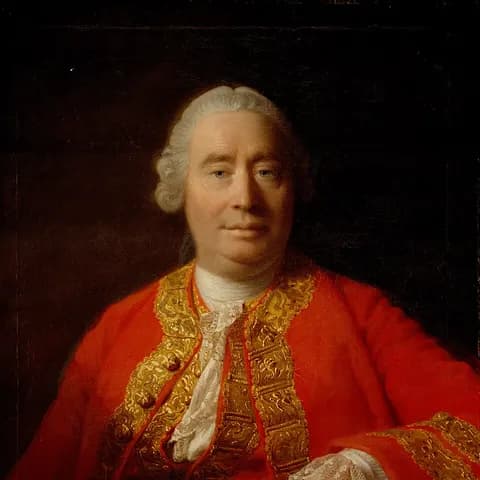 David Hume's IQPhilosopher & Historian, estimated 160+160+
Rankings that include Schopenhauer
- The highest IQ philosophers in historyRanked 5 of 43
Keep exploring
- High Tolerance for AmbiguitySign of high intelligence
- Problems Only Highly Intelligent People FaceSign of high intelligence
- L Lawliet's IQDeath Note, fan estimate 160
- Tony Stark's IQIron Man, fan estimate 160
People also search for
All 307 historical IQ estimates, ranked with ranges and sources.
Schopenhauer's IQ is 160. What's yours?
Schopenhauer's estimate comes from the historical record. Yours can come from a real test: 25 visual reasoning questions.
25 questions · about 12 minutes
Sources
- Arthur Schopenhauer, Stanford Encyclopedia of Philosophy. Covers his life, system and influence.
- Arthur Schopenhauer, Encyclopaedia Britannica. Summarises his life and philosophy.
- Cox, C. M. (1926). The Early Mental Traits of Three Hundred Geniuses. Stanford University Press.
- Simonton, D. K. (2009). Genius 101. Springer.
- Cattell, R. B. (1971). Abilities: Their Structure, Growth, and Action. Houghton Mifflin.
Last reviewed October 2026. How we estimate historical IQ