Georg Wilhelm Friedrich Hegel IQ
Georg Hegel's IQ is estimated at 143 to 165. Catharine Cox's 1926 study gave him a corrected 165; he never took a test. His books are among the hardest in philosophy, which shows range but also why they are disputed.
Hegel's IQ is 145+. What's yours?
25 questions · about 12 minutes
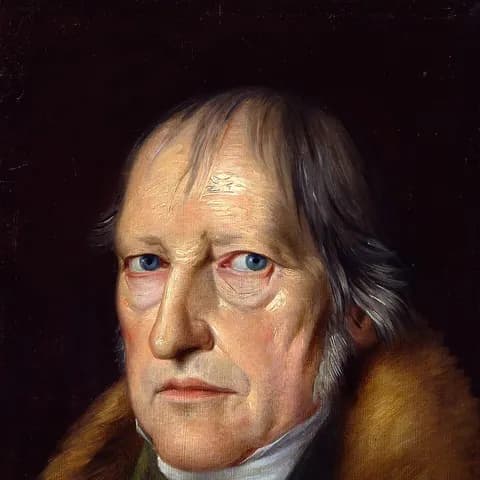
Key facts
- Estimated IQ
- 145+
- Known for
- Dialectics and the Phenomenology of Spirit
- Lived
- Philosopher, 1770–1831
- Basis
- Cox 1926 historiometric estimate
- Confidence
- Low. Hegel died in 1831. No IQ test was ever given; the figure comes from a 1926 study that rated historical figures from biographies.
Cox's corrected estimate for Hegel was 165. The scale and influence of his system are the stronger evidence, though philosophers still dispute what he meant.
What was Hegel's IQ?
Hegel never took an IQ test. Catharine Cox's 1926 study gave him a corrected estimate of 165. Adjusted for the Flynn effect that is about 143, so LifeScore uses a range of 143 to 165, with 145+ as the marker. His difficulty as a writer is not a measure of ability.
Why is Hegel so hard to read?
He coined his own terms, built arguments in long chains and wrote about abstract ideas such as spirit and being. The Phenomenology of Spirit (1807) is notorious. Readers often start with his lectures on history and art, which were edited from student notes and are easier.
Hegel or Kant: who was smarter?
Cox's 1926 figures give Kant 175 and Hegel 165. Kant set the problems Hegel tried to solve, and Hegel claimed to complete Kant's project. That ten-point gap is well inside Cox's uncertainty, so it says little about who was sharper.
Where does the 165 figure come from?
The 165 is Catharine Cox's corrected estimate from her 1926 study of 301 eminent people born between 1450 and 1850. She rated each person from biographical records of what they could do as a child and young adult, then corrected for gaps in the record.
Cox's numbers sit on an old ratio-IQ scale. One secondary tabulation subtracts about 22 points for the Flynn effect, which puts Georg Wilhelm Friedrich Hegel near 145.
LifeScore lists 145+, and the working range of 145 to 165 spans both figures. None of them is a test result.
How smart was Georg Wilhelm Friedrich Hegel?
- 01
Phenomenology of Spirit
Published in 1807, it traces how consciousness develops through stages, and it made his name. - 02
Science of Logic
Published in 1812 to 1816, it tried to derive the basic categories of thought from one another. - 03
Philosophy of Right
His 1820 work on law, ethics and the state shaped political thought for more than a century. - 04
Berlin professor
From 1818 he held the philosophy chair at the University of Berlin, where he taught until he died of cholera in 1831.
How Hegel thought
Hegel thought in terms of tension. An idea meets its opposite, and the clash forces a new idea that contains both. He applied the pattern to logic, history, art and religion and tried to show that each followed the same shape of development.
The evidence behind the estimate
An estimate built from the historical record, not a recovered test score.
What supports it
- Cox's 1926 study gave Hegel a corrected estimate of 165, which falls to about 143 after a Flynn-effect adjustment.
- He published the Phenomenology of Spirit (1807), the Science of Logic (1812 to 1816) and the Philosophy of Right (1820).
- He held the chair of philosophy at Berlin from 1818 until his death.
What it cannot prove
- Philosophical influence is not a measure of reasoning speed or memory.
- Many of his best-known lectures survive as student notes edited after his death.
- Cox's scale runs higher than modern deviation IQ, by roughly 22 points in one tabulation.
Hegel compared with Kant, Marx, Nietzsche
| Figure | Estimate | Range |
|---|---|---|
| Georg Wilhelm Friedrich Hegel | 145+ | 145–165 |
| Immanuel Kant | 160+ | 155–175 |
| Karl Marx | 155+ | 140–165 |
| Friedrich Nietzsche | 155+ | 140–165 |
Psychological profile
Georg Wilhelm Friedrich Hegel's IQ is represented here by a retrospective estimate of 145+, not a verified test result. Georg Wilhelm Friedrich Hegel is best known for exceptional system building. The useful question is what the surviving evidence shows, not whether a precise modern score can be recovered.
Systematic and dense. Tried to fit logic, history, art and politics into one connected account of how ideas develop.
The dominant archetype here is The Sage. This archetype shapes decision patterns: what feels natural, what creates friction, and what blind spots tend to emerge.
Estimated IQ is 145+. This is a rough estimate based on documented accomplishments and contemporary accounts, not a literal measurement.
Key traits
System Building
He studied at the Tübingen seminary, sharing a room with the poet Hölderlin and the philosopher Schelling.Abstract Thinking
He finished the Phenomenology in 1806, reportedly as Napoleon's army took Jena.Historical Sense
Later thinkers from Marx to Kierkegaard built their own positions by arguing with him.
One thing most people do not know
Marx called his own method an inversion of Hegel's, writing that Hegel stood on his head and had to be turned right side up.
Georg Wilhelm Friedrich Hegel: common questions
Was Georg Wilhelm Friedrich Hegel a genius?
What personality type was Georg Wilhelm Friedrich Hegel?
What can we learn from Georg Wilhelm Friedrich Hegel?
More famous IQs
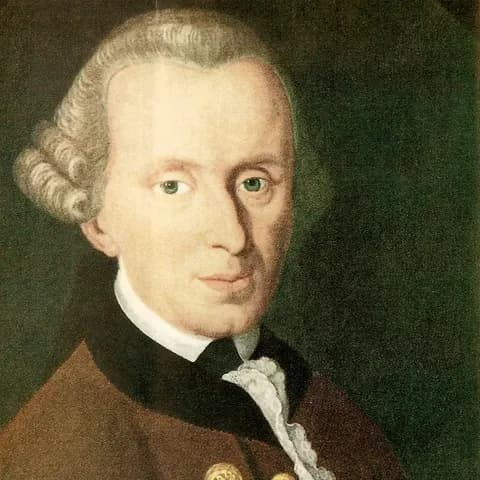 Immanuel Kant IQPhilosopher160+
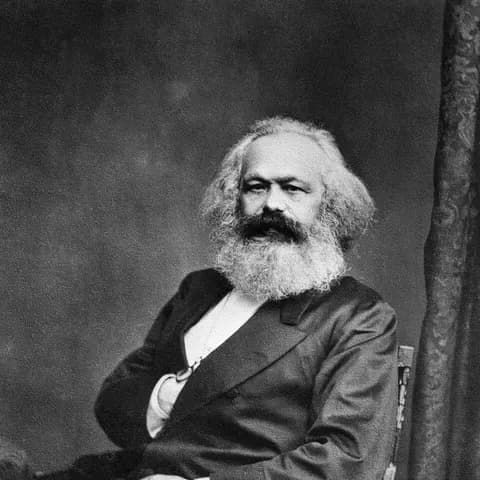 Karl Marx IQPhilosopher & Economist155+
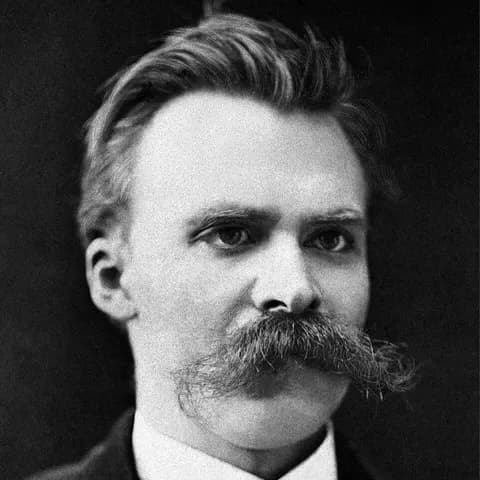 Friedrich Nietzsche IQPhilosopher155+
 Sigmund Freud IQFather of Psychoanalysis140+
 Socrates IQPhilosopher155+
- Confucius IQPhilosopher145+
 Plato IQPhilosopher160+
 Aristotle IQPhilosopher & Polymath160+
Keep exploring
- All famous IQs, ranked157 figures with ranges and sources
- What an IQ of 145 meansPercentile, rarity and classification
- What an IQ of 165 meansPercentile, rarity and classification
- Quick Pattern RecognitionSigns of high intelligence
- Rapid Learning SpeedSigns of high intelligence
- Einstein IQ testA short visual reasoning challenge
Hegel's IQ is 145+. What's yours?
Hegel's estimate comes from the historical record. Yours can come from a real test: 25 visual reasoning questions.
25 questions · about 12 minutes
Sources
- Georg Wilhelm Friedrich Hegel, Stanford Encyclopedia of Philosophy. Scholarly account of his life, method and main works.
- The Early Mental Traits of Three Hundred Geniuses (Cox, 1926), Stanford University Press, via Internet Archive. The original historiometric study. Cox rated 301 eminent people born 1450 to 1850 from records of their childhood and youth.
- Cox's IQ estimates of 301 eminent geniuses, IQ Comparison Site. Secondary tabulation of Cox's corrected estimates, with a version adjusted by about 22 points for the Flynn effect.
- Cox, C. M. (1926). The Early Mental Traits of Three Hundred Geniuses. Stanford University Press.
- Simonton, D. K. (2009). Genius 101. Springer.
- Cattell, R. B. (1971). Abilities: Their Structure, Growth, and Action. Houghton Mifflin.
- Portrait: Jakob Schlesinger · Public domain · Wikimedia Commons
Last reviewed September 2026. How we estimate historical IQ