Seneca IQ
Seneca's IQ is unknown; he died in AD 65. LifeScore uses about 145 (range 130 to 160) as an editorial marker for the Stoic writer, orator and adviser to Nero whose letters remain popular guides to living.
Seneca's IQ is 145. What's yours?
25 questions · about 12 minutes
Think you're smarter than Seneca? Try question 1.
Which option completes the grid? One tap, no sign-up.
Key facts
- Estimated IQ
- IQ 145
- Known for
- Letters on Ethics and Stoic philosophy
- Lived
- Stoic Philosopher & Statesman, c. 4 BC–AD 65
- Basis
- No documented estimate; editorial marker from the record
- Confidence
- Very low. Lived long before IQ testing and before the period Cox 1926 covered. No test or published estimate exists.
Seneca has no test or estimate. 145 is an editorial marker for an orator, statesman and author whose Stoic writing is still widely read.
Seneca in brief
Lucius Annaeus Seneca was born in Córdoba, in Roman Spain, around 4 BC and educated in rhetoric and philosophy in Rome. He became a famous orator and writer, was exiled to Corsica for eight years, then recalled to tutor the young Nero. During Nero's early reign he was among the most powerful men in Rome and grew very rich. He wrote Stoic essays, letters and tragedies. Accused of a plot in AD 65, he was ordered to kill himself.
What was Seneca's IQ?
No figure exists, and he lived far before the Cox 1926 period. LifeScore lists about 145 as an editorial marker, range 130 to 160. It rests on his rhetorical fame, his political rise and a body of writing that spans philosophy, science and drama.
What did Seneca teach?
That we suffer more in imagination than in reality, that time is our most precious possession and that virtue is the only true good. His essays such as On the Shortness of Life turn Stoic theory into practical advice.
How did Seneca die?
In AD 65 Nero accused him of joining the Pisonian conspiracy and ordered him to take his own life. According to Tacitus he cut his veins, took poison and finally died in a hot bath, while dictating to his secretaries.
Is Seneca worth reading today?
Many readers think so. His letters are short, practical and addressed to a friend, so they are easier to start with than most ancient philosophy. Modern Stoicism, a popular self-help movement, draws heavily on Seneca, Epictetus and Marcus Aurelius for advice on anxiety, anger and mortality.
How smart was Seneca?
- 01
Letters on Ethics
124 letters to Lucilius on Stoic living. - 02
Moral essays
On the Shortness of Life, On Anger and others. - 03
Tragedies
Nine plays that shaped Renaissance drama. - 04
Natural Questions
A study of natural phenomena, from earthquakes to comets.
How Seneca thought
Seneca reasoned practically. He took abstract Stoic principles and applied them to specific worries, such as losing money or facing death, through vivid examples. Turning theory into usable rules is a different but real form of intelligence.
The evidence behind the estimate
An estimate built from the historical record, not a recovered test score.
What supports it
- His essays, letters and plays survive in large numbers.
- Tacitus and others record his political career.
- His tragedies are the only complete Latin tragedies to survive.
What it cannot prove
- His wealth and role under Nero complicate his moral reputation.
- Influence in philosophy depends on timing, institutions and readers as well as on the power of the reasoning.
- An editorial marker is a comparison aid built from achievement, not a measurement, and two careful readers could place it ten points apart.
Seneca compared with Aurelius, Socrates, Machiavelli
| Figure | Estimate | Range |
|---|---|---|
| Seneca | 145 | 130–160 |
| Marcus Aurelius | 145+ | 130–155 |
| Socrates | 155+ | 145–165 |
| Niccolò Machiavelli | 145+ | 135–155 |
How would you score?
Where would you land next to Seneca?
Seneca's 145 is an estimate from the historical record, with a working range of 130 to 160. On the standard IQ scale an IQ of 145 sits at the 99.87th percentile: about 1 in 741 people score that high. Nobody can test Seneca now. You can find out where you sit on the same scale.
- 100Average adult50th percentile
- 130Gifted linetop 2%, about 1 in 44
- 145Seneca's99.87th percentile, about 1 in 741
- ?Youscored on the same scale
25 questions · about 12 minutes
Psychological profile
Seneca's IQ is represented here by a retrospective estimate of 145, not a verified test result. Seneca is best known for exceptional rhetoric. The useful question is what the surviving evidence shows, not whether a precise modern score can be recovered.
Eloquent, practical and compromised. A preacher of simplicity who was one of the richest men in Rome.
The dominant archetype here is The Stoic Adviser. This archetype shapes decision patterns: what feels natural, what creates friction, and what blind spots tend to emerge.
Estimated IQ is 145. This is a rough estimate based on documented accomplishments and contemporary accounts, not a literal measurement.
Key traits
Rhetoric
He was Nero's tutor and then his speechwriter and adviser.Practical Ethics
His Letters to Lucilius give practical advice on grief, time and fear of death.Political Skill
His tragedies influenced Elizabethan dramatists, including Shakespeare.
One thing most people do not know
His father, Seneca the Elder, was also a well-known writer on rhetoric, which is why he is sometimes called Seneca the Younger.
Seneca: common questions
Was Seneca a genius?
What personality type was Seneca?
What can we learn from Seneca?
The IQ-style test the NFL used
Seneca's IQ is an estimate. Yours could be real.
Before the draft, NFL teams gave prospects the Wonderlic: 50 questions in 12 minutes, and almost nobody finishes. We collected 241 reported player scores, each with its source. The average working adult scores about 21.
People with similar IQ estimates
Seneca's estimate of 145 falls in the genius level IQ range. Want your own number rather than Seneca's? Take the free IQ test or the quick IQ test. See what an IQ of 145 means, place it on the IQ chart or check how rare it is with the IQ rarity calculator.
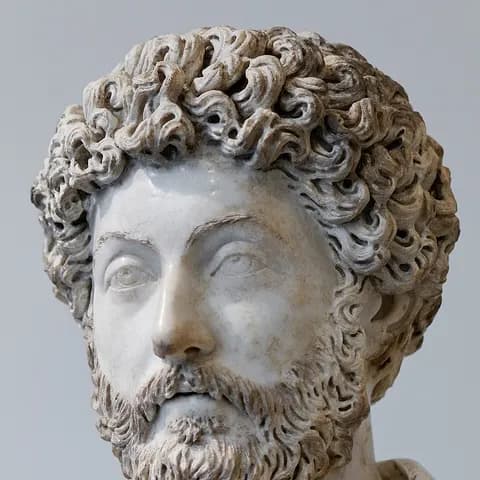 Marcus Aurelius' IQRoman Emperor & Philosopher, estimated 145+145+
 Niccolò Machiavelli's IQPolitical Philosopher & Diplomat, estimated 145+145+
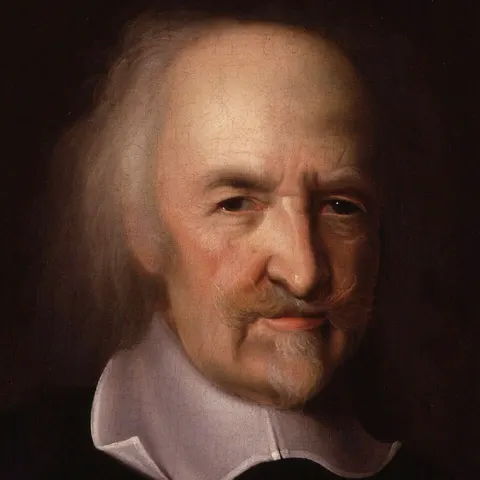 Thomas Hobbes' IQPolitical Philosopher, estimated 145+145+
 Alan Watts' IQPhilosopher & Speaker, estimated 145+145+
- Confucius' IQPhilosopher, estimated 145+145+
Rankings that include Seneca
- The highest IQ philosophers in historyRanked 39 of 43
Keep exploring
- Preference for ComplexitySign of high intelligence
- Exceptional Memory RetentionSign of high intelligence
- Dexter (Dexter's Laboratory)'s IQDexter's Laboratory, fan estimate 145
- Doctor Strange's IQMarvel Cinematic Universe, fan estimate 145
People also search for
All 307 historical IQ estimates, ranked with ranges and sources.
Seneca's IQ is 145. What's yours?
Seneca's estimate comes from the historical record. Yours can come from a real test: 25 visual reasoning questions.
25 questions · about 12 minutes
Sources
- Seneca, Stanford Encyclopedia of Philosophy. Covers his life, Stoic philosophy and works.
- Seneca, Encyclopaedia Britannica. Summarises his career, works and death.
- Cox, C. M. (1926). The Early Mental Traits of Three Hundred Geniuses. Stanford University Press.
- Simonton, D. K. (2009). Genius 101. Springer.
- Cattell, R. B. (1971). Abilities: Their Structure, Growth, and Action. Houghton Mifflin.
Last reviewed October 2026. How we estimate historical IQ