Thomas Hobbes IQ
Thomas Hobbes's IQ is estimated at 143 to 165. Catharine Cox's 1926 study gave him a corrected 165; he never took a test. His Leviathan, published in 1651, is one of the most influential books in political thought.
Hobbes' IQ is 145+. What's yours?
25 questions · about 12 minutes
Key facts
- Estimated IQ
- 145+
- Known for
- Leviathan and the social contract
- Lived
- Political Philosopher, 1588–1679
- Basis
- Cox 1926 historiometric estimate
- Confidence
- Low. Hobbes died in 1679. No IQ test was ever given; the figure comes from a 1926 study that rated historical figures from biographies.
Cox's corrected estimate for Hobbes was 165. The logical structure of Leviathan is the evidence, though some of his mathematical claims were wrong.
What was Thomas Hobbes's IQ?
Hobbes never took an IQ test. Catharine Cox's 1926 study gave him a corrected estimate of 165. Adjusted for the Flynn effect that is about 143, so LifeScore uses a range of 143 to 165, with 145+ as the marker. Leviathan is the main evidence.
What did Hobbes say about life without government?
In Leviathan he argued that without a strong authority, life would be a war of all against all, and he described it as solitary, poor, nasty, brutish and short. His answer was a social contract in which people give up some freedom to a sovereign in return for safety.
Did Hobbes meet Galileo?
Yes. Hobbes travelled in Europe and met Galileo in Italy in 1636, and he was impressed by the idea that all natural events are motion. He took that view into his philosophy and tried to explain thought, feeling and politics as matter in motion.
Where does the 165 figure come from?
The 165 is Catharine Cox's corrected estimate from her 1926 study of 301 eminent people born between 1450 and 1850. She rated each person from biographical records of what they could do as a child and young adult, then corrected for gaps in the record.
Cox's numbers sit on an old ratio-IQ scale. One secondary tabulation subtracts about 22 points for the Flynn effect, which puts Thomas Hobbes near 145.
LifeScore lists 145+, and the working range of 145 to 165 spans both figures. None of them is a test result.
How smart was Thomas Hobbes?
- 01
Leviathan
His 1651 book set out the social contract and shaped modern political theory. - 02
A translation of Thucydides
His 1629 English translation of the Peloponnesian War was his first major published work. - 03
De Cive
His 1642 book on citizenship set out his political ideas before Leviathan. - 04
Homer in old age
In his eighties he published English translations of the Iliad and the Odyssey.
How Hobbes thought
Hobbes tried to reason from simple definitions to firm conclusions, in the style of Euclid. He claimed to have found geometry late, at about 40, and was thrilled by the idea that a few clear starting points could prove complex results.
The evidence behind the estimate
An estimate built from the historical record, not a recovered test score.
What supports it
- Cox's 1926 study gave Hobbes a corrected estimate of 165, which falls to about 143 after a Flynn-effect adjustment.
- Leviathan (1651) set out the social contract in a tightly argued system.
- He translated Thucydides in 1629 and Homer in his eighties.
What it cannot prove
- His claims to have squared the circle were wrong, which shows ability varies by field.
- Political philosophy is judged on influence and argument, not on measures of reasoning speed.
- Cox's scale runs higher than modern deviation IQ, by roughly 22 points in one tabulation.
Hobbes compared with Locke, Descartes, Machiavelli
| Figure | Estimate | Range |
|---|---|---|
| Thomas Hobbes | 145+ | 145–165 |
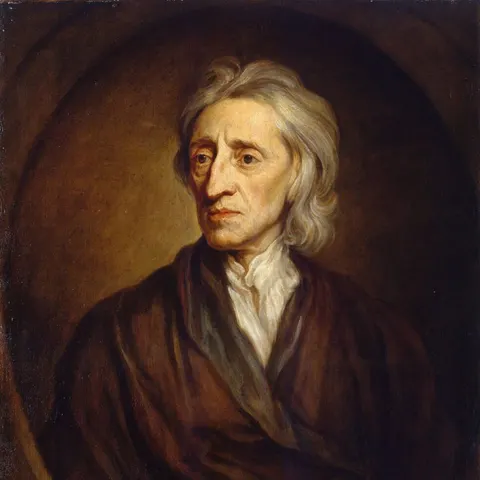
| John Locke | 155+ | 145–165 |
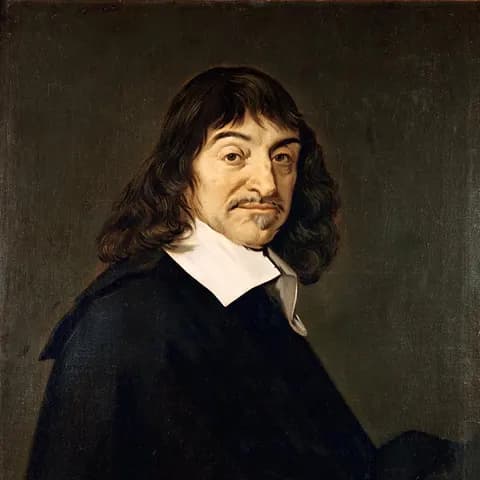
| René Descartes | 160+ | 160–180 |
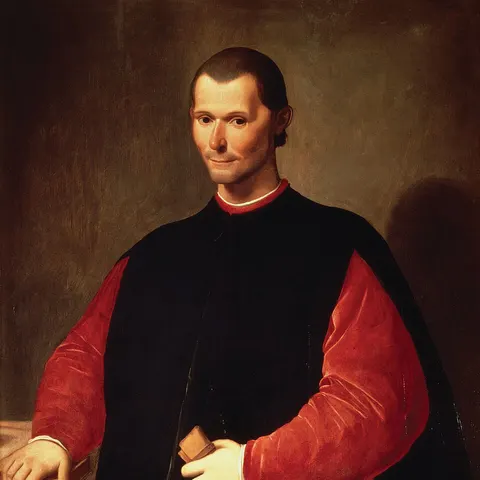
| Niccolò Machiavelli | 145+ | 135–155 |
Psychological profile
Thomas Hobbes's IQ is represented here by a retrospective estimate of 145+, not a verified test result. Thomas Hobbes is best known for exceptional logical method. The useful question is what the surviving evidence shows, not whether a precise modern score can be recovered.
Blunt, logical and unafraid of unpopular conclusions. Tried to reason about politics the way geometry reasons about shapes.
The dominant archetype here is The Logician. This archetype shapes decision patterns: what feels natural, what creates friction, and what blind spots tend to emerge.
Estimated IQ is 145+. This is a rough estimate based on documented accomplishments and contemporary accounts, not a literal measurement.
Key traits
Logical Method
He fled to France in 1640 because he feared persecution for his political views, and stayed for 11 years.Bluntness
He was said to sing aloud in his bedroom to exercise his lungs, and he lived to 91.Late Productivity
He argued about mathematics with the Oxford professor John Wallis for many years and was often wrong in those disputes.
One thing most people do not know
Hobbes said his mother gave birth to twins, himself and fear, when news of the Spanish Armada reached her.
Thomas Hobbes: common questions
Was Thomas Hobbes a genius?
What personality type was Thomas Hobbes?
What can we learn from Thomas Hobbes?
More famous IQs
 John Locke IQPhilosopher155+
 René Descartes IQPhilosopher & Mathematician160+
 Niccolò Machiavelli IQPolitical Philosopher & Diplomat145+
 Sigmund Freud IQFather of Psychoanalysis140+
 Socrates IQPhilosopher155+
- Confucius IQPhilosopher145+
 Plato IQPhilosopher160+
 Aristotle IQPhilosopher & Polymath160+
Keep exploring
- All famous IQs, ranked157 figures with ranges and sources
- What an IQ of 145 meansPercentile, rarity and classification
- What an IQ of 165 meansPercentile, rarity and classification
- Quick Pattern RecognitionSigns of high intelligence
- Rapid Learning SpeedSigns of high intelligence
- Einstein IQ testA short visual reasoning challenge
Hobbes' IQ is 145+. What's yours?
Hobbes' estimate comes from the historical record. Yours can come from a real test: 25 visual reasoning questions.
25 questions · about 12 minutes
Sources
- Thomas Hobbes, Stanford Encyclopedia of Philosophy. Scholarly account of his life, method and political theory.
- The Early Mental Traits of Three Hundred Geniuses (Cox, 1926), Stanford University Press, via Internet Archive. The original historiometric study. Cox rated 301 eminent people born 1450 to 1850 from records of their childhood and youth.
- Cox's IQ estimates of 301 eminent geniuses, IQ Comparison Site. Secondary tabulation of Cox's corrected estimates, with a version adjusted by about 22 points for the Flynn effect.
- Cox, C. M. (1926). The Early Mental Traits of Three Hundred Geniuses. Stanford University Press.
- Simonton, D. K. (2009). Genius 101. Springer.
- Cattell, R. B. (1971). Abilities: Their Structure, Growth, and Action. Houghton Mifflin.
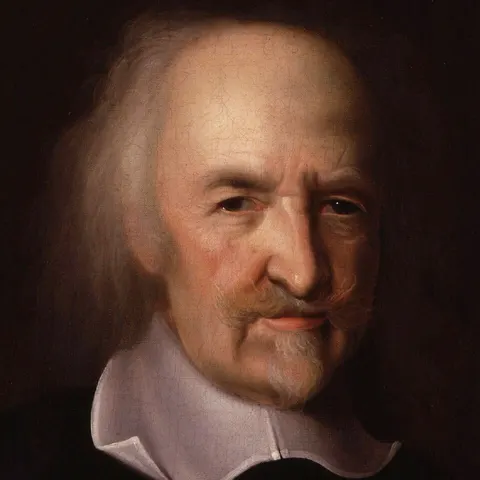
- Portrait: John Michael Wright · Public domain · Wikimedia Commons
Last reviewed September 2026. How we estimate historical IQ