Dante Alighieri IQ
Dante Alighieri's IQ is unknown; he died in 1321. LifeScore uses about 160 (range 145 to 175) as an editorial marker for the exiled Florentine whose Divine Comedy fused theology, science and politics in strict verse.
Dante's IQ is 160. What's yours?
25 questions · about 12 minutes
Think you're smarter than Dante Alighieri? Try question 1.
Which option completes the grid? One tap, no sign-up.
Key facts
- Estimated IQ
- IQ 160
- Range
- IQ 145 to 175
- Known for
- The Divine Comedy
- Lived
- Poet, 1265–1321
- Basis
- No documented estimate; editorial marker from the record
- Confidence
- Very low. Lived long before IQ testing and before the period Cox 1926 covered. No test or published estimate exists.
Dante has no test or published estimate. 160 is an editorial marker for a poet who built a 14,233-line epic with an exact numerical architecture.
Dante Alighieri in brief
Dante Alighieri was born in Florence in 1265 into a minor noble family. He studied rhetoric and philosophy, fought at the battle of Campaldino and served as one of the city's priors. In 1302 a rival faction exiled him on pain of death, and he never returned. In exile he wrote the Divine Comedy, an epic journey through Hell, Purgatory and Paradise, in the Tuscan vernacular rather than Latin. He died in Ravenna in 1321.
What was Dante's IQ?
No figure exists, and he lived long before the Cox 1926 period. LifeScore lists about 160 as an editorial marker, range 145 to 175. It rests on the Comedy's exact structure, its command of medieval philosophy, astronomy and theology, and his role in shaping a language.
Why is the Divine Comedy so important?
It is one of the greatest poems in any language and a summary of the medieval world view. Writing it in Italian rather than Latin showed that a vernacular could carry the highest literature, and its images of Hell shaped Western art for seven centuries.
Who was Beatrice?
Probably Beatrice Portinari, a Florentine woman Dante met as a child and loved from afar. She died in 1290 at 24. He wrote about her in La Vita Nuova and made her his guide through Paradise in the Comedy.
How smart was Dante Alighieri?
- 01
The Divine Comedy
Inferno, Purgatorio and Paradiso, finished shortly before his death. - 02
La Vita Nuova
A sequence of poems and prose about his love for Beatrice. - 03
De vulgari eloquentia
A Latin treatise arguing for the dignity of vernacular language. - 04
Monarchia
A political treatise on the relationship between emperor and pope.
How Dante thought
Dante thought architecturally. Every sin has its place and punishment, every number has meaning, and the rhyme scheme itself mirrors the Trinity. Holding such a large, consistent system in mind while writing vivid, human scenes is a rare combination.
The evidence behind the estimate
An estimate built from the historical record, not a recovered test score.
What supports it
- The Comedy survives in hundreds of early manuscripts.
- His prose works show training in philosophy, rhetoric and astronomy.
- He served in Florence's highest office before his exile.
What it cannot prove
- Few personal documents survive; no autograph manuscript of the Comedy is known.
- Literary genius is mostly verbal and creative; an IQ test samples only part of that, and style cannot be scored.
- An editorial marker is a comparison aid built from achievement, not a measurement, and two careful readers could place it ten points apart.
Dante compared with Shakespeare, Milton, Chaucer
| Figure | Estimate | Range |
|---|---|---|
| Dante Alighieri | 160 | 145–175 |
| William Shakespeare | 160+ | 145–170 |
| John Milton | 160+ | 160–180 |
| Geoffrey Chaucer | 150 | 135–165 |
How would you score?
Where would you land next to Dante Alighieri?
Dante Alighieri's 160 is an estimate from the historical record, with a working range of 145 to 175. On the standard IQ scale an IQ of 160 sits at the 99.997th percentile: about 1 in 31,600 people score that high. Nobody can test Dante now. You can find out where you sit on the same scale.
- 100Average adult50th percentile
- 130Gifted linetop 2%, about 1 in 44
- 160Dante's99.997th percentile, about 1 in 31,600
- ?Youscored on the same scale
25 questions · about 12 minutes
Psychological profile
Dante Alighieri's IQ is represented here by a retrospective estimate of 160, not a verified test result. Dante Alighieri is best known for exceptional structural imagination. The useful question is what the surviving evidence shows, not whether a precise modern score can be recovered.
Proud, passionate and exacting. An exile who settled his scores with enemies in verse.
The dominant archetype here is The Architect Poet. This archetype shapes decision patterns: what feels natural, what creates friction, and what blind spots tend to emerge.
Estimated IQ is 160. This is a rough estimate based on documented accomplishments and contemporary accounts, not a literal measurement.
Key traits
Structural Imagination
The Comedy has 100 cantos in three parts of 33, plus an introduction, in interlocking three-line terza rima.Verbal Mastery
He wrote in Tuscan Italian, helping make it the basis of the modern Italian language.Learning
He placed real Florentine enemies, and a living pope, in his Hell.
One thing most people do not know
Florence formally revoked his sentence of exile in 2008, nearly 700 years late.
Dante Alighieri: common questions
Was Dante Alighieri a genius?
What personality type was Dante Alighieri?
What can we learn from Dante Alighieri?
The IQ-style test the NFL used
Dante Alighieri's IQ is an estimate. Yours could be real.
Before the draft, NFL teams gave prospects the Wonderlic: 50 questions in 12 minutes, and almost nobody finishes. We collected 241 reported player scores, each with its source. The average working adult scores about 21.
People with similar IQ estimates
Dante Alighieri's estimate of 160 falls in the profoundly gifted IQ range. Want your own number rather than Dante's? Take the free IQ test or the quick IQ test. See what an IQ of 160 means, place it on the IQ chart or check how rare it is with the IQ rarity calculator.
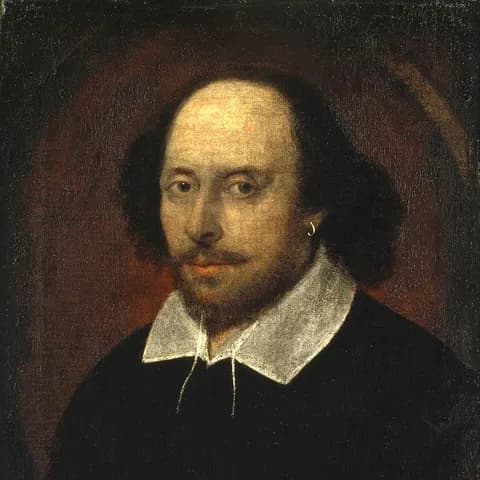 William Shakespeare's IQPlaywright & Poet, estimated 160+160+
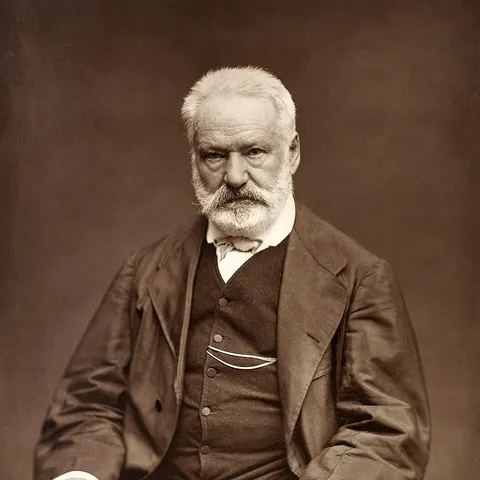 Victor Hugo's IQNovelist & Poet, estimated 160+160+
- Giacomo Leopardi's IQPoet & Philosopher, estimated 160160
- James Joyce's IQNovelist, estimated 160160
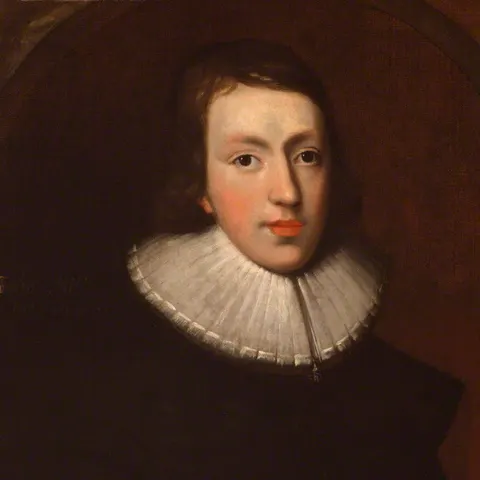 John Milton's IQPoet & Polemicist, estimated 160+160+
Rankings that include Dante
- The highest IQ writers and poets in historyRanked 2 of 33
Keep exploring
- Subtle Signs Someone is Smarter Than You ThinkSign of high intelligence
- Strong Logical ReasoningSign of high intelligence
- L Lawliet's IQDeath Note, fan estimate 160
- Tony Stark's IQIron Man, fan estimate 160
People also search for
All 307 historical IQ estimates, ranked with ranges and sources.
Dante's IQ is 160. What's yours?
Dante's estimate comes from the historical record. Yours can come from a real test: 25 visual reasoning questions.
25 questions · about 12 minutes
Sources
- Dante, Encyclopaedia Britannica. Summarises his life, exile and works.
- Divine Comedy, Wikipedia. Describes the poem's structure, language and influence.
- Cox, C. M. (1926). The Early Mental Traits of Three Hundred Geniuses. Stanford University Press.
- Simonton, D. K. (2009). Genius 101. Springer.
- Cattell, R. B. (1971). Abilities: Their Structure, Growth, and Action. Houghton Mifflin.
Last reviewed October 2026. How we estimate historical IQ