James Joyce IQ
James Joyce's IQ is unknown. LifeScore uses about 160 (range 145 to 175) as an editorial marker for the polyglot Dubliner whose Ulysses and Finnegans Wake pushed the novel to its verbal limits.
Joyce's IQ is 160. What's yours?
25 questions · about 12 minutes
Think you're smarter than James Joyce? Try question 1.
Which option completes the grid? One tap, no sign-up.
Key facts
- Estimated IQ
- IQ 160
- Range
- IQ 145 to 175
- Known for
- Ulysses and Finnegans Wake
- Lived
- Novelist, 1882–1941
- Basis
- No documented estimate; editorial marker from the record
- Confidence
- Very low. Born after 1850, so outside the Cox 1926 study. No IQ test result is known.
Joyce has no test score. 160 is an editorial marker for a polyglot whose novels are among the most complex verbal structures ever built.
James Joyce in brief
James Joyce was born in Dublin in 1882 and educated by Jesuits at Clongowes Wood and Belvedere colleges and at University College Dublin, where he studied modern languages. He left Ireland in 1904 with Nora Barnacle and lived in Trieste, Zurich and Paris, often teaching English to survive. He published Dubliners, A Portrait of the Artist as a Young Man, Ulysses in 1922 and the experimental Finnegans Wake in 1939. He died in Zurich in 1941.
What was James Joyce's IQ?
No figure exists. LifeScore lists about 160 as an editorial marker, range 145 to 175. It rests on his languages, his prodigious memory for Dublin detail and the structural complexity of Ulysses, which maps each chapter onto an episode of Homer's Odyssey.
Why is Ulysses so hard to read?
Each of its 18 chapters uses a different style, from stream of consciousness to a question-and-answer catechism and parodies of English prose through the ages. It is packed with allusions and has almost no conventional plot beyond one day in Dublin.
How many languages did Joyce know?
He worked in English, Italian, French and German, read Latin and Norwegian, and studied others. Finnegans Wake draws words from dozens of languages, though he did not speak them all fluently.
Was Ulysses banned?
Yes. Episodes serialised in an American magazine led to an obscenity conviction in 1921, and the book was banned in the United States until a judge ruled in 1933 that it was not obscene. Copies were also seized in Britain and elsewhere for years after its 1922 publication in Paris.
How smart was James Joyce?
- 01
Ulysses (1922)
Frequently ranked the greatest English-language novel of the century. - 02
Dubliners (1914)
Fifteen short stories of Dublin life. - 03
A Portrait of the Artist as a Young Man
A novel of his own youth and education. - 04
Finnegans Wake (1939)
An experimental night-book of invented language.
How Joyce thought
Joyce thought in correspondences. He mapped Homer onto Dublin, gave each chapter its own organ, colour and art, and kept track of thousands of details. That kind of large-scale structure with dense local wordplay reflects exceptional verbal memory and planning.
The evidence behind the estimate
An estimate built from the historical record, not a recovered test score.
What supports it
- His schemas for Ulysses, given to friends, document its structure.
- He studied modern languages at University College Dublin.
- He taught languages for a living in Trieste and Zurich.
What it cannot prove
- Difficulty of a book is not a measure of the author's intelligence.
- Literary genius is mostly verbal and creative; an IQ test samples only part of that, and style cannot be scored.
- An editorial marker is a comparison aid built from achievement, not a measurement, and two careful readers could place it ten points apart.
Joyce compared with Woolf, Kafka, Shakespeare
| Figure | Estimate | Range |
|---|---|---|
| James Joyce | 160 | 145–175 |
| Virginia Woolf | 150+ | 135–160 |
| Franz Kafka | 145+ | 130–155 |
| William Shakespeare | 160+ | 145–170 |
How would you score?
Where would you land next to James Joyce?
James Joyce's 160 is an estimate from the historical record, with a working range of 145 to 175. On the standard IQ scale an IQ of 160 sits at the 99.997th percentile: about 1 in 31,600 people score that high. Nobody can test Joyce now. You can find out where you sit on the same scale.
- 100Average adult50th percentile
- 130Gifted linetop 2%, about 1 in 44
- 160Joyce's99.997th percentile, about 1 in 31,600
- ?Youscored on the same scale
25 questions · about 12 minutes
Psychological profile
James Joyce's IQ is represented here by a retrospective estimate of 160, not a verified test result. James Joyce is best known for exceptional linguistic range. The useful question is what the surviving evidence shows, not whether a precise modern score can be recovered.
Obsessive, funny and exiled. A writer who left Ireland and then wrote about Dublin for the rest of his life.
The dominant archetype here is The Experimenter. This archetype shapes decision patterns: what feels natural, what creates friction, and what blind spots tend to emerge.
Estimated IQ is 160. This is a rough estimate based on documented accomplishments and contemporary accounts, not a literal measurement.
Key traits
Linguistic Range
He read or spoke many languages, including Italian, French, German and Norwegian, which he learned to read Ibsen.Memory
Ulysses tracks one Dublin day, 16 June 1904, now celebrated as Bloomsday.Structural Play
Finnegans Wake uses words built from dozens of languages.
One thing most people do not know
He wrote with crayons on large sheets in later life because of failing eyesight.
James Joyce: common questions
Was James Joyce a genius?
What personality type was James Joyce?
What can we learn from James Joyce?
The IQ-style test the NFL used
James Joyce's IQ is an estimate. Yours could be real.
Before the draft, NFL teams gave prospects the Wonderlic: 50 questions in 12 minutes, and almost nobody finishes. We collected 241 reported player scores, each with its source. The average working adult scores about 21.
People with similar IQ estimates
James Joyce's estimate of 160 falls in the profoundly gifted IQ range. Want your own number rather than James's? Take the free IQ test or the quick IQ test. See what an IQ of 160 means, place it on the IQ chart or check how rare it is with the IQ rarity calculator.
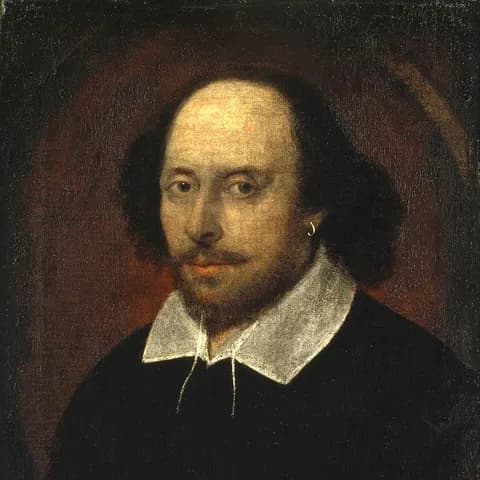 William Shakespeare's IQPlaywright & Poet, estimated 160+160+
- Dante Alighieri's IQPoet, estimated 160160
- Giacomo Leopardi's IQPoet & Philosopher, estimated 160160
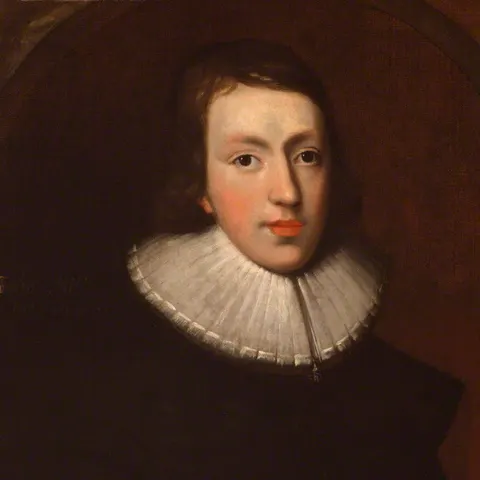 John Milton's IQPoet & Polemicist, estimated 160+160+
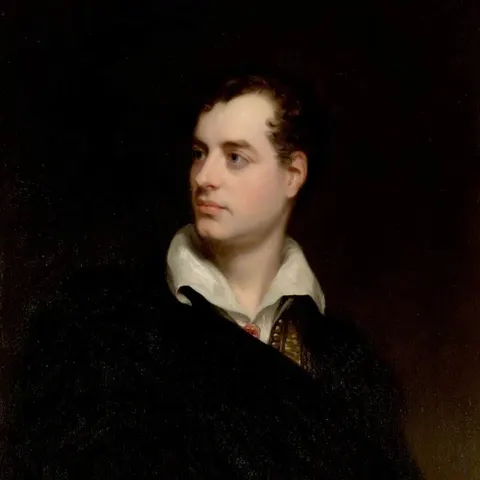 Lord Byron's IQPoet, estimated 160+160+
Rankings that include Joyce
- The highest IQ writers and poets in historyRanked 4 of 33
Keep exploring
- Deep Intellectual CuriositySign of high intelligence
- Strong Logical ReasoningSign of high intelligence
- L Lawliet's IQDeath Note, fan estimate 160
- Tony Stark's IQIron Man, fan estimate 160
People also search for
All 307 historical IQ estimates, ranked with ranges and sources.
Joyce's IQ is 160. What's yours?
Joyce's estimate comes from the historical record. Yours can come from a real test: 25 visual reasoning questions.
25 questions · about 12 minutes
Sources
- James Joyce, Encyclopaedia Britannica. Summarises his life, languages and novels.
- Ulysses (novel), Wikipedia. Describes the novel's structure and reception.
- Cox, C. M. (1926). The Early Mental Traits of Three Hundred Geniuses. Stanford University Press.
- Simonton, D. K. (2009). Genius 101. Springer.
- Cattell, R. B. (1971). Abilities: Their Structure, Growth, and Action. Houghton Mifflin.
Last reviewed October 2026. How we estimate historical IQ