Lord Byron IQ
Lord Byron's IQ is estimated at 158 to 180. Catharine Cox's 1926 study gave him a corrected 180; he never took a test. His fluency in verse is documented, and so is his daughter's later career in mathematics.
Byron's IQ is 160+. What's yours?
25 questions · about 12 minutes
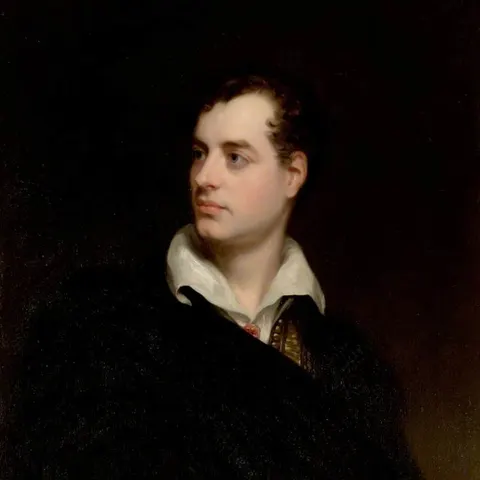
Key facts
- Estimated IQ
- 160+
- Known for
- Don Juan, Childe Harold and a life as a Romantic celebrity
- Lived
- Poet, 1788–1824
- Basis
- Cox 1926 historiometric estimate
- Confidence
- Low. Byron died in 1824. No IQ test was ever given; the figure comes from a 1926 study that rated historical figures from biographies.
Cox's corrected estimate for Byron was 180. His verse is the documented evidence, but writing talent and IQ are not the same thing.
What was Lord Byron's IQ?
Byron never took an IQ test. Catharine Cox's 1926 study gave him a corrected estimate of 180. Adjusted for the Flynn effect that is about 158, so LifeScore uses a range of 158 to 180, with 160+ as the marker. His poems are the evidence.
How famous did Byron become?
Famous overnight. After the first two cantos of Childe Harold's Pilgrimage appeared in 1812, he is said to have remarked that he woke one morning and found himself famous. The poem sold out within days, and he became a celebrity in London society.
Was Byron the father of Ada Lovelace?
Yes. His only legitimate child, Augusta Ada, was born in December 1815. Byron left England a few months later and never saw her again. She grew up to work with Charles Babbage and is often credited with writing the first computer program.
Where does the 180 figure come from?
The 180 is Catharine Cox's corrected estimate from her 1926 study of 301 eminent people born between 1450 and 1850. She rated each person from biographical records of what they could do as a child and young adult, then corrected for gaps in the record.
Cox's numbers sit on an old ratio-IQ scale. One secondary tabulation subtracts about 22 points for the Flynn effect, which puts Lord Byron near 160.
LifeScore lists 160+, and the working range of 160 to 180 spans both figures. None of them is a test result.
How smart was Lord Byron?
- 01
Childe Harold
Published from 1812, it turned him into a celebrity almost overnight. - 02
Don Juan
His unfinished comic epic, written from 1819 to 1824, is among the longest and funniest poems in English. - 03
A peer in the House of Lords
He inherited his title at ten and made speeches defending Luddite weavers. - 04
The Greek cause
He raised money and joined the Greek fight for independence, and died at Missolonghi in 1824.
How Byron thought
Byron wrote quickly and revised little. His strength was voice: a conversational, ironic tone that moved from comedy to feeling in a few lines, and rhyme that made the hard look easy.
The evidence behind the estimate
An estimate built from the historical record, not a recovered test score.
What supports it
- Cox's 1926 study gave Byron a corrected estimate of 180, which falls to about 158 after a Flynn-effect adjustment.
- Childe Harold (from 1812) made him famous, and Don Juan (1819 to 1824) is a major comic epic.
- He took his seat in the House of Lords and spoke against the Frame-Breaking Act in 1812.
What it cannot prove
- Literary success reflects style, fashion and publicity as well as reasoning ability.
- Childhood evidence for Cox's method is thinner for a poet than for a prodigy mathematician.
- Cox's scale runs higher than modern deviation IQ, by roughly 22 points in one tabulation.
Byron compared with Milton, Goethe, Victor Hugo
| Figure | Estimate | Range |
|---|---|---|
| Lord Byron | 160+ | 160–180 |
| John Milton | 160+ | 160–180 |
| Johann Wolfgang von Goethe | 190+ | 190–210 |
| Victor Hugo | 160+ | 160–180 |
Psychological profile
Lord Byron's IQ is represented here by a retrospective estimate of 160+, not a verified test result. Lord Byron is best known for exceptional verbal fluency. The useful question is what the surviving evidence shows, not whether a precise modern score can be recovered.
Quick, witty and restless. Wrote with ease and self-mockery, and lived as publicly as he wrote.
The dominant archetype here is The Bard. This archetype shapes decision patterns: what feels natural, what creates friction, and what blind spots tend to emerge.
Estimated IQ is 160+. This is a rough estimate based on documented accomplishments and contemporary accounts, not a literal measurement.
Key traits
Verbal Fluency
He was born with a deformed right foot and was sensitive about it all his life.Wit
He wrote cantos in a rush, often in a few days, and sent them to his publisher.Restlessness
He swam the Hellespont in 1810 in imitation of the myth of Leander.
One thing most people do not know
Byron kept a pet bear at Cambridge because the college rules banned dogs.
Lord Byron: common questions
Was Lord Byron a genius?
What personality type was Lord Byron?
What can we learn from Lord Byron?
More famous IQs
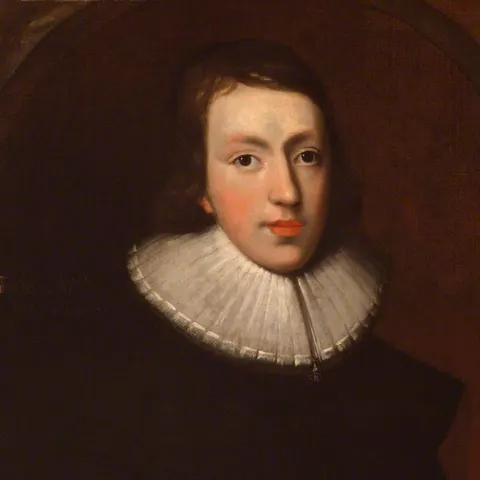 John Milton IQPoet & Polemicist160+
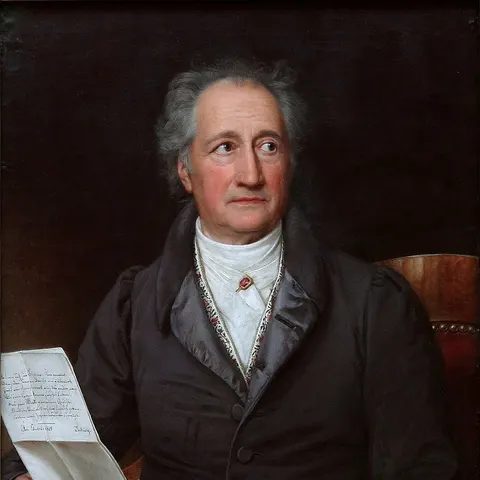 Johann Wolfgang von Goethe IQPoet, Novelist & Scientist190+
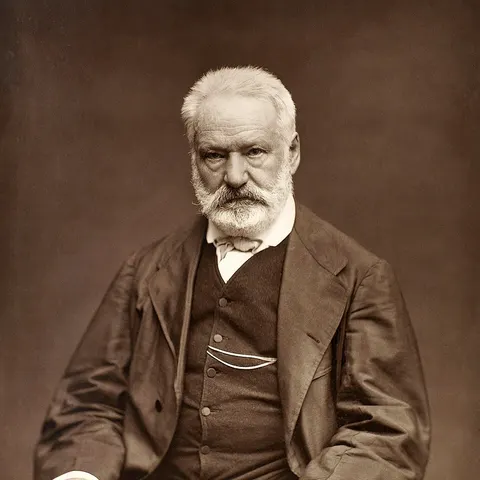 Victor Hugo IQNovelist & Poet160+
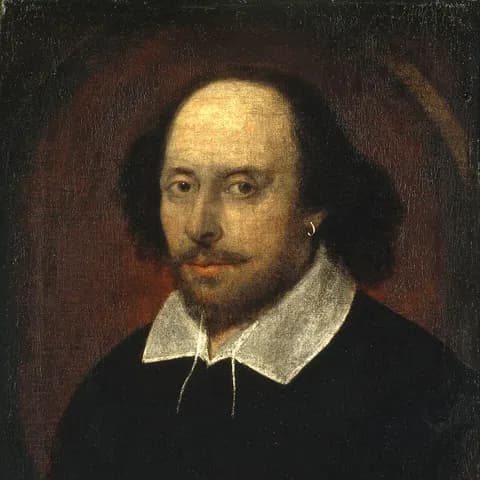 William Shakespeare IQPlaywright & Poet160+
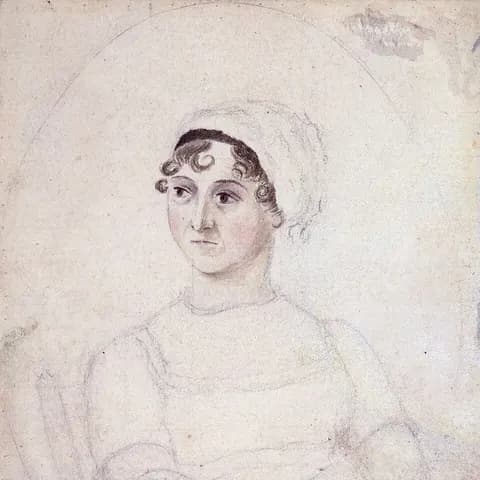 Jane Austen IQNovelist145+
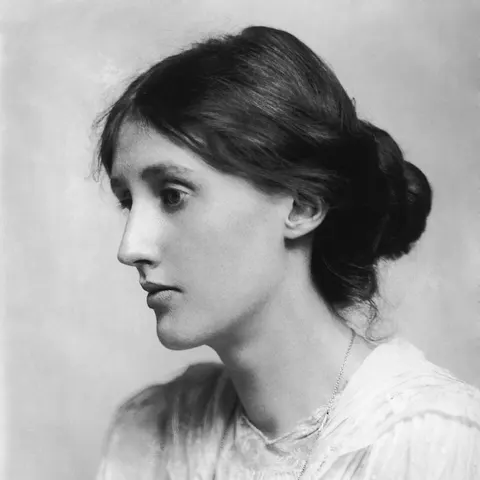 Virginia Woolf IQNovelist & Essayist150+
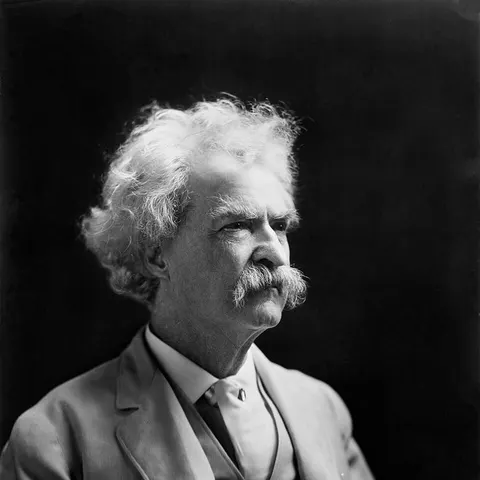 Mark Twain IQAuthor & Humorist145+
 Ernest Hemingway IQNovelist & Journalist140+
Keep exploring
- All famous IQs, ranked157 figures with ranges and sources
- What an IQ of 160 meansPercentile, rarity and classification
- What an IQ of 180 meansPercentile, rarity and classification
- Quick Pattern RecognitionSigns of high intelligence
- Rapid Learning SpeedSigns of high intelligence
- Einstein IQ testA short visual reasoning challenge
Byron's IQ is 160+. What's yours?
Byron's estimate comes from the historical record. Yours can come from a real test: 25 visual reasoning questions.
25 questions · about 12 minutes
Sources
- Lord Byron, Encyclopaedia Britannica. Biography covering his poetry, his fame, his marriage and the Greek cause.
- The Early Mental Traits of Three Hundred Geniuses (Cox, 1926), Stanford University Press, via Internet Archive. The original historiometric study. Cox rated 301 eminent people born 1450 to 1850 from records of their childhood and youth.
- Cox's IQ estimates of 301 eminent geniuses, IQ Comparison Site. Secondary tabulation of Cox's corrected estimates, with a version adjusted by about 22 points for the Flynn effect.
- Cox, C. M. (1926). The Early Mental Traits of Three Hundred Geniuses. Stanford University Press.
- Simonton, D. K. (2009). Genius 101. Springer.
- Cattell, R. B. (1971). Abilities: Their Structure, Growth, and Action. Houghton Mifflin.
- Portrait: Thomas Phillips · Public domain · Wikimedia Commons
Last reviewed September 2026. How we estimate historical IQ