Geoffrey Chaucer IQ
Geoffrey Chaucer's IQ is unknown; he died in 1400. LifeScore uses about 150 (range 135 to 165) as an editorial marker for the royal official, translator and author of The Canterbury Tales.
Chaucer's IQ is 150. What's yours?
25 questions · about 12 minutes
Think you're smarter than Geoffrey Chaucer? Try question 1.
Which option completes the grid? One tap, no sign-up.
Key facts
- Estimated IQ
- IQ 150
- Known for
- The Canterbury Tales
- Lived
- Poet & Civil Servant, c. 1343–1400
- Basis
- No documented estimate; editorial marker from the record
- Confidence
- Very low. Lived long before IQ testing and before the period Cox 1926 covered. No test or published estimate exists.
Chaucer has no test or estimate. 150 is an editorial marker for a busy civil servant who wrote the first great poetry in English.
Geoffrey Chaucer in brief
Geoffrey Chaucer was born in London around 1343, the son of a wine merchant. He served as a page in a noble household, was captured in France during the Hundred Years' War and was ransomed by the king. He spent his life in royal service as a diplomat, customs controller and clerk of the king's works, while writing poetry in English. His unfinished Canterbury Tales follows a group of pilgrims telling stories. He died in 1400.
What was Geoffrey Chaucer's IQ?
No figure exists, and he lived long before the Cox 1926 period. LifeScore lists about 150 as an editorial marker, range 135 to 165. It rests on his translations from three languages, his technical writing on astronomy and the psychological range of his characters.
Why is Chaucer called the father of English literature?
He wrote major poetry in English when the court still used French and scholars used Latin. His success helped establish English, specifically the London dialect, as a literary language, and he introduced verse forms such as rhyme royal.
Did Chaucer finish The Canterbury Tales?
No. The plan was for about 30 pilgrims to tell four tales each, around 120 in all. He completed 24, some of them unfinished, before his death. The order of the surviving fragments is still debated.
Is Chaucer hard to read today?
His Middle English looks unfamiliar, but with a glossary most readers can follow it, and reading aloud helps because spelling followed sound. Modern translations exist, and many students read the General Prologue to The Canterbury Tales in the original.
How smart was Geoffrey Chaucer?
- 01
The Canterbury Tales
Twenty-four tales told by a cross-section of English society. - 02
Troilus and Criseyde
A long poem of love and betrayal set in Troy. - 03
Treatise on the Astrolabe
One of the earliest technical works in English. - 04
Royal service
Diplomat, customs controller and clerk of the king's works.
How Chaucer thought
Chaucer reasoned about people. He let each pilgrim reveal themselves through their own story and voice, often contradicting the narrator. Managing many viewpoints and an ironic distance from each is a sophisticated form of social and verbal intelligence.
The evidence behind the estimate
An estimate built from the historical record, not a recovered test score.
What supports it
- Royal records document his offices, missions and payments.
- He translated from French, Latin and Italian.
- His astrolabe treatise shows working knowledge of astronomy.
What it cannot prove
- Personal details beyond official records are scarce.
- Literary genius is mostly verbal and creative; an IQ test samples only part of that, and style cannot be scored.
- An editorial marker is a comparison aid built from achievement, not a measurement, and two careful readers could place it ten points apart.
Chaucer compared with Dante, Shakespeare, More
| Figure | Estimate | Range |
|---|---|---|
| Geoffrey Chaucer | 150 | 135–165 |
| Dante Alighieri | 160 | 145–175 |
| William Shakespeare | 160+ | 145–170 |
| Thomas More | 135+ | 135–155 |
How would you score?
Where would you land next to Geoffrey Chaucer?
Geoffrey Chaucer's 150 is an estimate from the historical record, with a working range of 135 to 165. On the standard IQ scale an IQ of 150 sits at the 99.96th percentile: about 1 in 2,330 people score that high. Nobody can test Chaucer now. You can find out where you sit on the same scale.
- 100Average adult50th percentile
- 130Gifted linetop 2%, about 1 in 44
- 150Chaucer's99.96th percentile, about 1 in 2,330
- ?Youscored on the same scale
25 questions · about 12 minutes
Psychological profile
Geoffrey Chaucer's IQ is represented here by a retrospective estimate of 150, not a verified test result. Geoffrey Chaucer is best known for exceptional social insight. The useful question is what the surviving evidence shows, not whether a precise modern score can be recovered.
Observant, ironic and humane. A sharp-eyed official who caught every type of person in verse.
The dominant archetype here is The Observer. This archetype shapes decision patterns: what feels natural, what creates friction, and what blind spots tend to emerge.
Estimated IQ is 150. This is a rough estimate based on documented accomplishments and contemporary accounts, not a literal measurement.
Key traits
Social Insight
He also wrote a technical manual for children on using an astrolabe.Irony
He translated from French, Latin and Italian, including Boccaccio.Verbal Range
He was the first poet buried in what became Poets' Corner in Westminster Abbey.
One thing most people do not know
A story first told in 1598 says he was fined two shillings as a young man for beating a friar in Fleet Street.
Geoffrey Chaucer: common questions
Was Geoffrey Chaucer a genius?
What personality type was Geoffrey Chaucer?
What can we learn from Geoffrey Chaucer?
The IQ-style test the NFL used
Geoffrey Chaucer's IQ is an estimate. Yours could be real.
Before the draft, NFL teams gave prospects the Wonderlic: 50 questions in 12 minutes, and almost nobody finishes. We collected 241 reported player scores, each with its source. The average working adult scores about 21.
People with similar IQ estimates
Geoffrey Chaucer's estimate of 150 falls in the genius level IQ range. Want your own number rather than Geoffrey's? Take the free IQ test or the quick IQ test. See what an IQ of 150 means, place it on the IQ chart or check how rare it is with the IQ rarity calculator.
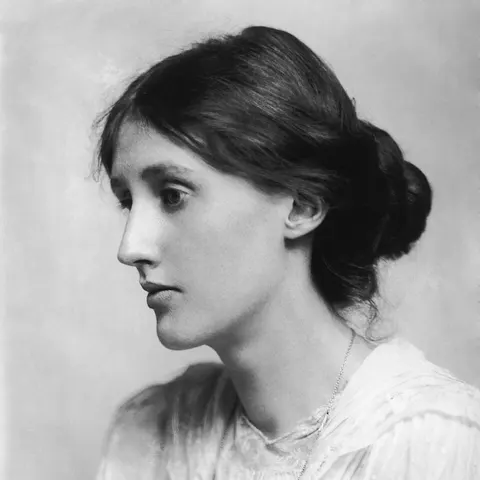 Virginia Woolf's IQNovelist & Essayist, estimated 150+150+
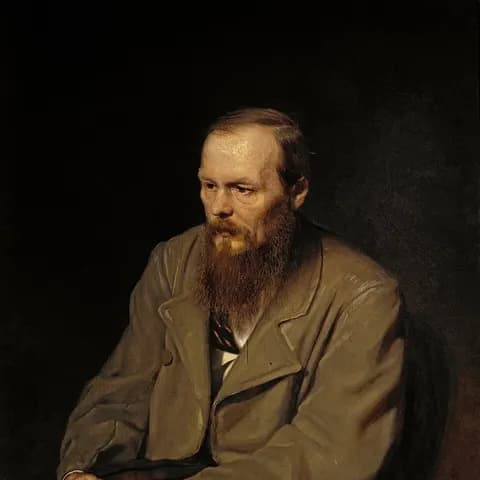 Fyodor Dostoevsky's IQNovelist, estimated 150+150+
- Edgar Allan Poe's IQWriter & Critic, estimated 150150
- Miguel de Cervantes' IQNovelist, estimated 150150
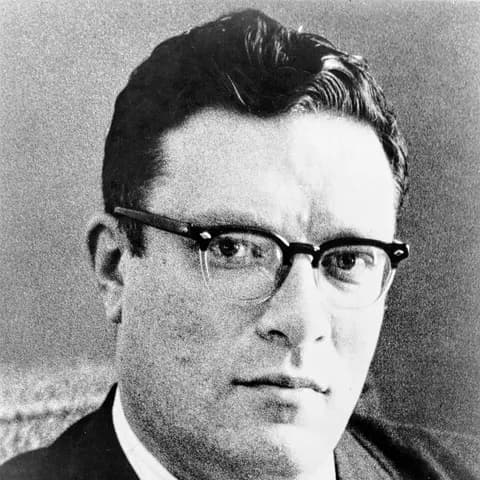 Isaac Asimov's IQScience Fiction Author, estimated 150+150+
Rankings that include Chaucer
- The highest IQ writers and poets in historyRanked 17 of 33
Keep exploring
- Exceptional Memory RetentionSign of high intelligence
- Strong Self-Teaching AbilitySign of high intelligence
- Tyrion Lannister's IQGame of Thrones, fan estimate 150
- Erwin Smith's IQAttack on Titan, fan estimate 150
People also search for
All 307 historical IQ estimates, ranked with ranges and sources.
Chaucer's IQ is 150. What's yours?
Chaucer's estimate comes from the historical record. Yours can come from a real test: 25 visual reasoning questions.
25 questions · about 12 minutes
Sources
- Geoffrey Chaucer, Encyclopaedia Britannica. Summarises his career and works.
- The Canterbury Tales, Wikipedia. Describes the tales, the pilgrims and the manuscripts.
- Cox, C. M. (1926). The Early Mental Traits of Three Hundred Geniuses. Stanford University Press.
- Simonton, D. K. (2009). Genius 101. Springer.
- Cattell, R. B. (1971). Abilities: Their Structure, Growth, and Action. Houghton Mifflin.
Last reviewed October 2026. How we estimate historical IQ