Miguel de Cervantes IQ
Miguel de Cervantes' IQ is unknown; no test or confirmed study figure exists. LifeScore uses about 150 (range 135 to 165) as an editorial marker for the soldier, captive and tax collector who wrote Don Quixote.
Cervantes' IQ is 150. What's yours?
25 questions · about 12 minutes
Think you're smarter than Miguel de Cervantes? Try question 1.
Which option completes the grid? One tap, no sign-up.
Key facts
- Estimated IQ
- IQ 150
- Known for
- Don Quixote, often called the first modern novel
- Lived
- Novelist, 1547–1616
- Basis
- No documented estimate; editorial marker from the record
- Confidence
- Very low. Born inside the period Cox 1926 covered, but we could not confirm a Cox figure from an accessible tabulation, so none is quoted. No IQ test was ever given.
Cervantes has no test and no Cox figure we could confirm. 150 is an editorial marker for the soldier and tax collector who invented the modern novel.
Miguel de Cervantes in brief
Miguel de Cervantes was born in Alcalá de Henares, Spain, in 1547, the son of a struggling surgeon. He was wounded at the naval battle of Lepanto in 1571, losing the use of his left hand, and was then captured by pirates and held in Algiers for five years. Back in Spain he worked as a tax collector and was jailed over his accounts. He published Don Quixote in two parts, in 1605 and 1615. He died in Madrid in 1616.
What was Miguel de Cervantes' IQ?
No figure exists. LifeScore lists about 150 as an editorial marker, range 135 to 165. It rests on Don Quixote's invention: a book that plays with fiction, reality and its own readers in ways novelists still copy.
Why is Don Quixote called the first modern novel?
It follows ordinary people in a real setting, its characters change through the story, and it is full of self-awareness: characters in Part Two have read Part One. It also parodies the chivalric romances of its time.
Was Cervantes really a prisoner?
Yes. In 1575 Barbary pirates captured his ship. He was held in Algiers for five years and made four escape attempts before Trinitarian friars paid his ransom in 1580.
How smart was Miguel de Cervantes?
- 01
Don Quixote
Published in two parts, 1605 and 1615. - 02
Exemplary Novels
Twelve short stories published in 1613. - 03
Battle of Lepanto
Fought and was wounded in the 1571 naval battle. - 04
Spanish literature
Spanish is often called "the language of Cervantes".
How Cervantes thought
Cervantes worked in layers. He wrote a parody that became sincere, a comedy that became tragic, and a story that comments on itself. Keeping several levels of meaning in play at once is a mark of high verbal and abstract intelligence.
The evidence behind the estimate
An estimate built from the historical record, not a recovered test score.
What supports it
- Don Quixote is among the most translated books in history.
- Records document his captivity, ransom and tax career.
- His work shaped the novel as a form across Europe.
What it cannot prove
- His formal education is poorly documented.
- Literary genius is mostly verbal and creative; an IQ test samples only part of that, and style cannot be scored.
- An editorial marker is a comparison aid built from achievement, not a measurement, and two careful readers could place it ten points apart.
Cervantes compared with Shakespeare, Dante, Voltaire
| Figure | Estimate | Range |
|---|---|---|
| Miguel de Cervantes | 150 | 135–165 |
| William Shakespeare | 160+ | 145–170 |
| Dante Alighieri | 160 | 145–175 |
| Voltaire | 170+ | 170–190 |
How would you score?
Where would you land next to Miguel de Cervantes?
Miguel de Cervantes' 150 is an estimate from the historical record, with a working range of 135 to 165. On the standard IQ scale an IQ of 150 sits at the 99.96th percentile: about 1 in 2,330 people score that high. Nobody can test Cervantes now. You can find out where you sit on the same scale.
- 100Average adult50th percentile
- 130Gifted linetop 2%, about 1 in 44
- 150Cervantes'99.96th percentile, about 1 in 2,330
- ?Youscored on the same scale
25 questions · about 12 minutes
Psychological profile
Miguel de Cervantes's IQ is represented here by a retrospective estimate of 150, not a verified test result. Miguel de Cervantes is best known for exceptional irony. The useful question is what the surviving evidence shows, not whether a precise modern score can be recovered.
Resilient, wry and humane. A man who turned a hard life into comedy that is also tragedy.
The dominant archetype here is The Ironist. This archetype shapes decision patterns: what feels natural, what creates friction, and what blind spots tend to emerge.
Estimated IQ is 150. This is a rough estimate based on documented accomplishments and contemporary accounts, not a literal measurement.
Key traits
Irony
He made four escape attempts during five years of captivity in Algiers.Resilience
Part Two of Don Quixote mocks a fake sequel by another writer that appeared in 1614.Narrative Invention
He and Shakespeare are both traditionally dated to 23 April 1616, but Spain and England used different calendars, so they died about ten days apart.
One thing most people do not know
In 2015 researchers announced they had found his remains in a convent in Madrid.
Miguel de Cervantes: common questions
Was Miguel de Cervantes a genius?
What personality type was Miguel de Cervantes?
What can we learn from Miguel de Cervantes?
The IQ-style test the NFL used
Miguel de Cervantes' IQ is an estimate. Yours could be real.
Before the draft, NFL teams gave prospects the Wonderlic: 50 questions in 12 minutes, and almost nobody finishes. We collected 241 reported player scores, each with its source. The average working adult scores about 21.
People with similar IQ estimates
Miguel de Cervantes' estimate of 150 falls in the genius level IQ range. Want your own number rather than Miguel's? Take the free IQ test or the quick IQ test. See what an IQ of 150 means, place it on the IQ chart or check how rare it is with the IQ rarity calculator.
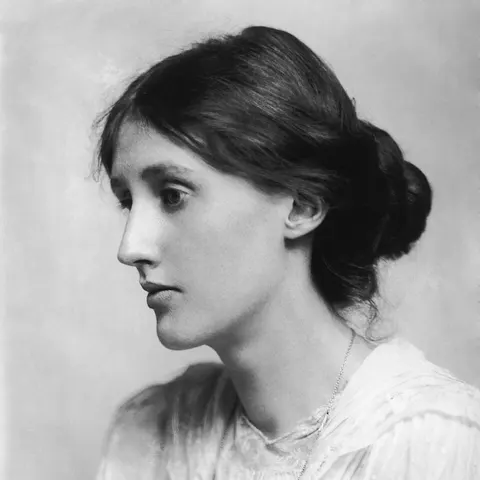 Virginia Woolf's IQNovelist & Essayist, estimated 150+150+
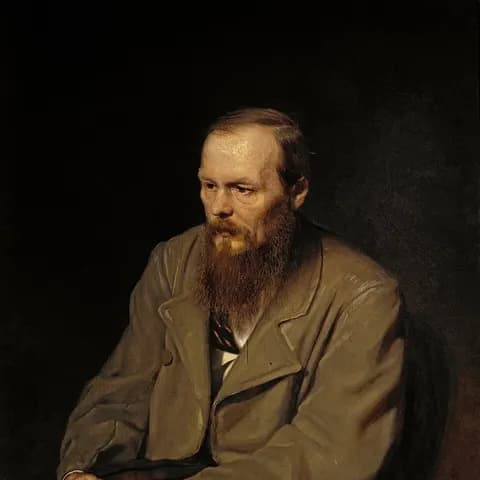 Fyodor Dostoevsky's IQNovelist, estimated 150+150+
- Edgar Allan Poe's IQWriter & Critic, estimated 150150
- Geoffrey Chaucer's IQPoet & Civil Servant, estimated 150150
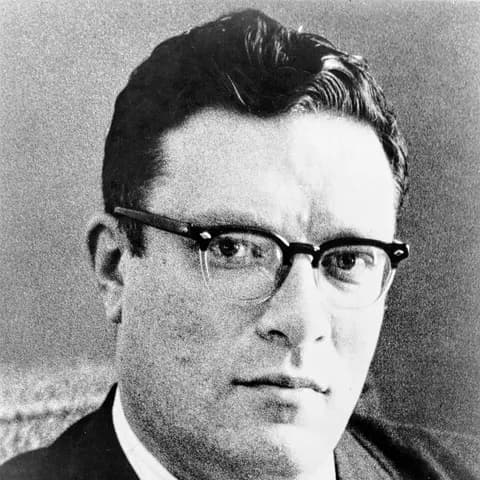 Isaac Asimov's IQScience Fiction Author, estimated 150+150+
Rankings that include Cervantes
- The highest IQ writers and poets in historyRanked 19 of 33
Keep exploring
- Deep Intellectual CuriositySign of high intelligence
- Signs of High IQ in ChildrenSign of high intelligence
- Tyrion Lannister's IQGame of Thrones, fan estimate 150
- Erwin Smith's IQAttack on Titan, fan estimate 150
People also search for
All 307 historical IQ estimates, ranked with ranges and sources.
Cervantes' IQ is 150. What's yours?
Cervantes' estimate comes from the historical record. Yours can come from a real test: 25 visual reasoning questions.
25 questions · about 12 minutes
Sources
- Miguel de Cervantes, Encyclopaedia Britannica. Summarises his life, captivity and works.
- Don Quixote, Wikipedia. Describes the novel, its two parts and its influence.
- Cox, C. M. (1926). The Early Mental Traits of Three Hundred Geniuses. Stanford University Press.
- Simonton, D. K. (2009). Genius 101. Springer.
- Cattell, R. B. (1971). Abilities: Their Structure, Growth, and Action. Houghton Mifflin.
Last reviewed October 2026. How we estimate historical IQ