Edgar Allan Poe IQ
Edgar Allan Poe's IQ is unknown; no test or confirmed study figure exists. LifeScore uses about 150 (range 135 to 165) as an editorial marker for the author of The Raven, who invented the detective story and loved ciphers.
Edgar Allan Poe's IQ is 150. What's yours?
25 questions · about 12 minutes
Think you're smarter than Edgar Allan Poe? Try question 1.
Which option completes the grid? One tap, no sign-up.
Key facts
- Estimated IQ
- IQ 150
- Known for
- The Raven and the first detective stories
- Lived
- Writer & Critic, 1809–1849
- Basis
- No documented estimate; editorial marker from the record
- Confidence
- Very low. Born inside the period Cox 1926 covered, but we could not confirm a Cox figure from an accessible tabulation, so none is quoted. No IQ test was ever given.
Poe has no test and no Cox figure we could confirm. 150 is an editorial marker for a writer who invented detective fiction and solved readers' cipher puzzles.
Edgar Allan Poe in brief
Edgar Allan Poe was born in Boston in 1809 to touring actors. Orphaned before he was three, he was raised in Richmond, Virginia, by John Allan, with whom he later quarrelled. He studied briefly at the University of Virginia and at West Point, then lived by writing and editing magazines. He wrote The Raven, macabre tales and the first modern detective stories, but remained poor. He died in Baltimore in 1849 in unexplained circumstances.
What was Edgar Allan Poe's IQ?
No figure exists. LifeScore lists about 150 as an editorial marker, range 135 to 165. It rests on his invention of the detective story, his cipher-solving and his cool, analytical criticism alongside some of the most famous poems in English.
Did Poe invent the detective story?
Most historians say yes. The Murders in the Rue Morgue (1841) introduced C. Auguste Dupin, an amateur who solves a crime by reasoning. Poe wrote two more Dupin stories, and Arthur Conan Doyle acknowledged the debt when he created Sherlock Holmes.
How did Poe die?
He was found delirious in Baltimore in October 1849 wearing someone else's clothes and died four days later. The cause is unknown. Theories include alcohol, rabies, carbon monoxide poisoning and being used as a forced voter in an election-day scam.
How smart was Edgar Allan Poe?
- 01
The Raven (1845)
One of the most famous poems in American literature. - 02
The detective story
Invented with The Murders in the Rue Morgue in 1841. - 03
Tales of horror
The Tell-Tale Heart, The Fall of the House of Usher and others. - 04
Literary criticism
The Philosophy of Composition set out a theory of the short form.
How Edgar Allan Poe thought
Poe claimed he wrote The Raven like a maths problem, choosing each effect deliberately. Whether or not that was true, his stories show strong deductive reasoning, and his ciphers show pattern-finding of the kind tested in letter and code puzzles.
The evidence behind the estimate
An estimate built from the historical record, not a recovered test score.
What supports it
- His cipher challenges and solutions appeared in magazines in 1839 to 1841.
- His Dupin stories set the model for detective fiction.
- He did well in languages at the University of Virginia before leaving.
What it cannot prove
- His own accounts of his methods were partly showmanship.
- Literary genius is mostly verbal and creative; an IQ test samples only part of that, and style cannot be scored.
- An editorial marker is a comparison aid built from achievement, not a measurement, and two careful readers could place it ten points apart.
Edgar Allan Poe compared with Doyle, Twain, Dickens
| Figure | Estimate | Range |
|---|---|---|
| Edgar Allan Poe | 150 | 135–165 |
| Arthur Conan Doyle | 140 | 125–155 |
| Mark Twain | 145+ | 130–155 |
| Charles Dickens | 145+ | 145–180 |
How would you score?
Where would you land next to Edgar Allan Poe?
Edgar Allan Poe's 150 is an estimate from the historical record, with a working range of 135 to 165. On the standard IQ scale an IQ of 150 sits at the 99.96th percentile: about 1 in 2,330 people score that high. Nobody can test Edgar Allan Poe now. You can find out where you sit on the same scale.
- 100Average adult50th percentile
- 130Gifted linetop 2%, about 1 in 44
- 150Edgar Allan Poe's99.96th percentile, about 1 in 2,330
- ?Youscored on the same scale
25 questions · about 12 minutes
Psychological profile
Edgar Allan Poe's IQ is represented here by a retrospective estimate of 150, not a verified test result. Edgar Allan Poe is best known for exceptional logical puzzles. The useful question is what the surviving evidence shows, not whether a precise modern score can be recovered.
Brilliant, troubled and combative. A master of mood and logic who lived in poverty and grief.
The dominant archetype here is The Analyst of Shadows. This archetype shapes decision patterns: what feels natural, what creates friction, and what blind spots tend to emerge.
Estimated IQ is 150. This is a rough estimate based on documented accomplishments and contemporary accounts, not a literal measurement.
Key traits
Logical Puzzles
He challenged magazine readers to send him ciphers and claimed to solve almost all of them.Atmosphere
His detective C. Auguste Dupin inspired Sherlock Holmes.Precision
His essay Eureka (1848) imagined the universe beginning from a single particle.
One thing most people do not know
The Baltimore Ravens American football team is named after his poem.
Edgar Allan Poe: common questions
Was Edgar Allan Poe a genius?
What personality type was Edgar Allan Poe?
What can we learn from Edgar Allan Poe?
The IQ-style test the NFL used
Edgar Allan Poe's IQ is an estimate. Yours could be real.
Before the draft, NFL teams gave prospects the Wonderlic: 50 questions in 12 minutes, and almost nobody finishes. We collected 241 reported player scores, each with its source. The average working adult scores about 21.
People with similar IQ estimates
Edgar Allan Poe's estimate of 150 falls in the genius level IQ range. Want your own number rather than Edgar's? Take the free IQ test or the quick IQ test. See what an IQ of 150 means, place it on the IQ chart or check how rare it is with the IQ rarity calculator.
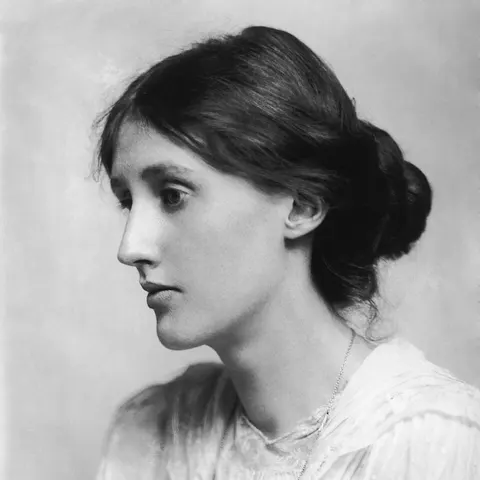 Virginia Woolf's IQNovelist & Essayist, estimated 150+150+
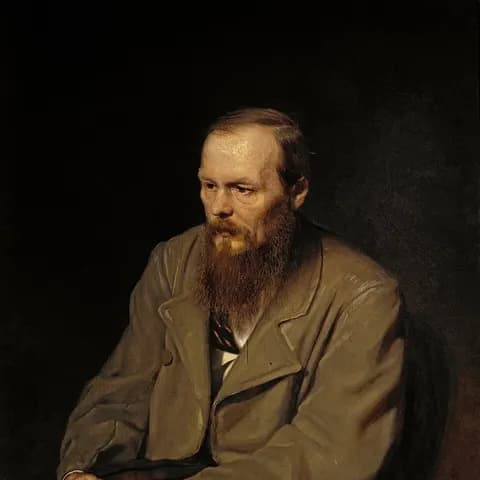 Fyodor Dostoevsky's IQNovelist, estimated 150+150+
- Miguel de Cervantes' IQNovelist, estimated 150150
- Geoffrey Chaucer's IQPoet & Civil Servant, estimated 150150
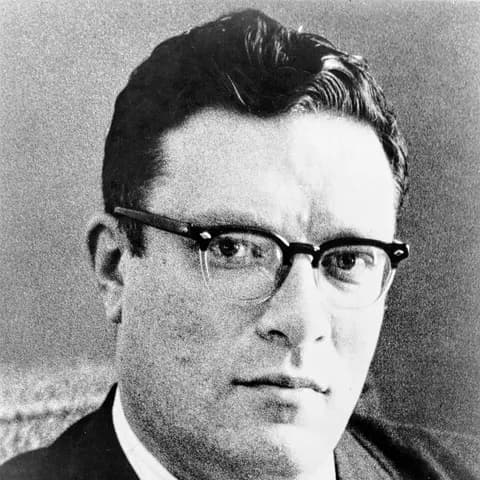 Isaac Asimov's IQScience Fiction Author, estimated 150+150+
Rankings that include Edgar Allan Poe
- The highest IQ writers and poets in historyRanked 15 of 33
Keep exploring
- Rapid Verbal ProcessingSign of high intelligence
- Signs of High Emotional Intelligence (EQ)Sign of high intelligence
- Tyrion Lannister's IQGame of Thrones, fan estimate 150
- Erwin Smith's IQAttack on Titan, fan estimate 150
People also search for
All 307 historical IQ estimates, ranked with ranges and sources.
Edgar Allan Poe's IQ is 150. What's yours?
Edgar Allan Poe's estimate comes from the historical record. Yours can come from a real test: 25 visual reasoning questions.
25 questions · about 12 minutes
Sources
- Edgar Allan Poe, Encyclopaedia Britannica. Summarises his life, works and death.
- Edgar Allan Poe Society of Baltimore, Edgar Allan Poe Society. Texts, letters and research on Poe, including his cryptography columns.
- Cox, C. M. (1926). The Early Mental Traits of Three Hundred Geniuses. Stanford University Press.
- Simonton, D. K. (2009). Genius 101. Springer.
- Cattell, R. B. (1971). Abilities: Their Structure, Growth, and Action. Houghton Mifflin.
Last reviewed October 2026. How we estimate historical IQ