H. G. Wells IQ
H. G. Wells' IQ is unknown. LifeScore uses about 145 (range 130 to 160) as an editorial marker for the draper's apprentice who studied under Huxley and wrote The Time Machine and The War of the Worlds.
H. G. Wells' IQ is 145. What's yours?
25 questions · about 12 minutes
Think you're smarter than Hg Wells? Try question 1.
Which option completes the grid? One tap, no sign-up.
Key facts
- Estimated IQ
- IQ 145
- Known for
- The Time Machine and The War of the Worlds
- Lived
- Novelist & Futurist, 1866–1946
- Basis
- No documented estimate; editorial marker from the record
- Confidence
- Very low. Born after 1850, so outside the Cox 1926 study. No IQ test result is known.
Wells has no test score. 145 is an editorial marker for a draper's apprentice who won a science scholarship and imagined much of the twentieth century.
H. G. Wells in brief
Herbert George Wells was born in Bromley, Kent, in 1866 to a struggling shopkeeper and a housekeeper. Apprenticed to a draper, he escaped by winning a scholarship to study science in London under T. H. Huxley, Darwin's champion. He took a zoology degree and taught before turning to writing. The Time Machine, The War of the Worlds and The Invisible Man made him a founder of science fiction. He also wrote history and politics. He died in 1946.
What was H. G. Wells' IQ?
No figure exists. LifeScore lists about 145 as an editorial marker, range 130 to 160. It rests on his scholarship from poverty, a science degree and a stream of books that reasoned from science to future society.
What did H. G. Wells predict?
He imagined tanks, aerial bombing, atomic weapons, something like the internet in his "World Brain" essays, and genetic engineering. Many details were wrong, but his method of extrapolating from science was new and influential.
Did The War of the Worlds cause panic?
Orson Welles's 1938 radio adaptation caused some alarm among American listeners, though historians now think newspaper reports exaggerated the panic. Wells himself was annoyed the broadcast was presented as real news.
Did H. G. Wells meet Stalin?
Yes. In 1934 he interviewed both Franklin Roosevelt and Joseph Stalin, hoping to win them over to his vision of a planned world state, and was disappointed by Stalin's response. Wells was a lifelong socialist who also held views on eugenics that were common among intellectuals of his time and are rejected today.
How smart was H. G. Wells?
- 01
The Time Machine (1895)
Popularised the idea of time travel by machine. - 02
The War of the Worlds (1898)
The model alien invasion story. - 03
The Outline of History (1920)
A best-selling history of the world. - 04
Human rights advocacy
His 1940 Rights of Man influenced the Universal Declaration of Human Rights.
How H. G. Wells thought
Wells reasoned by extrapolation: take a scientific idea, push it forward and ask what society would look like. That if-then thinking is the same chain reasoning tested in logic items, applied to imagination.
The evidence behind the estimate
An estimate built from the historical record, not a recovered test score.
What supports it
- He earned a BSc in zoology from the University of London in 1890.
- Szilard credited The World Set Free with influencing his thinking about chain reactions.
- He published more than 100 books.
What it cannot prove
- Prediction in fiction mixes insight with luck.
- Achievement reflects education, opportunity, persistence and collaboration as well as raw reasoning ability.
- An editorial marker is a comparison aid built from achievement, not a measurement, and two careful readers could place it ten points apart.
H. G. Wells compared with Verne, Asimov, Orwell
| Figure | Estimate | Range |
|---|---|---|
| H. G. Wells | 145 | 130–160 |
| Jules Verne | 140 | 125–155 |
| Isaac Asimov | 150+ | 135–160 |
| George Orwell | 140+ | 130–150 |
How would you score?
Where would you land next to H. G. Wells?
H. G. Wells' 145 is an estimate from the historical record, with a working range of 130 to 160. On the standard IQ scale an IQ of 145 sits at the 99.87th percentile: about 1 in 741 people score that high. Nobody can test H. G. Wells now. You can find out where you sit on the same scale.
- 100Average adult50th percentile
- 130Gifted linetop 2%, about 1 in 44
- 145H. G. Wells'99.87th percentile, about 1 in 741
- ?Youscored on the same scale
25 questions · about 12 minutes
Psychological profile
H. G. Wells's IQ is represented here by a retrospective estimate of 145, not a verified test result. H. G. Wells is best known for exceptional scientific imagination. The useful question is what the surviving evidence shows, not whether a precise modern score can be recovered.
Restless, opinionated and prolific. A science student who turned evolution and physics into stories.
The dominant archetype here is The Futurist. This archetype shapes decision patterns: what feels natural, what creates friction, and what blind spots tend to emerge.
Estimated IQ is 145. This is a rough estimate based on documented accomplishments and contemporary accounts, not a literal measurement.
Key traits
Scientific Imagination
He studied biology under T. H. Huxley at the Normal School of Science in London.Prolific Output
His 1914 novel The World Set Free imagined atomic bombs and inspired Leo Szilard.Social Vision
He wrote over 100 books, including a best-selling Outline of History.
One thing most people do not know
He invented a tabletop war game, Little Wars, published in 1913.
H. G. Wells: common questions
Was H. G. Wells a genius?
What personality type was H. G. Wells?
What can we learn from H. G. Wells?
The IQ-style test the NFL used
H. G. Wells' IQ is an estimate. Yours could be real.
Before the draft, NFL teams gave prospects the Wonderlic: 50 questions in 12 minutes, and almost nobody finishes. We collected 241 reported player scores, each with its source. The average working adult scores about 21.
People with similar IQ estimates
H. G. Wells' estimate of 145 falls in the genius level IQ range. Want your own number rather than H.'s? Take the free IQ test or the quick IQ test. See what an IQ of 145 means, place it on the IQ chart or check how rare it is with the IQ rarity calculator.
- Albert Camus' IQWriter & Philosopher, estimated 145145
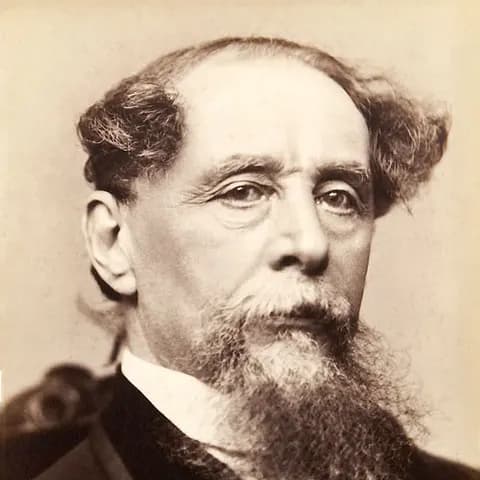 Charles Dickens' IQNovelist, estimated 145+145+
 Franz Kafka's IQNovelist, estimated 145+145+
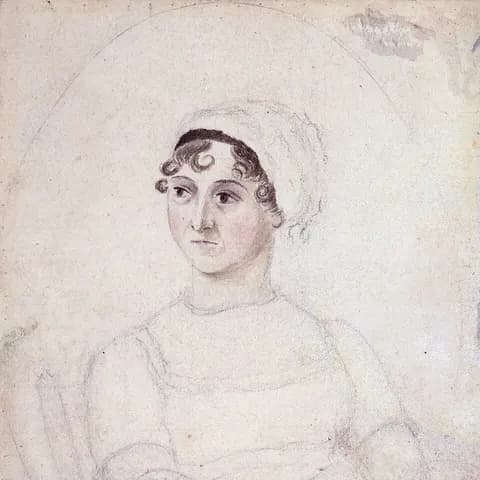 Jane Austen's IQNovelist, estimated 145+145+
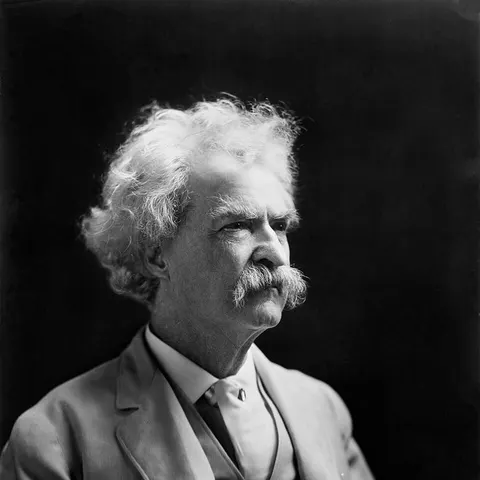 Mark Twain's IQAuthor & Humorist, estimated 145+145+
Rankings that include H. G. Wells
- The highest IQ writers and poets in historyRanked 24 of 33
Keep exploring
- Creative Divergent ThinkingSign of high intelligence
- Abstract Conceptual ThinkingSign of high intelligence
- Dexter (Dexter's Laboratory)'s IQDexter's Laboratory, fan estimate 145
- Doctor Strange's IQMarvel Cinematic Universe, fan estimate 145
People also search for
All 307 historical IQ estimates, ranked with ranges and sources.
H. G. Wells' IQ is 145. What's yours?
H. G. Wells' estimate comes from the historical record. Yours can come from a real test: 25 visual reasoning questions.
25 questions · about 12 minutes
Sources
- H. G. Wells, Encyclopaedia Britannica. Summarises his life, science training and works.
- H. G. Wells, Wikipedia. Covers his novels, predictions and politics.
- Cox, C. M. (1926). The Early Mental Traits of Three Hundred Geniuses. Stanford University Press.
- Simonton, D. K. (2009). Genius 101. Springer.
- Cattell, R. B. (1971). Abilities: Their Structure, Growth, and Action. Houghton Mifflin.
Last reviewed October 2026. How we estimate historical IQ