Jules Verne IQ
Jules Verne's IQ is unknown; no test or confirmed study figure exists. LifeScore uses about 140 (range 125 to 155) as an editorial marker for the law graduate who researched science to write his extraordinary voyages.
Verne's IQ is 140. What's yours?
25 questions · about 12 minutes
Think you're smarter than Jules Verne? Try question 1.
Which option completes the grid? One tap, no sign-up.
Key facts
- Estimated IQ
- IQ 140
- Known for
- Twenty Thousand Leagues Under the Seas and Around the World in Eighty Days
- Lived
- Novelist, 1828–1905
- Basis
- No documented estimate; editorial marker from the record
- Confidence
- Very low. Born inside the period Cox 1926 covered, but we could not confirm a Cox figure from an accessible tabulation, so none is quoted. No IQ test was ever given.
Verne has no test and no Cox figure we could confirm. 140 is an editorial marker for a law graduate who researched science deeply to write adventure.
Jules Verne in brief
Jules Verne was born in Nantes in 1828, the son of a lawyer, and studied law in Paris to please his father. He preferred the theatre and wrote plays and libretti while working as a stockbroker. In 1863 the publisher Pierre-Jules Hetzel issued his first novel, Five Weeks in a Balloon, and contracted him for a series of "extraordinary voyages". These included Twenty Thousand Leagues Under the Seas and Around the World in Eighty Days. He died in Amiens in 1905.
What was Jules Verne's IQ?
No figure exists. LifeScore lists about 140 as an editorial marker, range 125 to 155. It rests on his disciplined research, his law degree and novels that worked out the physics and geography of their journeys in detail.
Did Jules Verne predict the future?
Some of his ideas resembled later inventions, such as electric submarines and a moon launch from Florida. He was mostly extrapolating from technology he read about, and many of his details were impossible. His influence on later engineers and explorers was real.
How many books did Jules Verne write?
He wrote 54 novels in the Voyages extraordinaires series in his lifetime, with more published after his death, plus plays, short stories and nonfiction about geography and exploration.
How smart was Jules Verne?
- 01
Twenty Thousand Leagues Under the Seas
Captain Nemo and the submarine Nautilus, 1870. - 02
Around the World in Eighty Days
Phileas Fogg's race against the clock, 1873. - 03
From the Earth to the Moon
A cannon-launched moon voyage, 1865. - 04
Voyages extraordinaires
Dozens of novels of exploration and science.
How Verne thought
Verne reasoned from data. He gathered facts, calculated distances and speeds and built plots around real constraints. The twist of Eighty Days, gaining a day by travelling east, is a puzzle about time zones that a reasoning test might pose.
The evidence behind the estimate
An estimate built from the historical record, not a recovered test score.
What supports it
- His notes and research files survive.
- He held a law degree from Paris.
- His books have been translated into well over 100 languages.
What it cannot prove
- Scientific detail often came from sources and advisers.
- Achievement reflects education, opportunity, persistence and collaboration as well as raw reasoning ability.
- An editorial marker is a comparison aid built from achievement, not a measurement, and two careful readers could place it ten points apart.
Verne compared with H. G. Wells, Asimov, Victor Hugo
| Figure | Estimate | Range |
|---|---|---|
| Jules Verne | 140 | 125–155 |
| H. G. Wells | 145 | 130–160 |
| Isaac Asimov | 150+ | 135–160 |
| Victor Hugo | 160+ | 160–180 |
How would you score?
Where would you land next to Jules Verne?
Jules Verne's 140 is an estimate from the historical record, with a working range of 125 to 155. On the standard IQ scale an IQ of 140 sits at the 99.62nd percentile: about 1 in 261 people score that high. Nobody can test Verne now. You can find out where you sit on the same scale.
- 100Average adult50th percentile
- 130Gifted linetop 2%, about 1 in 44
- 140Verne's99.62nd percentile, about 1 in 261
- ?Youscored on the same scale
25 questions · about 12 minutes
Psychological profile
Jules Verne's IQ is represented here by a retrospective estimate of 140, not a verified test result. Jules Verne is best known for exceptional research. The useful question is what the surviving evidence shows, not whether a precise modern score can be recovered.
Diligent, private and imaginative. A tireless researcher who turned libraries into journeys.
The dominant archetype here is The Researcher. This archetype shapes decision patterns: what feels natural, what creates friction, and what blind spots tend to emerge.
Estimated IQ is 140. This is a rough estimate based on documented accomplishments and contemporary accounts, not a literal measurement.
Key traits
Research
He kept tens of thousands of notes from scientific journals and books.Imagination
Around the World in Eighty Days turns on the International Date Line, a clever twist of time.Discipline
He is one of the most translated authors in the world.
One thing most people do not know
At 11 he reportedly tried to run away to sea as a cabin boy and was caught by his father.
Jules Verne: common questions
Was Jules Verne a genius?
What personality type was Jules Verne?
What can we learn from Jules Verne?
The IQ-style test the NFL used
Jules Verne's IQ is an estimate. Yours could be real.
Before the draft, NFL teams gave prospects the Wonderlic: 50 questions in 12 minutes, and almost nobody finishes. We collected 241 reported player scores, each with its source. The average working adult scores about 21.
People with similar IQ estimates
Jules Verne's estimate of 140 falls in the genius level IQ range. Want your own number rather than Jules's? Take the free IQ test or the quick IQ test. See what an IQ of 140 means, place it on the IQ chart or check how rare it is with the IQ rarity calculator.
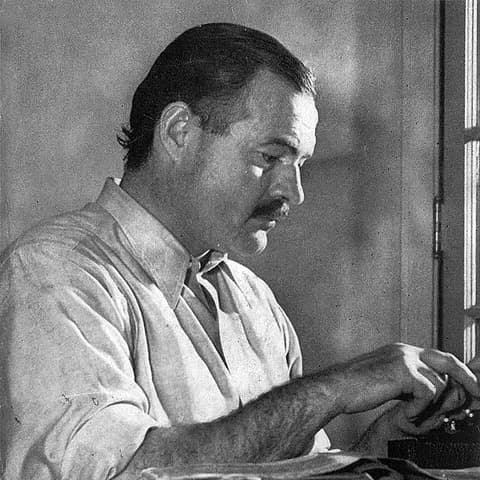 Ernest Hemingway's IQNovelist & Journalist, estimated 140+140+
- Agatha Christie's IQCrime Novelist, estimated 140140
- Arthur Conan Doyle's IQWriter & Physician, estimated 140140
 George Orwell's IQNovelist & Essayist, estimated 140+140+
 Maya Angelou's IQPoet & Memoirist, estimated 140+140+
Rankings that include Verne
- The highest IQ writers and poets in historyRanked 32 of 33
Keep exploring
- Signs of Intelligence in ConversationSign of high intelligence
- Signs of High Emotional Intelligence (EQ)Sign of high intelligence
- Armin Arlert's IQAttack on Titan, fan estimate 140
- Izaya Orihara's IQDurarara!!, fan estimate 140
People also search for
All 307 historical IQ estimates, ranked with ranges and sources.
Verne's IQ is 140. What's yours?
Verne's estimate comes from the historical record. Yours can come from a real test: 25 visual reasoning questions.
25 questions · about 12 minutes
Sources
- Jules Verne, Encyclopaedia Britannica. Summarises his life, publisher and novels.
- Voyages extraordinaires, Wikipedia. Lists and describes the series of novels.
- Cox, C. M. (1926). The Early Mental Traits of Three Hundred Geniuses. Stanford University Press.
- Simonton, D. K. (2009). Genius 101. Springer.
- Cattell, R. B. (1971). Abilities: Their Structure, Growth, and Action. Houghton Mifflin.
Last reviewed October 2026. How we estimate historical IQ