Albert Camus IQ
Albert Camus's IQ is unknown. LifeScore uses about 145 (range 130 to 160) as an editorial marker for the scholarship boy from Algiers who wrote The Stranger and won the Nobel Prize at 44.
Camus' IQ is 145. What's yours?
25 questions · about 12 minutes
Think you're smarter than Albert Camus? Try question 1.
Which option completes the grid? One tap, no sign-up.
Key facts
- Estimated IQ
- IQ 145
- Known for
- The Stranger, The Plague and the philosophy of the absurd
- Lived
- Writer & Philosopher, 1913–1960
- Basis
- No documented estimate; editorial marker from the record
- Confidence
- Very low. Born after 1850, so outside the Cox 1926 study. No IQ test result is known.
Camus has no test score. 145 is an editorial marker for a scholarship boy from a poor Algerian home who won the Nobel Prize at 44.
Albert Camus in brief
Albert Camus was born in 1913 in Mondovi, French Algeria, into a poor family; his father was killed in the First World War and his mother was partly deaf and could not read. A teacher spotted his talent and helped him win a scholarship. He studied philosophy in Algiers, played goalkeeper until tuberculosis stopped him, and edited the Resistance paper Combat in Paris. He wrote The Stranger, The Plague and The Myth of Sisyphus, won the 1957 Nobel Prize at 44 and died in a car crash in 1960.
What was Albert Camus's IQ?
No figure exists. LifeScore lists about 145 as an editorial marker, range 130 to 160. It rests on his escape from poverty through scholarships, a philosophy degree and novels and essays that earned the Nobel Prize at 44.
What is the absurd?
For Camus, the absurd is the clash between our need for meaning and a universe that offers none. In The Myth of Sisyphus he argues we should neither despair nor invent false hope, but live fully in revolt, as Sisyphus does, forever pushing his rock.
Was Camus an existentialist?
He rejected the label, though he is often grouped with Sartre. He disagreed with Sartre on key points, especially on whether political violence could be justified, and the two fell out in 1952.
Was Albert Camus a footballer?
He kept goal for the Racing Universitaire d'Alger junior team as a teenager until tuberculosis ended his playing at 17. He later wrote that what he knew most surely about morality and the duty of man he owed to football.
How smart was Albert Camus?
- 01
The Stranger (1942)
A short novel of the absurd. - 02
The Plague (1947)
A novel of an epidemic and human solidarity. - 03
The Myth of Sisyphus (1942)
An essay on the absurd. - 04
Nobel Prize 1957
Awarded for literature at 44.
How Camus thought
Camus reasoned with plain clarity. He started from one hard question, whether life is worth living, and refused easy answers. His strength is honest, precise thinking stated in simple prose.
The evidence behind the estimate
An estimate built from the historical record, not a recovered test score.
What supports it
- He won the 1957 Nobel Prize in Literature.
- He earned a philosophy diploma from the University of Algiers.
- His letter of thanks to Louis Germain survives.
What it cannot prove
- A short life cut his output short.
- Influence in philosophy depends on timing, institutions and readers as well as on the power of the reasoning.
- An editorial marker is a comparison aid built from achievement, not a measurement, and two careful readers could place it ten points apart.
Camus compared with Sartre, de Beauvoir, Kafka
| Figure | Estimate | Range |
|---|---|---|
| Albert Camus | 145 | 130–160 |
| Jean-Paul Sartre | 150 | 135–165 |
| Simone de Beauvoir | 150+ | 135–160 |
| Franz Kafka | 145+ | 130–155 |
How would you score?
Where would you land next to Albert Camus?
Albert Camus' 145 is an estimate from the historical record, with a working range of 130 to 160. On the standard IQ scale an IQ of 145 sits at the 99.87th percentile: about 1 in 741 people score that high. Nobody can test Camus now. You can find out where you sit on the same scale.
- 100Average adult50th percentile
- 130Gifted linetop 2%, about 1 in 44
- 145Camus'99.87th percentile, about 1 in 741
- ?Youscored on the same scale
25 questions · about 12 minutes
Psychological profile
Albert Camus's IQ is represented here by a retrospective estimate of 145, not a verified test result. Albert Camus is best known for exceptional clarity. The useful question is what the surviving evidence shows, not whether a precise modern score can be recovered.
Lucid, sensual and principled. A writer of the absurd who insisted on decency.
The dominant archetype here is The Rebel. This archetype shapes decision patterns: what feels natural, what creates friction, and what blind spots tend to emerge.
Estimated IQ is 145. This is a rough estimate based on documented accomplishments and contemporary accounts, not a literal measurement.
Key traits
Clarity
He dedicated his Nobel lecture to Louis Germain, the primary teacher who changed his life.Moral Seriousness
He was the second-youngest Nobel laureate in literature at the time.Literary Style
He broke publicly with Sartre in 1952 over communism and political violence.
One thing most people do not know
An unused train ticket was found in his pocket after the crash that killed him.
Albert Camus: common questions
Was Albert Camus a genius?
What personality type was Albert Camus?
What can we learn from Albert Camus?
The IQ-style test the NFL used
Albert Camus' IQ is an estimate. Yours could be real.
Before the draft, NFL teams gave prospects the Wonderlic: 50 questions in 12 minutes, and almost nobody finishes. We collected 241 reported player scores, each with its source. The average working adult scores about 21.
People with similar IQ estimates
Albert Camus' estimate of 145 falls in the genius level IQ range. Want your own number rather than Albert's? Take the free IQ test or the quick IQ test. See what an IQ of 145 means, place it on the IQ chart or check how rare it is with the IQ rarity calculator.
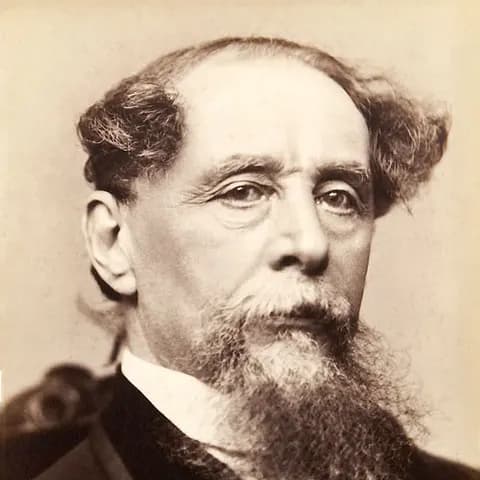 Charles Dickens' IQNovelist, estimated 145+145+
 Franz Kafka's IQNovelist, estimated 145+145+
- H. G. Wells' IQNovelist & Futurist, estimated 145145
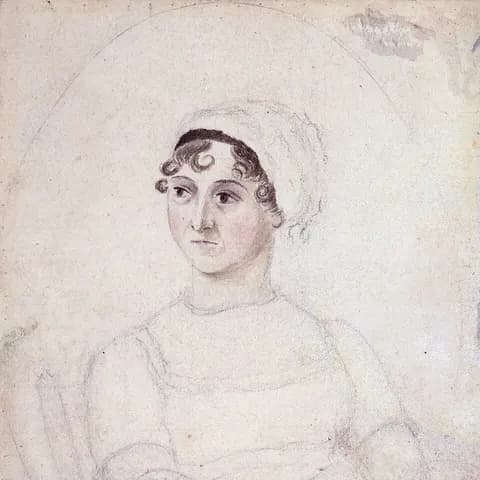 Jane Austen's IQNovelist, estimated 145+145+
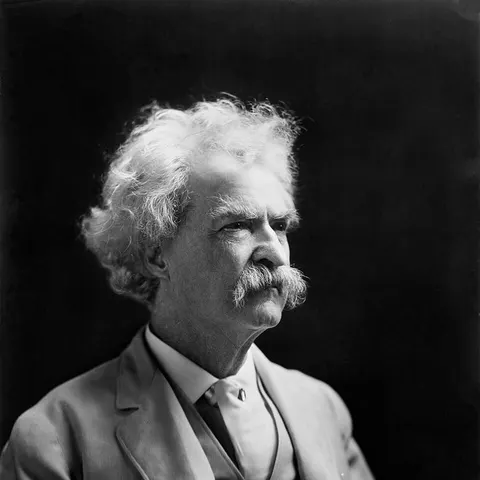 Mark Twain's IQAuthor & Humorist, estimated 145+145+
Rankings that include Camus
- The highest IQ writers and poets in historyRanked 21 of 33
- The highest IQ Nobel Prize winnersRanked 24 of 35
Keep exploring
- Creative Divergent ThinkingSign of high intelligence
- Emotional Signs of High IntelligenceSign of high intelligence
- Dexter (Dexter's Laboratory)'s IQDexter's Laboratory, fan estimate 145
- Doctor Strange's IQMarvel Cinematic Universe, fan estimate 145
People also search for
All 307 historical IQ estimates, ranked with ranges and sources.
Camus' IQ is 145. What's yours?
Camus' estimate comes from the historical record. Yours can come from a real test: 25 visual reasoning questions.
25 questions · about 12 minutes
Sources
- Albert Camus, biographical, Nobel Prize. Official biography covering his education and career.
- Albert Camus, Stanford Encyclopedia of Philosophy. Covers his life and philosophy of the absurd.
- Cox, C. M. (1926). The Early Mental Traits of Three Hundred Geniuses. Stanford University Press.
- Simonton, D. K. (2009). Genius 101. Springer.
- Cattell, R. B. (1971). Abilities: Their Structure, Growth, and Action. Houghton Mifflin.
Last reviewed October 2026. How we estimate historical IQ