Jean-Paul Sartre IQ
Jean-Paul Sartre's IQ is unknown. LifeScore uses about 150 (range 135 to 165) as an editorial marker for the philosopher who came first in France's agrégation, wrote Being and Nothingness and refused the Nobel Prize.
Sartre's IQ is 150. What's yours?
25 questions · about 12 minutes
Think you're smarter than Jean Paul Sartre? Try question 1.
Which option completes the grid? One tap, no sign-up.
Key facts
- Estimated IQ
- IQ 150
- Known for
- Being and Nothingness and existentialism
- Lived
- Philosopher & Writer, 1905–1980
- Basis
- No documented estimate; editorial marker from the record
- Confidence
- Very low. Born after 1850, so outside the Cox 1926 study. No IQ test result is known.
Sartre has no test score. 150 is an editorial marker for the École Normale philosopher who led existentialism and refused the Nobel Prize.
Jean-Paul Sartre in brief
Jean-Paul Sartre was born in Paris in 1905 and raised partly by his grandfather, a German teacher. He studied at the elite École Normale Supérieure, where he met Simone de Beauvoir, and came first in the 1929 agrégation in philosophy on his second attempt. He was a prisoner of war in 1940 and 1941. Being and Nothingness (1943) made him the leading existentialist. He wrote novels and plays, became a public activist and refused the 1964 Nobel Prize. He died in 1980.
What was Jean-Paul Sartre's IQ?
No figure exists. LifeScore lists about 150 as an editorial marker, range 135 to 165. It rests on his first place in the 1929 agrégation, a vast output in philosophy, fiction and drama and his leadership of a major movement.
What does "existence precedes essence" mean?
Sartre's summary of existentialism: humans are not born with a fixed nature or purpose. We exist first and then define ourselves by our choices, so we are "condemned to be free" and fully responsible for what we become.
Why did Sartre refuse the Nobel Prize?
He said he always declined official honours because a writer should not allow himself to be turned into an institution, and that accepting would lend his name to the prize's politics. He is one of the few people to refuse it voluntarily.
What was Sartre's relationship with Simone de Beauvoir?
They met as students in 1929 and remained partners for 51 years, never marrying or living together, and allowing each other other relationships. They read and criticised each other's work closely, and scholars now argue that Beauvoir shaped his philosophy more than was once recognised.
How smart was Jean-Paul Sartre?
- 01
Being and Nothingness (1943)
His major work of existential philosophy. - 02
Nausea (1938)
A philosophical novel. - 03
No Exit (1944)
The play that gave "hell is other people". - 04
Nobel Prize 1964
Awarded and declined.
How Sartre thought
Sartre built philosophy from concrete scenes: a waiter playing at being a waiter, a man caught looking through a keyhole. Drawing abstract structures out of everyday examples is a strong form of analogical reasoning.
The evidence behind the estimate
An estimate built from the historical record, not a recovered test score.
What supports it
- He came first in the 1929 agrégation in philosophy.
- He was awarded the 1964 Nobel Prize in Literature.
- He published dozens of books across genres.
What it cannot prove
- His politics, including support for Stalinist and Maoist positions, are widely criticised.
- Influence in philosophy depends on timing, institutions and readers as well as on the power of the reasoning.
- An editorial marker is a comparison aid built from achievement, not a measurement, and two careful readers could place it ten points apart.
Sartre compared with de Beauvoir, Camus, Kierkegaard
| Figure | Estimate | Range |
|---|---|---|
| Jean-Paul Sartre | 150 | 135–165 |
| Simone de Beauvoir | 150+ | 135–160 |
| Albert Camus | 145 | 130–160 |
| Søren Kierkegaard | 160 | 145–175 |
How would you score?
Where would you land next to Jean-Paul Sartre?
Jean-Paul Sartre's 150 is an estimate from the historical record, with a working range of 135 to 165. On the standard IQ scale an IQ of 150 sits at the 99.96th percentile: about 1 in 2,330 people score that high. Nobody can test Sartre now. You can find out where you sit on the same scale.
- 100Average adult50th percentile
- 130Gifted linetop 2%, about 1 in 44
- 150Sartre's99.96th percentile, about 1 in 2,330
- ?Youscored on the same scale
25 questions · about 12 minutes
Psychological profile
Jean-Paul Sartre's IQ is represented here by a retrospective estimate of 150, not a verified test result. Jean-Paul Sartre is best known for exceptional abstract argument. The useful question is what the surviving evidence shows, not whether a precise modern score can be recovered.
Restless, prolific and political. A writer who worked on amphetamines and argued with everyone.
The dominant archetype here is The Engaged Intellectual. This archetype shapes decision patterns: what feels natural, what creates friction, and what blind spots tend to emerge.
Estimated IQ is 150. This is a rough estimate based on documented accomplishments and contemporary accounts, not a literal measurement.
Key traits
Abstract Argument
He failed the agrégation on his first attempt in 1928, then came first in 1929; Beauvoir came second.Prolific Output
He was nearly blind in one eye from childhood.Political Engagement
He declined the Nobel Prize in Literature in 1964, saying a writer should not become an institution.
One thing most people do not know
About 50,000 people followed his funeral procession through Paris in 1980.
Jean-Paul Sartre: common questions
Was Jean-Paul Sartre a genius?
What personality type was Jean-Paul Sartre?
What can we learn from Jean-Paul Sartre?
The IQ-style test the NFL used
Jean-Paul Sartre's IQ is an estimate. Yours could be real.
Before the draft, NFL teams gave prospects the Wonderlic: 50 questions in 12 minutes, and almost nobody finishes. We collected 241 reported player scores, each with its source. The average working adult scores about 21.
People with similar IQ estimates
Jean-Paul Sartre's estimate of 150 falls in the genius level IQ range. Want your own number rather than Jean-Paul's? Take the free IQ test or the quick IQ test. See what an IQ of 150 means, place it on the IQ chart or check how rare it is with the IQ rarity calculator.
- Carl Jung's IQPsychiatrist & Psychologist, estimated 150+150+
- Hannah Arendt's IQPolitical Theorist, estimated 150150
- Lao Tzu's IQPhilosopher, estimated 150+150+
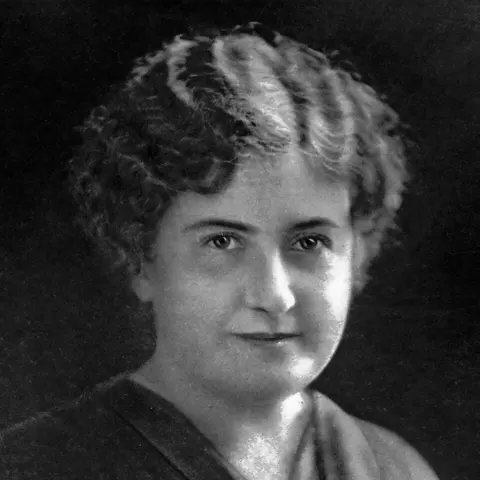 Maria Montessori's IQEducator & Physician, estimated 150+150+
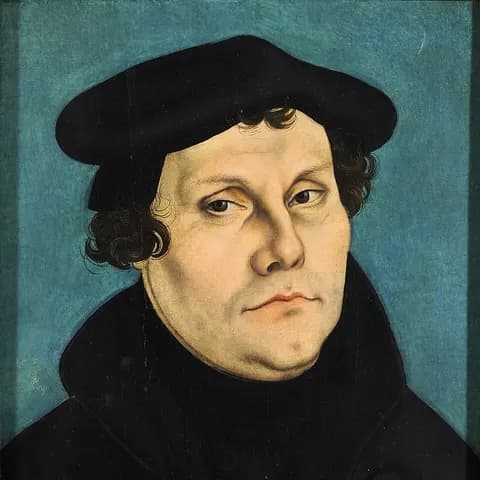 Martin Luther's IQTheologian & Reformer, estimated 150+150+
Rankings that include Sartre
- The highest IQ philosophers in historyRanked 28 of 43
- The highest IQ Nobel Prize winnersRanked 21 of 35
Keep exploring
- Strong Metacognitive AwarenessSign of high intelligence
- Subtle Signs Someone is Smarter Than You ThinkSign of high intelligence
- Tyrion Lannister's IQGame of Thrones, fan estimate 150
- Erwin Smith's IQAttack on Titan, fan estimate 150
People also search for
All 307 historical IQ estimates, ranked with ranges and sources.
Sartre's IQ is 150. What's yours?
Sartre's estimate comes from the historical record. Yours can come from a real test: 25 visual reasoning questions.
25 questions · about 12 minutes
Sources
- Jean-Paul Sartre, Stanford Encyclopedia of Philosophy. Covers his life, philosophy and politics.
- Jean-Paul Sartre, facts, Nobel Prize. Records the 1964 award and his refusal.
- Cox, C. M. (1926). The Early Mental Traits of Three Hundred Geniuses. Stanford University Press.
- Simonton, D. K. (2009). Genius 101. Springer.
- Cattell, R. B. (1971). Abilities: Their Structure, Growth, and Action. Houghton Mifflin.
Last reviewed October 2026. How we estimate historical IQ