Hannah Arendt IQ
Hannah Arendt's IQ is unknown. LifeScore uses about 150 (range 135 to 165) as an editorial marker for the refugee philosopher who wrote The Origins of Totalitarianism and described the banality of evil.
Arendt's IQ is 150. What's yours?
25 questions · about 12 minutes
Think you're smarter than Hannah Arendt? Try question 1.
Which option completes the grid? One tap, no sign-up.
Key facts
- Estimated IQ
- IQ 150
- Known for
- The Origins of Totalitarianism and "the banality of evil"
- Lived
- Political Theorist, 1906–1975
- Basis
- No documented estimate; editorial marker from the record
- Confidence
- Very low. Born after 1850, so outside the Cox 1926 study. No IQ test result is known.
Arendt has no test score. 150 is an editorial marker for a refugee philosopher whose analysis of totalitarianism remains essential.
Hannah Arendt in brief
Hannah Arendt was born in 1906 near Hanover and grew up in Königsberg. She studied philosophy with Martin Heidegger and Karl Jaspers, earning a doctorate at 22. As a Jew she was briefly arrested by the Gestapo in 1933 and fled to Paris, then escaped an internment camp and reached New York in 1941. She wrote The Origins of Totalitarianism and The Human Condition and taught at Chicago and the New School. Her Eichmann reports coined "the banality of evil". She died in 1975.
What was Hannah Arendt's IQ?
No figure exists. LifeScore lists about 150 as an editorial marker, range 135 to 165. It rests on her doctorate at 22, her major works of political theory written in a second language and her original conceptual distinctions.
What does "the banality of evil" mean?
Watching Eichmann's trial, Arendt argued that he was not a monster but an ambitious bureaucrat who did not think about what he was doing. Great evil, she suggested, can come from thoughtlessness rather than from deep wickedness. Historians still debate how well this fits Eichmann.
Was Hannah Arendt a philosopher?
She preferred to call herself a political theorist. She studied philosophy under Heidegger and Jaspers, but her main subject was political life: action, freedom, power and how totalitarian movements destroy them.
What was Arendt's relationship with Heidegger?
As an 18-year-old student she had a secret affair with Martin Heidegger, her married professor. He joined the Nazi party in 1933. After the war Arendt resumed contact and helped rebuild his reputation in the United States, a choice that puzzled many of her friends and still attracts debate.
How smart was Hannah Arendt?
- 01
The Origins of Totalitarianism (1951)
A study of Nazism and Stalinism. - 02
The Human Condition (1958)
An analysis of labour, work and action. - 03
Eichmann in Jerusalem (1963)
A controversial report on the trial. - 04
On Revolution (1963)
Compared the American and French revolutions.
How Arendt thought
Arendt reasoned by distinctions. She separated labour from work, power from violence and thinking from knowing, and used each distinction to reveal something hidden. Drawing precise conceptual lines is a hallmark of verbal-analytical intelligence.
The evidence behind the estimate
An estimate built from the historical record, not a recovered test score.
What supports it
- She earned a doctorate from Heidelberg in 1928.
- She wrote her major works in English, her second language.
- Her books remain core texts in political theory.
What it cannot prove
- Her Eichmann thesis is contested by historians.
- Influence in philosophy depends on timing, institutions and readers as well as on the power of the reasoning.
- An editorial marker is a comparison aid built from achievement, not a measurement, and two careful readers could place it ten points apart.
Arendt compared with de Beauvoir, Popper, Orwell
| Figure | Estimate | Range |
|---|---|---|
| Hannah Arendt | 150 | 135–165 |
| Simone de Beauvoir | 150+ | 135–160 |
| Karl Popper | 150 | 135–165 |
| George Orwell | 140+ | 130–150 |
How would you score?
Where would you land next to Hannah Arendt?
Hannah Arendt's 150 is an estimate from the historical record, with a working range of 135 to 165. On the standard IQ scale an IQ of 150 sits at the 99.96th percentile: about 1 in 2,330 people score that high. Nobody can test Arendt now. You can find out where you sit on the same scale.
- 100Average adult50th percentile
- 130Gifted linetop 2%, about 1 in 44
- 150Arendt's99.96th percentile, about 1 in 2,330
- ?Youscored on the same scale
25 questions · about 12 minutes
Psychological profile
Hannah Arendt's IQ is represented here by a retrospective estimate of 150, not a verified test result. Hannah Arendt is best known for exceptional political analysis. The useful question is what the surviving evidence shows, not whether a precise modern score can be recovered.
Independent, fearless and controversial. A thinker who refused every party line.
The dominant archetype here is The Independent Thinker. This archetype shapes decision patterns: what feels natural, what creates friction, and what blind spots tend to emerge.
Estimated IQ is 150. This is a rough estimate based on documented accomplishments and contemporary accounts, not a literal measurement.
Key traits
Political Analysis
She completed her doctorate on Augustine under Jaspers at 22.Independence
She reported on Adolf Eichmann's trial in Jerusalem for The New Yorker in 1961.Conceptual Clarity
She wrote her major books in English, a language she learned in her mid-thirties.
One thing most people do not know
She was a heavy smoker and was often photographed with a cigarette while lecturing.
Hannah Arendt: common questions
Was Hannah Arendt a genius?
What personality type was Hannah Arendt?
What can we learn from Hannah Arendt?
The IQ-style test the NFL used
Hannah Arendt's IQ is an estimate. Yours could be real.
Before the draft, NFL teams gave prospects the Wonderlic: 50 questions in 12 minutes, and almost nobody finishes. We collected 241 reported player scores, each with its source. The average working adult scores about 21.
People with similar IQ estimates
Hannah Arendt's estimate of 150 falls in the genius level IQ range. Want your own number rather than Hannah's? Take the free IQ test or the quick IQ test. See what an IQ of 150 means, place it on the IQ chart or check how rare it is with the IQ rarity calculator.
- Carl Jung's IQPsychiatrist & Psychologist, estimated 150+150+
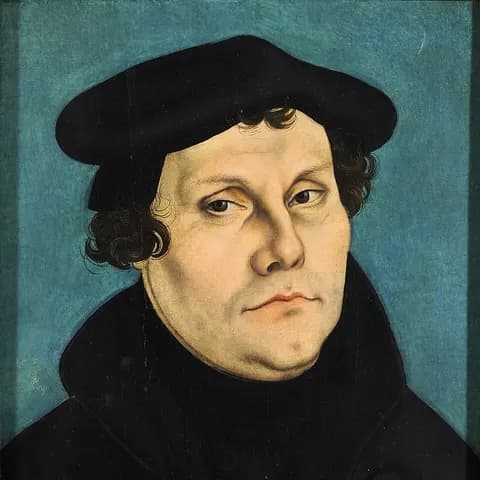 Martin Luther's IQTheologian & Reformer, estimated 150+150+
- Simone de Beauvoir's IQPhilosopher & Feminist, estimated 150+150+
- Jean-Paul Sartre's IQPhilosopher & Writer, estimated 150150
- Karl Popper's IQPhilosopher of Science, estimated 150150
Rankings that include Arendt
- The highest IQ philosophers in historyRanked 27 of 43
- The smartest women in historyRanked 10 of 39
Keep exploring
- High Tolerance for AmbiguitySign of high intelligence
- Rapid Learning SpeedSign of high intelligence
- Tyrion Lannister's IQGame of Thrones, fan estimate 150
- Erwin Smith's IQAttack on Titan, fan estimate 150
People also search for
All 307 historical IQ estimates, ranked with ranges and sources.
Arendt's IQ is 150. What's yours?
Arendt's estimate comes from the historical record. Yours can come from a real test: 25 visual reasoning questions.
25 questions · about 12 minutes
Sources
- Hannah Arendt, Stanford Encyclopedia of Philosophy. Covers her life, works and key concepts.
- Hannah Arendt, Encyclopaedia Britannica. Summarises her life and works.
- Cox, C. M. (1926). The Early Mental Traits of Three Hundred Geniuses. Stanford University Press.
- Simonton, D. K. (2009). Genius 101. Springer.
- Cattell, R. B. (1971). Abilities: Their Structure, Growth, and Action. Houghton Mifflin.
Last reviewed October 2026. How we estimate historical IQ