José Raúl Capablanca IQ
José Raúl Capablanca's IQ is unknown. LifeScore uses about 140 (range 125 to 155) as an editorial marker for the Cuban prodigy who learned chess at four, studied at Columbia and was world champion from 1921 to 1927.
Capablanca's IQ is 140. What's yours?
25 questions · about 12 minutes
Think you're smarter than Jose Raul Capablanca? Try question 1.
Which option completes the grid? One tap, no sign-up.
Key facts
- Estimated IQ
- IQ 140
- Known for
- World champion 1921 to 1927, famed for effortless play
- Lived
- World Chess Champion, 1888–1942
- Basis
- No documented estimate; editorial marker from the record
- Confidence
- Very low. Born after 1850, so outside the Cox 1926 study. No IQ test result is known.
Capablanca has no test score. 140 is an editorial marker for a natural prodigy who seemed to play chess without effort.
José Raúl Capablanca in brief
José Raúl Capablanca was born in Havana in 1888 and, by his own account, learned chess at four by watching his father play. At 12 he beat Cuba's champion in a match. He studied engineering at Columbia University but left for chess, and in 1921 took the world title from Emanuel Lasker without losing a game. Famous for effortless, precise simplicity, he lost the title to Alexander Alekhine in 1927. He also served as a Cuban diplomat. He died in New York in 1942.
What was Capablanca's IQ?
No figure exists. LifeScore lists about 140 as an editorial marker, range 125 to 155. It rests on his childhood prodigy, his Columbia admission and a style of near-flawless intuitive play, while recognising that chess skill and IQ are only moderately related.
Did Capablanca really learn chess at four?
That is his own account: he watched his father play a friend and pointed out that his father had moved a knight illegally. Whether exactly true or not, he was beating strong Cuban players by 12.
Why was Capablanca called the human chess machine?
He made very few errors and lost extremely rarely; between 1916 and 1924 he went eight years without losing a single serious game. His play looked simple because he found clear plans others missed.
How did Capablanca lose his title?
In 1927 Alexander Alekhine, who had prepared intensely and studied Capablanca's games, beat him in Buenos Aires after 34 games. A rematch was never agreed, as the two argued over terms, and their rivalry became bitter. Capablanca remained one of the world's strongest players until his death.
How smart was José Raúl Capablanca?
- 01
World Chess Champion
Held the title from 1921 to 1927. - 02
Undefeated title match
Beat Lasker in 1921 without losing a game. - 03
Chess Fundamentals (1921)
A classic instruction book still in print. - 04
Diplomat
Served in Cuba's foreign service.
How Capablanca thought
Capablanca reasoned by simplification: trade into positions where the plan is clear and the advantage grows. Seeing the essential structure of a complex position and stripping away the rest is a strong form of pattern recognition.
The evidence behind the estimate
An estimate built from the historical record, not a recovered test score.
What supports it
- His match and tournament records are complete.
- He was admitted to Columbia University in 1906.
- His books and annotated games survive.
What it cannot prove
- Chess skill correlates only modestly with IQ in research samples; at the top, practice and pattern memory matter more.
- His own stories about rarely studying may be exaggerated.
- An editorial marker is a comparison aid built from achievement, not a measurement, and two careful readers could place it ten points apart.
Capablanca compared with Fischer, Kasparov, Lasker
| Figure | Estimate | Range |
|---|---|---|
| José Raúl Capablanca | 140 | 125–155 |
| Bobby Fischer | 187 | 181–187 |
| Garry Kasparov | 135 | 123–140 |
| Emanuel Lasker | 155 | 140–170 |
How would you score?
Where would you land next to José Raúl Capablanca?
José Raúl Capablanca's 140 is an estimate from the historical record, with a working range of 125 to 155. On the standard IQ scale an IQ of 140 sits at the 99.62nd percentile: about 1 in 261 people score that high. Nobody can test Capablanca now. You can find out where you sit on the same scale.
- 100Average adult50th percentile
- 130Gifted linetop 2%, about 1 in 44
- 140Capablanca's99.62nd percentile, about 1 in 261
- ?Youscored on the same scale
25 questions · about 12 minutes
Psychological profile
José Raúl Capablanca's IQ is represented here by a retrospective estimate of 140, not a verified test result. José Raúl Capablanca is best known for exceptional intuition. The useful question is what the surviving evidence shows, not whether a precise modern score can be recovered.
Elegant, confident and charming. A natural who claimed he rarely studied the game.
The dominant archetype here is The Natural. This archetype shapes decision patterns: what feels natural, what creates friction, and what blind spots tend to emerge.
Estimated IQ is 140. This is a rough estimate based on documented accomplishments and contemporary accounts, not a literal measurement.
Key traits
Intuition
He reportedly learned the rules at four by watching his father and pointing out an illegal move.Simplicity
He lost only a few dozen serious games in his whole career.Endgame Technique
He enrolled at Columbia to study chemical engineering in 1906.
One thing most people do not know
He appeared in a 1925 Soviet silent comedy film, Chess Fever.
José Raúl Capablanca: common questions
Was José Raúl Capablanca a genius?
What personality type was José Raúl Capablanca?
What can we learn from José Raúl Capablanca?
The IQ-style test the NFL used
José Raúl Capablanca's IQ is an estimate. Yours could be real.
Before the draft, NFL teams gave prospects the Wonderlic: 50 questions in 12 minutes, and almost nobody finishes. We collected 241 reported player scores, each with its source. The average working adult scores about 21.
People with similar IQ estimates
José Raúl Capablanca's estimate of 140 falls in the genius level IQ range. Want your own number rather than José's? Take the free IQ test or the quick IQ test. See what an IQ of 140 means, place it on the IQ chart or check how rare it is with the IQ rarity calculator.
- James Monroe's IQ5th US President, estimated 139139
- Harry S. Truman's IQ33rd US President, estimated 140140
- Indira Gandhi's IQIndian Prime Minister, estimated 140+140+
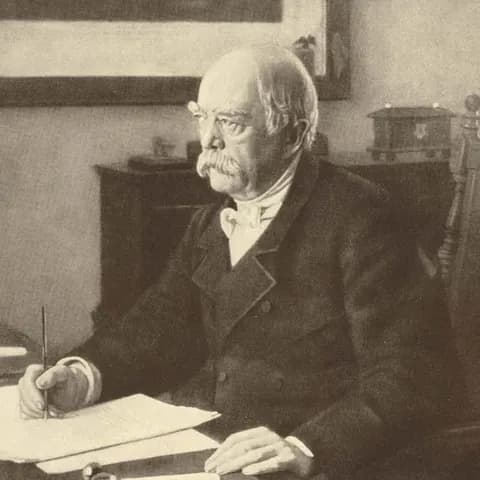 Otto von Bismarck's IQChancellor of Germany, estimated 140+140+
- Suleiman the Magnificent's IQOttoman Sultan, estimated 140140
Rankings that include Capablanca
- The smartest chess players and their IQsRanked 5 of 6
Keep exploring
- High Tolerance for AmbiguitySign of high intelligence
- Seeing Long-Range ImplicationsSign of high intelligence
- Armin Arlert's IQAttack on Titan, fan estimate 140
- Izaya Orihara's IQDurarara!!, fan estimate 140
People also search for
All 307 historical IQ estimates, ranked with ranges and sources.
Capablanca's IQ is 140. What's yours?
Capablanca's estimate comes from the historical record. Yours can come from a real test: 25 visual reasoning questions.
25 questions · about 12 minutes
Sources
- José Raúl Capablanca, Encyclopaedia Britannica. Summarises his life, title and style.
- José Raúl Capablanca, Wikipedia. Covers his childhood, Columbia, title matches and record.
- Cox, C. M. (1926). The Early Mental Traits of Three Hundred Geniuses. Stanford University Press.
- Simonton, D. K. (2009). Genius 101. Springer.
- Cattell, R. B. (1971). Abilities: Their Structure, Growth, and Action. Houghton Mifflin.
Last reviewed October 2026. How we estimate historical IQ