Emanuel Lasker IQ
Emanuel Lasker's IQ is unknown. LifeScore uses about 155 (range 140 to 170) as an editorial marker for the world chess champion of 27 years who earned a mathematics doctorate and proved a theorem later extended by Emmy Noether.
Lasker's IQ is 155. What's yours?
25 questions · about 12 minutes
Think you're smarter than Emanuel Lasker? Try question 1.
Which option completes the grid? One tap, no sign-up.
Key facts
- Estimated IQ
- IQ 155
- Known for
- Holding the world chess title for 27 years and the Lasker-Noether theorem
- Lived
- World Chess Champion & Mathematician, 1868–1941
- Basis
- No documented estimate; editorial marker from the record
- Confidence
- Very low. Born after 1850, so outside the Cox 1926 study. No IQ test result is known.
Lasker has no test score. 155 is an editorial marker for a world champion who also proved a lasting theorem in algebra.
Emanuel Lasker in brief
Emanuel Lasker was born in 1868 in Berlinchen, Prussia, now Barlinek in Poland. He studied mathematics and won the world chess title from Wilhelm Steinitz in 1894, holding it for 27 years, longer than anyone. In 1902 he earned a doctorate in mathematics at Erlangen; his work on ideals in algebra introduced primary decomposition, known as the Lasker-Noether theorem. He was also a philosopher and friend of Einstein. Forced out of Germany by the Nazis, he died in New York in 1941.
What was Emanuel Lasker's IQ?
No figure exists. LifeScore lists about 155 as an editorial marker, range 140 to 170. It rests on an unmatched 27-year chess reign and original research in mathematics, a rare double achievement.
What is the Lasker-Noether theorem?
A result in commutative algebra stating that ideals in certain rings can be broken into primary components, much as numbers factor into primes. Lasker proved it for polynomial rings in 1905, and Emmy Noether generalised it in 1921.
Did Lasker play psychologically?
Commentators, notably Richard Réti, claimed he deliberately chose moves that unsettled particular opponents. Modern analysis suggests he simply played practical, fighting chess and understood that games are won by the player who makes the last mistake.
How did Lasker win the world title?
In 1894 he challenged the ageing champion Wilhelm Steinitz and won by ten games to five. He beat Steinitz again in a rematch in 1896 and defended the title against Marshall, Tarrasch, Janowski and Schlechter before losing to Capablanca in 1921.
How smart was Emanuel Lasker?
- 01
World Chess Champion
1894 to 1921, the longest reign. - 02
Doctorate in mathematics
Erlangen, 1902. - 03
Lasker-Noether theorem
Primary decomposition of ideals, 1905. - 04
Lasker's Manual of Chess
A classic text on chess thinking.
How Lasker thought
Lasker treated chess as a struggle under uncertainty rather than a search for perfect moves, choosing practical plans that worked against real opponents. His mathematics shows the same strength: finding structure in complex objects.
The evidence behind the estimate
An estimate built from the historical record, not a recovered test score.
What supports it
- His title matches and results are documented.
- His 1905 paper in Mathematische Annalen is cited in algebra textbooks.
- He received a doctorate from the University of Erlangen.
What it cannot prove
- Chess skill correlates only modestly with IQ in research samples; at the top, practice and pattern memory matter more.
- Achievement reflects education, opportunity, persistence and collaboration as well as raw reasoning ability.
- An editorial marker is a comparison aid built from achievement, not a measurement, and two careful readers could place it ten points apart.
Lasker compared with Noether, Capablanca, Einstein
| Figure | Estimate | Range |
|---|---|---|
| Emanuel Lasker | 155 | 140–170 |
| Emmy Noether | 170+ | 155–180 |
| José Raúl Capablanca | 140 | 125–155 |
| Albert Einstein | 160+ | 150–170 |
How would you score?
Where would you land next to Emanuel Lasker?
Emanuel Lasker's 155 is an estimate from the historical record, with a working range of 140 to 170. On the standard IQ scale an IQ of 155 sits at the 99.99th percentile: about 1 in 8,137 people score that high. Nobody can test Lasker now. You can find out where you sit on the same scale.
- 100Average adult50th percentile
- 130Gifted linetop 2%, about 1 in 44
- 155Lasker's99.99th percentile, about 1 in 8,137
- ?Youscored on the same scale
25 questions · about 12 minutes
Psychological profile
Emanuel Lasker's IQ is represented here by a retrospective estimate of 155, not a verified test result. Emanuel Lasker is best known for exceptional mathematical reasoning. The useful question is what the surviving evidence shows, not whether a precise modern score can be recovered.
Pragmatic, philosophical and resilient. A champion who played the opponent as well as the position.
The dominant archetype here is The Mathematician-Champion. This archetype shapes decision patterns: what feels natural, what creates friction, and what blind spots tend to emerge.
Estimated IQ is 155. This is a rough estimate based on documented accomplishments and contemporary accounts, not a literal measurement.
Key traits
Mathematical Reasoning
His 1905 paper on ideals was later generalised by Emmy Noether.Psychology
He invented a board game, Lasca.Endurance
Einstein wrote a foreword to a biography of Lasker and called him one of the most interesting people he knew.
One thing most people do not know
He also played bridge at a high level and wrote books on it.
Emanuel Lasker: common questions
Was Emanuel Lasker a genius?
What personality type was Emanuel Lasker?
What can we learn from Emanuel Lasker?
The IQ-style test the NFL used
Emanuel Lasker's IQ is an estimate. Yours could be real.
Before the draft, NFL teams gave prospects the Wonderlic: 50 questions in 12 minutes, and almost nobody finishes. We collected 241 reported player scores, each with its source. The average working adult scores about 21.
People with similar IQ estimates
Emanuel Lasker's estimate of 155 falls in the genius level IQ range. Want your own number rather than Emanuel's? Take the free IQ test or the quick IQ test. See what an IQ of 155 means, place it on the IQ chart or check how rare it is with the IQ rarity calculator.
- Woodrow Wilson's IQ28th US President, estimated 155155
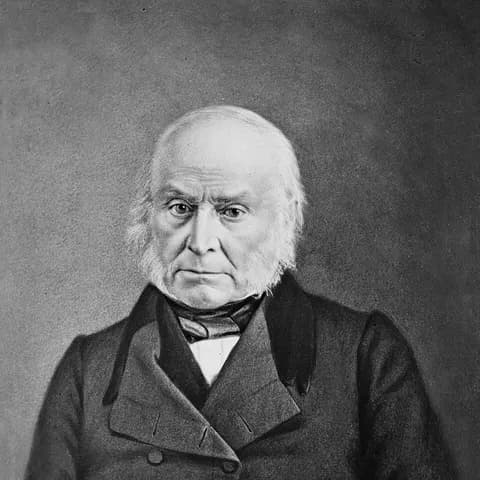 John Quincy Adams' IQ6th US President & Diplomat, estimated 155+155+
- Bill Gates' IQMicrosoft Co-founder, estimated 155+155+
- Jimmy Carter's IQ39th US President, estimated 157157
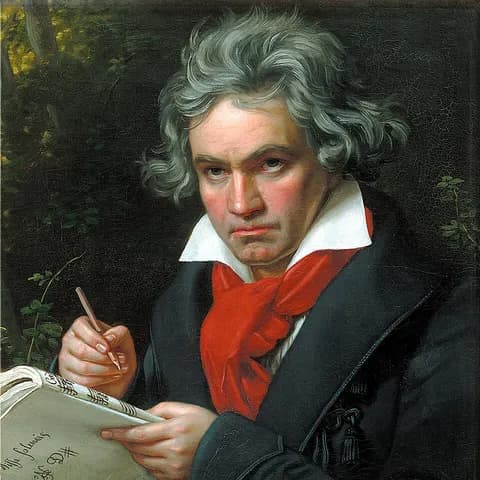 Ludwig van Beethoven's IQComposer, estimated 155+155+
Rankings that include Lasker
- The smartest chess players and their IQsRanked 2 of 6
Keep exploring
- Complex Problem DecompositionSign of high intelligence
- High Tolerance for AmbiguitySign of high intelligence
- Light Yagami's IQDeath Note, fan estimate 155
- Kurisu Makise's IQSteins;Gate, fan estimate 155
People also search for
All 307 historical IQ estimates, ranked with ranges and sources.
Lasker's IQ is 155. What's yours?
Lasker's estimate comes from the historical record. Yours can come from a real test: 25 visual reasoning questions.
25 questions · about 12 minutes
Sources
- Emanuel Lasker, Encyclopaedia Britannica. Summarises his chess career and mathematics.
- Emanuel Lasker biography, MacTutor, University of St Andrews. Covers his mathematical work and doctorate.
- Cox, C. M. (1926). The Early Mental Traits of Three Hundred Geniuses. Stanford University Press.
- Simonton, D. K. (2009). Genius 101. Springer.
- Cattell, R. B. (1971). Abilities: Their Structure, Growth, and Action. Houghton Mifflin.
Last reviewed October 2026. How we estimate historical IQ