Marilyn vos Savant IQ
Marilyn vos Savant's reported IQ is 228. It is a ratio score from a Stanford-Binet test she took at age 10 in 1956, not a modern adult score. Guinness listed it from 1985 to 1989, then retired the category as unreliable.
Vos Savant's IQ is 228. What's yours?
25 questions · about 12 minutes
Key facts
- Estimated IQ
- 228
- Range
- 186 to 228
- Known for
- The "Ask Marilyn" column and a Guinness "Highest IQ" listing
- Lived
- Columnist & Author, Born 1946
- Basis
- Reported Stanford-Binet score (1956), ratio scale
- Confidence
- Low. A Stanford-Binet score of 228 at age 10 in 1956 is reported by her and by Guinness. The test report itself is not public.
Vos Savant has a reported test score, which most famous people lack, but 228 is a ratio score from age 10 and cannot be read as a modern adult IQ.
What is Marilyn vos Savant's IQ?
The figure on record is 228, from a Stanford-Binet test taken at age 10 in 1956. Her mental age was put at 22 years 10 months, and 22.8 divided by 10 gives about 228. A later Mega Test result of 186 was criticised as poorly designed and scored.
Why did Guinness stop listing the highest IQ?
Guinness listed vos Savant under "Highest IQ" from 1985 to 1989 and dropped the category in 1990. It concluded that IQ tests were too unreliable to name one record holder, because scores from different tests cannot be compared and ratio scores at the extreme are shaky.
Was vos Savant right about the Monty Hall problem?
Yes. In her September 1990 column she said a player should switch doors, which wins two times in three. Many readers, including some with mathematics degrees, wrote in to say she was wrong. Simulations and the maths both back her answer.
Why is 228 not the same as a modern IQ of 228?
The 228 comes from the old ratio method: mental age divided by real age, times 100. A ten-year-old who performs like a 22-year-old gets about 228. Modern tests compare you with people your own age and cap out far lower.
On a modern scale where 100 is average and 15 points is one standard deviation, 228 would be far rarer than one in a trillion, more people than have ever lived. The ratio scale simply stops meaning anything that high.
That is why LifeScore treats 228 as a reported childhood score and uses a range of 186 to 228 that includes her later Mega Test result.
How smart was Marilyn vos Savant?
- 01
A Guinness listing
She appeared under "Highest IQ" in the Guinness Book of World Records from 1985 to 1989. - 02
"Ask Marilyn"
Her question-and-answer column began in Parade magazine in 1986 and has run for decades. - 03
The Monty Hall answer
In September 1990 she defended the switch-doors answer against a wave of angry letters, and she was correct. - 04
Books on logic and puzzles
She has written books on reasoning, spelling and mathematics for general readers.
How Vos Savant thought
Vos Savant works by turning a puzzle into a plain-language rule and then testing the rule on small cases. Her columns show the method: she states the assumptions, runs the cases and answers in a few lines, even when readers disagree.
The evidence behind the estimate
An estimate built from the historical record, not a recovered test score.
What supports it
- A Stanford-Binet test in 1956, at age 10, is reported to have given a mental age of 22 years 10 months, or a ratio IQ of about 228.
- Guinness listed her under "Highest IQ" from 1985 to 1989.
- A Mega Test in the mid-1980s gave 186, though professionals criticised that test as improperly designed and scored.
What it cannot prove
- Ratio IQ (mental age over real age) is not comparable with modern deviation IQ, and it breaks down at extreme values.
- Guinness retired the category because it judged the tests too unreliable to rank people.
- Vos Savant is a living person. LifeScore reports the public record and has no access to any private result.
Vos Savant compared with Langan, Tao, Hawking
| Figure | Estimate | Range |
|---|---|---|
| Marilyn vos Savant | 228 | 186–228 |
| Christopher Langan | 174 | 160–195 |
| Terence Tao | 220 | 220–230 |
| Stephen Hawking | 160+ | 150–170 |
Psychological profile
Marilyn vos Savant's IQ is represented here by a retrospective estimate of 228, not a verified test result. Marilyn vos Savant is best known for exceptional logical reasoning. The useful question is what the surviving evidence shows, not whether a precise modern score can be recovered.
Public puzzle-solver and columnist. Her reputation rests on one childhood score and on decades of answering readers' logic questions in print.
The dominant archetype here is The Problem Solver. This archetype shapes decision patterns: what feels natural, what creates friction, and what blind spots tend to emerge.
Estimated IQ is 228. This is a rough estimate based on documented accomplishments and contemporary accounts, not a literal measurement.
Key traits
Logical Reasoning
The column asks her to reason in public, in writing, on a deadline, week after week.Public Explaining
Her Monty Hall answer drew heavy criticism, and she explained it again rather than backing down.Composure Under Criticism
She explains answers without jargon, which is harder than it looks.
One thing most people do not know
She married Robert Jarvik, the scientist behind the Jarvik-7 artificial heart, in 1987.
Marilyn vos Savant: common questions
Was Marilyn vos Savant a genius?
What personality type was Marilyn vos Savant?
What can we learn from Marilyn vos Savant?
More famous IQs
- Christopher Langan IQSelf-taught Theorist174
- Terence Tao IQMathematician220
 Stephen Hawking IQTheoretical Physicist160+
 William Shakespeare IQPlaywright & Poet160+
 Jane Austen IQNovelist145+
 Virginia Woolf IQNovelist & Essayist150+
 Mark Twain IQAuthor & Humorist145+
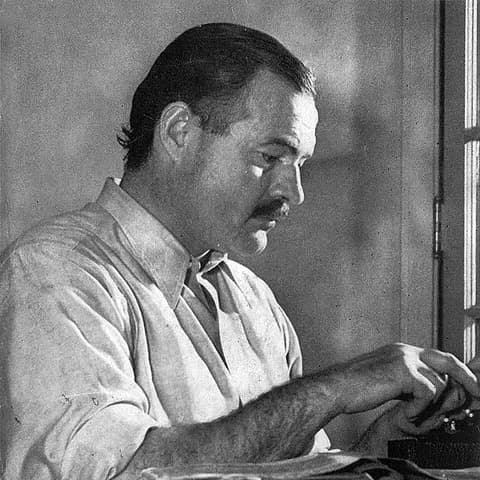 Ernest Hemingway IQNovelist & Journalist140+
Keep exploring
Vos Savant's IQ is 228. What's yours?
Vos Savant's estimate comes from the historical record. Yours can come from a real test: 25 visual reasoning questions.
25 questions · about 12 minutes
Sources
- Marilyn vos Savant, Wikipedia. Covers the 1956 Stanford-Binet score, the Mega Test result, the Guinness listing and the Monty Hall column.
- Highest IQ category retired, Wikipedia, summarising Guinness World Records. Guinness listed "Highest IQ" from 1985 to 1989 and retired the category in 1990 because it judged IQ tests too unreliable to name a single record holder.
- Ask Marilyn, Parade. Her long-running weekly column of reader questions and her answers.
- Cox, C. M. (1926). The Early Mental Traits of Three Hundred Geniuses. Stanford University Press.
- Simonton, D. K. (2009). Genius 101. Springer.
- Cattell, R. B. (1971). Abilities: Their Structure, Growth, and Action. Houghton Mifflin.
Last reviewed September 2026. How we estimate historical IQ