Christopher Langan IQ
Christopher Langan's best-documented result is 47 out of 48 on the Mega Test in 1986, first read as an IQ of about 174. The 190 to 210 sometimes quoted is his own claim, and the Mega Test is an unsupervised, non-standard test.
Langan's IQ is 174. What's yours?
25 questions · about 12 minutes
Key facts
- Estimated IQ
- 174
- Known for
- The Mega Test, the CTMU and a reputation as "the smartest man in America"
- Lived
- Self-taught Theorist, Born 1952
- Basis
- Reported Mega Test score (1986); higher figures are claims
- Confidence
- Low. The Mega Test, an unsupervised take-home test, is documented: 42 under his own name and 47 out of 48 as Eric Hart in 1986. Higher figures are claims.
Langan has a documented high score on a non-standard test. The 195 often quoted is a claim, so LifeScore lists 174 with a wide range.
What is Christopher Langan's IQ?
The documented result is the Mega Test: 42 as himself, then 47 out of 48 under the pseudonym Eric Hart in 1986. A score of 42 was originally read as about 173 to 174, and later renorming gave 159 to 174. Claims of 190 to 210 have no published test.
What is the Mega Test?
It is a take-home test of 48 verbal and spatial problems, created by Ronald Hoeflin in the 1980s and published in Omni magazine. It is untimed, unsupervised and aimed at the extreme top of the range, so psychologists do not treat its IQ conversions as standard measurements.
What did Langan do for work?
He spent more than twenty years as a bouncer on Long Island, and worked as a forest service firefighter, a construction worker and a cowboy. In 2008 he won $250,000 on the game show 1 vs. 100 and bought a horse farm in Missouri.
Where does the 195 figure come from?
The 195 and the 190 to 210 range appear in magazine and television profiles of Langan. They are quoted as his IQ, but the reports we found do not publish a test sheet, an examiner or a date for them.
The one published instrument is the Mega Test. A 42 was first converted to about 173 to 174 and later renormed to a lower range, so the safest documented reading is a high 160s to mid 170s.
LifeScore lists 174, with a range of 160 to 195 that covers both the Mega Test conversions and the claim.
How smart was Christopher Langan?
- 01
The Mega Test
In 1986 he scored 47 out of 48 as Eric Hart, after scoring 42 under his own name. - 02
The Mega Foundation
He co-founded it in 1999 for people with IQs of about 164 and above. - 03
The CTMU
He self-published the Cognitive-Theoretic Model of the Universe in 2002 and revised it in 2020. - 04
A quiz show win
He won $250,000 on 1 vs. 100 in 2008.
How Langan thought
Langan describes working from first principles and building a single framework to explain many things at once. That makes his work hard to compare with conventional academic output, which is why test scores became the main public evidence of his ability.
The evidence behind the estimate
An estimate built from the historical record, not a recovered test score.
What supports it
- In 1986 he scored 47 out of 48 on the Mega Test under the pseudonym Eric Hart, after 42 under his own name.
- A score of 42 was originally read as about 173 to 174; later renorming gave 163 to 174 or 159 to 169.
- He co-founded the Mega Foundation in 1999 and published the CTMU in 2002.
What it cannot prove
- The Mega Test is untimed and unsupervised, and it has no representative norm group at this level.
- Figures of 190 to 210 come from profiles that do not publish a test report.
- Langan is a living person. LifeScore reports the public record only.
Langan compared with Vos Savant, Tao, Ramanujan
| Figure | Estimate | Range |
|---|---|---|
| Christopher Langan | 174 | 160–195 |
| Marilyn vos Savant | 228 | 186–228 |
| Terence Tao | 220 | 220–230 |
| Srinivasa Ramanujan | 170+ | 155–185 |
Psychological profile
Christopher Langan's IQ is represented here by a retrospective estimate of 174, not a verified test result. Christopher Langan is best known for exceptional self-teaching. The useful question is what the surviving evidence shows, not whether a precise modern score can be recovered.
Fiercely independent and self-taught. Left two universities, worked manual jobs for decades and developed his own theory of reality outside academia.
The dominant archetype here is The Theorist. This archetype shapes decision patterns: what feels natural, what creates friction, and what blind spots tend to emerge.
Estimated IQ is 174. This is a rough estimate based on documented accomplishments and contemporary accounts, not a literal measurement.
Key traits
Self-teaching
He left Reed College after a semester and later dropped out of Montana State, citing money and transport.Abstract Thinking
He kept developing his theory while working as a bouncer for over two decades.Independence
His work has been published outside peer-reviewed journals, so specialists have not tested it in the usual way.
One thing most people do not know
He took the Mega Test twice, once under a pseudonym, and scored 42 and 47 out of 48.
Christopher Langan: common questions
Was Christopher Langan a genius?
What personality type was Christopher Langan?
What can we learn from Christopher Langan?
More famous IQs
- Marilyn vos Savant IQColumnist & Author228
- Terence Tao IQMathematician220
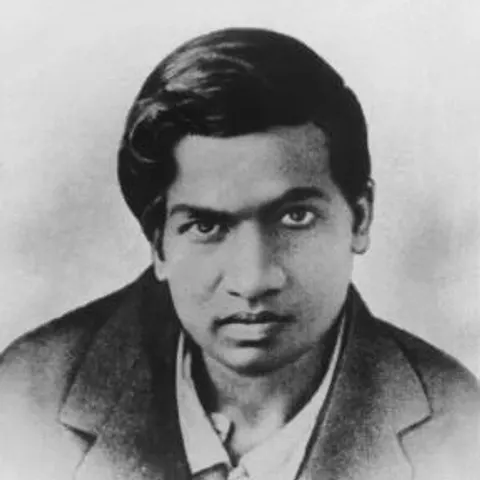 Srinivasa Ramanujan IQMathematician170+
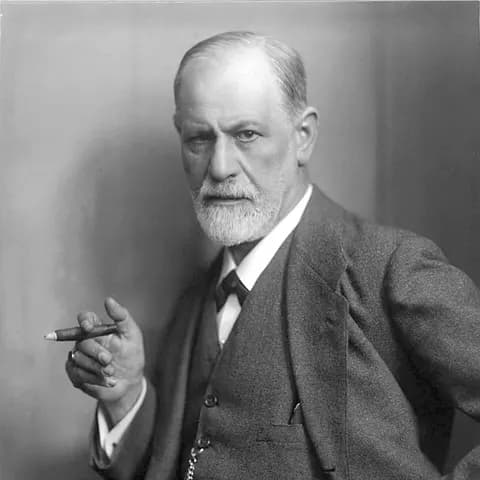 Sigmund Freud IQFather of Psychoanalysis140+
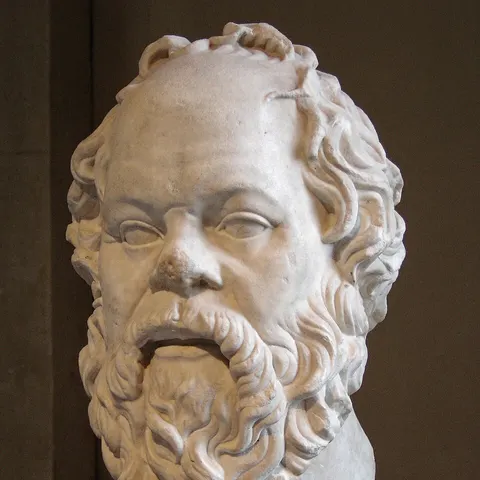 Socrates IQPhilosopher155+
- Confucius IQPhilosopher145+
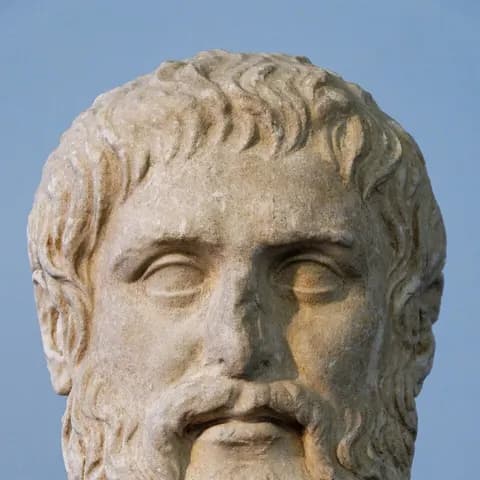 Plato IQPhilosopher160+
 Aristotle IQPhilosopher & Polymath160+
Keep exploring
- All famous IQs, ranked157 figures with ranges and sources
- What an IQ of 160 meansPercentile, rarity and classification
- What an IQ of 174 meansPercentile, rarity and classification
- What an IQ of 195 meansPercentile, rarity and classification
- Quick Pattern RecognitionSigns of high intelligence
- Rapid Learning SpeedSigns of high intelligence
- Einstein IQ testA short visual reasoning challenge
Langan's IQ is 174. What's yours?
Langan's estimate comes from the historical record. Yours can come from a real test: 25 visual reasoning questions.
25 questions · about 12 minutes
Sources
- Christopher Langan, Wikipedia. Covers the Mega Test scores, the renorming, his education and work history, the Mega Foundation and the CTMU.
- Mega Test, Wikipedia. Describes the take-home test and why its conversions are not treated as standard IQ.
- Highest IQ category retired, Wikipedia, summarising Guinness World Records. Guinness listed "Highest IQ" from 1985 to 1989 and retired the category in 1990 because it judged IQ tests too unreliable to name a single record holder.
- Cox, C. M. (1926). The Early Mental Traits of Three Hundred Geniuses. Stanford University Press.
- Simonton, D. K. (2009). Genius 101. Springer.
- Cattell, R. B. (1971). Abilities: Their Structure, Growth, and Action. Houghton Mifflin.
Last reviewed September 2026. How we estimate historical IQ