William James Sidis IQ
William James Sidis is claimed to have had an IQ of 250 to 300. The claim came from his sister Helena and names no test, so it is unverified. What is documented is that he entered Harvard at 11 and lectured its Mathematical Club on four-dimensional bodies in 1910.
Sidis' IQ is 250. What's yours?
25 questions · about 12 minutes

Key facts
- Estimated IQ
- 250
- Range
- 250 to 300
- Known for
- Entering Harvard at 11 and a claimed IQ of 250 to 300
- Lived
- Child Prodigy & Writer, 1898–1944
- Basis
- Unverified family claim; documented Harvard record
- Confidence
- Very low. No IQ test result is documented. The 250 to 300 is a claim by his sister Helena, published after his death.
Sidis was a genuine prodigy, but the 250 to 300 is an unverified family claim. The Harvard record is better evidence than the number.
What was William James Sidis's IQ?
Unknown. The 250 to 300 comes from his sister Helena's claim that his IQ was between those numbers. No test, date or examiner is named, and scholars note the family's habit of exaggeration. A 254 sometimes cited was probably a civil service ranking.
How old was Sidis when he went to Harvard?
He enrolled at 11 in 1909 and gave a lecture on four-dimensional bodies to the Harvard Mathematical Club in 1910. He graduated cum laude in 1914, aged 16, and then taught mathematics at the Rice Institute in Texas for a year.
What happened to William James Sidis?
He was arrested at a 1919 May Day socialist parade and sentenced to 18 months, then withdrew from public life. He worked clerical jobs, wrote under pseudonyms and sued The New Yorker in 1937 over a profile, settling for $3,000. He died in 1944 at 46.
Where does the 250 to 300 figure come from?
It comes from his sister Helena, who said his IQ was between 250 and 300. No test, examiner or date is given.
Even if a childhood test existed, scores that high came from the old ratio method and are not meaningful on a modern scale.
LifeScore lists 250 because it is the number people search for, and labels it as an unverified claim.
How smart was William James Sidis?
- 01
Reading at 18 months
Family accounts say he could read the New York Times by then. - 02
Harvard at 11
He enrolled in 1909 and graduated cum laude in 1914. - 03
The 1910 lecture
He spoke to the Harvard Mathematical Club about four-dimensional bodies. - 04
The Animate and the Inanimate
His 1925 book speculated about the origin of life and the reversal of thermodynamics.
How Sidis thought
Sidis worked alone and followed his curiosity across mathematics, history and languages. He invented a language, collected streetcar transfers and wrote a long history of Native American tribes, using pseudonyms to keep his name out of print.
The evidence behind the estimate
An estimate built from the historical record, not a recovered test score.
What supports it
- He enrolled at Harvard at age 11 in 1909 and graduated cum laude in 1914.
- In 1910 he lectured the Harvard Mathematical Club on four-dimensional bodies.
- He published The Animate and the Inanimate in 1925 and held a patent for a rotary perpetual calendar in 1930.
What it cannot prove
- The IQ claim names no test, date or examiner, and the family had a reputation for exaggeration.
- A 1933 civil service figure of 254 sometimes cited was probably a placement score, not an IQ.
- Ratio IQ at extreme values has no meaning on a modern scale.
Sidis compared with Mill, von Neumann, Pascal
| Figure | Estimate | Range |
|---|---|---|
| William James Sidis | 250 | 250–300 |
| John Stuart Mill | 160+ | 160–180 |
| John von Neumann | 170+ | 160–190 |
| Blaise Pascal | 165+ | 165–195 |
Psychological profile
William James Sidis's IQ is represented here by a retrospective estimate of 250, not a verified test result. William James Sidis is best known for exceptional early mastery. The useful question is what the surviving evidence shows, not whether a precise modern score can be recovered.
A famous child prodigy who withdrew from public life. Wrote widely under pseudonyms and avoided the attention that had followed him since childhood.
The dominant archetype here is The Outcast. This archetype shapes decision patterns: what feels natural, what creates friction, and what blind spots tend to emerge.
Estimated IQ is 250. This is a rough estimate based on documented accomplishments and contemporary accounts, not a literal measurement.
Key traits
Early Mastery
He taught himself several languages as a child and invented one called Vendergood.Languages
He coined the word peridromophile for people who collect transit tickets, and he was one himself.Privacy
He avoided publicity for most of his adult life after the press attention of his youth.
One thing most people do not know
He patented a rotary perpetual calendar in 1930.
William James Sidis: common questions
Was William James Sidis a genius?
What personality type was William James Sidis?
What can we learn from William James Sidis?
More famous IQs
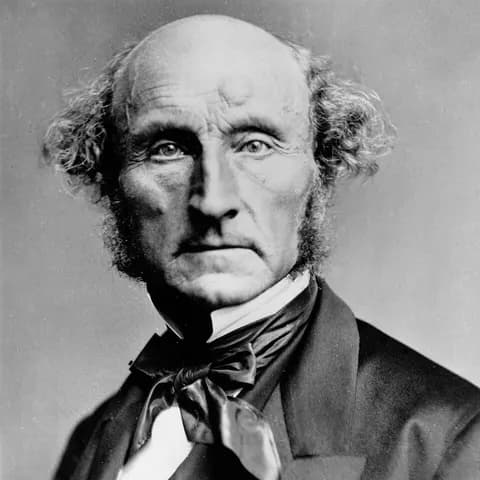 John Stuart Mill IQPhilosopher & Economist160+
- John von Neumann IQMathematician & Computer Pioneer170+
- Blaise Pascal IQMathematician & Philosopher165+
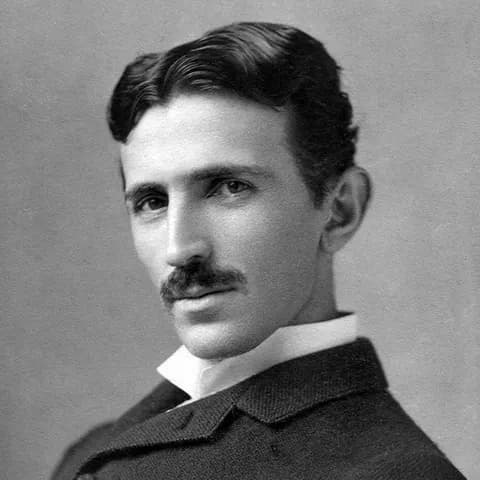 Nikola Tesla IQInventor160+
 Isaac Newton IQPhysicist & Mathematician160+
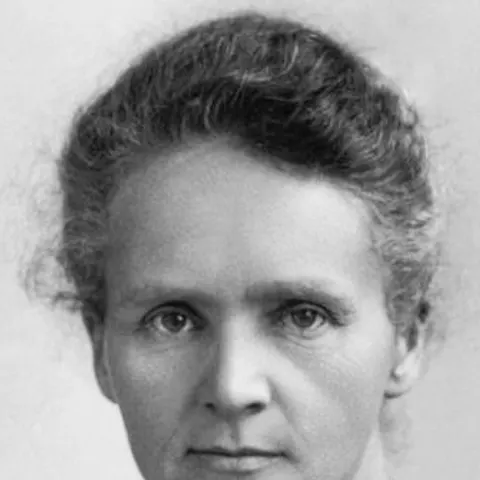 Marie Curie IQPhysicist & Chemist150
 Ada Lovelace IQMathematician (Early Computing)145
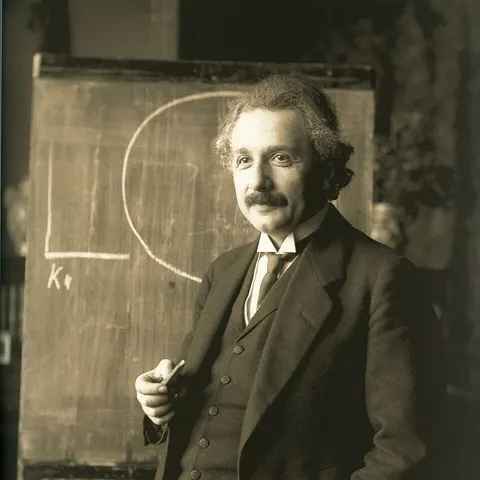 Albert Einstein IQPhysicist160+
Keep exploring
Sidis' IQ is 250. What's yours?
Sidis' estimate comes from the historical record. Yours can come from a real test: 25 visual reasoning questions.
25 questions · about 12 minutes
Sources
- William James Sidis, Wikipedia. Covers his early life, Harvard years, later life, the lawsuit and the origin of the IQ claims.
- Sidis Archives, sidis.net. A collection of material about Sidis, including his writings and biographical sources.
- Cox, C. M. (1926). The Early Mental Traits of Three Hundred Geniuses. Stanford University Press.
- Simonton, D. K. (2009). Genius 101. Springer.
- Cattell, R. B. (1971). Abilities: Their Structure, Growth, and Action. Houghton Mifflin.
- Portrait: Unknown authorUnknown author · Public domain · Wikimedia Commons
Last reviewed September 2026. How we estimate historical IQ