John Stuart Mill IQ
John Stuart Mill's IQ is estimated at 158 to 180. Catharine Cox's 1926 study gave him a corrected 180; he never took a test. His father's account of teaching him Greek at three is one of the best-documented childhoods in her study.
Mill's IQ is 160+. What's yours?
25 questions · about 12 minutes
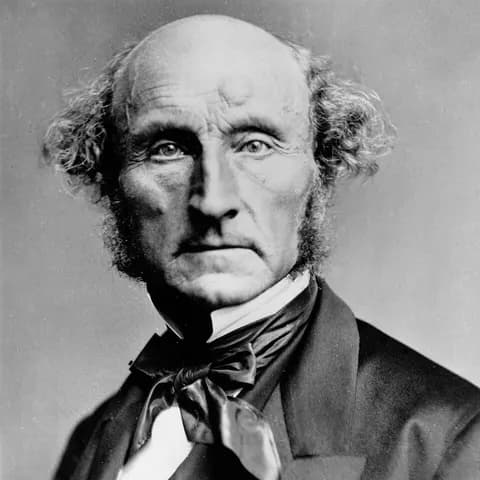
Key facts
- Estimated IQ
- 160+
- Known for
- On Liberty and a famously intense childhood education
- Lived
- Philosopher & Economist, 1806–1873
- Basis
- Cox 1926 historiometric estimate
- Confidence
- Low. Mill died in 1873. No IQ test was ever given; the figure comes from a 1926 study that rated historical figures from biographies.
Cox's corrected estimate for Mill was 180. His documented childhood and later books make his one of the stronger historical estimates, though it remains an estimate.
What was John Stuart Mill's IQ?
Mill never took an IQ test. Catharine Cox's 1926 study gave him a corrected estimate of 180. Adjusted for the Flynn effect that is about 158, so LifeScore uses a range of 158 to 180, with 160+ as the marker. His detailed childhood record helps a method like Cox's.
When did John Stuart Mill learn Greek?
Mill says in his Autobiography that his father James Mill began teaching him Greek at age three. By eight he had read Aesop, Xenophon and several of Plato's dialogues in Greek, and had started Latin, geometry and algebra. By twelve he was studying logic and political economy.
Did Mill have a breakdown?
Yes. At 20, in 1826, he fell into a deep depression, which he later described in his Autobiography. He recovered partly by reading poetry, especially Wordsworth, and concluded that happiness cannot be pursued directly. The episode softened his earlier strict utilitarian training.
Where does the 180 figure come from?
The 180 is Catharine Cox's corrected estimate from her 1926 study of 301 eminent people born between 1450 and 1850. She rated each person from biographical records of what they could do as a child and young adult, then corrected for gaps in the record.
Cox's numbers sit on an old ratio-IQ scale. One secondary tabulation subtracts about 22 points for the Flynn effect, which puts John Stuart Mill near 160.
LifeScore lists 160+, and the working range of 160 to 180 spans both figures. None of them is a test result.
How smart was John Stuart Mill?
- 01
A System of Logic
His 1843 book set out the standard methods of scientific reasoning for a generation. - 02
On Liberty
His 1859 essay argued that society may limit a person's freedom only to prevent harm to others. - 03
Principles of Political Economy
His 1848 textbook was the standard economics text in English for decades. - 04
The Subjection of Women
His 1869 book argued for legal equality of the sexes, and in 1867 he moved an amendment for women's suffrage in Parliament.
How Mill thought
Mill took opposing views seriously and tried to state them better than their holders did. He argued that you do not understand your own position until you can answer the strongest case against it, and his writing shows the habit.
The evidence behind the estimate
An estimate built from the historical record, not a recovered test score.
What supports it
- Cox's 1926 study gave Mill a corrected estimate of 180, which falls to about 158 after a Flynn-effect adjustment.
- His Autobiography describes Greek at three, Plato at seven or eight and logic and economics by twelve.
- He wrote A System of Logic (1843), Principles of Political Economy (1848) and On Liberty (1859).
What it cannot prove
- Much of the childhood evidence is Mill's own account, written decades later.
- A highly structured education measures what a parent could teach as well as ability.
- Cox's scale runs higher than modern deviation IQ, by roughly 22 points in one tabulation.
Mill compared with Locke, Darwin, Galton
| Figure | Estimate | Range |
|---|---|---|
| John Stuart Mill | 160+ | 160–180 |
| John Locke | 155+ | 145–165 |
| Charles Darwin | 140+ | 140–165 |
| Francis Galton | 180+ | 178–200 |
Psychological profile
John Stuart Mill's IQ is represented here by a retrospective estimate of 160+, not a verified test result. John Stuart Mill is best known for exceptional early learning. The useful question is what the surviving evidence shows, not whether a precise modern score can be recovered.
A child educated to an extreme. Became a clear, fair-minded writer on liberty, logic and economics who also argued for women's rights.
The dominant archetype here is The Scholar. This archetype shapes decision patterns: what feels natural, what creates friction, and what blind spots tend to emerge.
Estimated IQ is 160+. This is a rough estimate based on documented accomplishments and contemporary accounts, not a literal measurement.
Key traits
Early Learning
His father taught him in a regimented programme, and Mill later criticised its lack of play and feeling.Clear Argument
He worked for the East India Company for 35 years while writing in his spare time.Open-mindedness
He credited his wife Harriet Taylor Mill as a major influence on his ideas.
One thing most people do not know
Mill served as a member of Parliament from 1865 to 1868 and refused to campaign or pay for his own election.
John Stuart Mill: common questions
Was John Stuart Mill a genius?
What personality type was John Stuart Mill?
What can we learn from John Stuart Mill?
More famous IQs
 John Locke IQPhilosopher155+
 Charles Darwin IQNaturalist & Biologist140+
 Francis Galton IQPolymath & Statistician180+
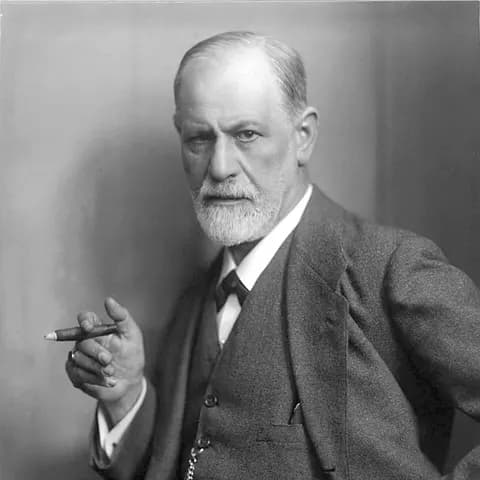 Sigmund Freud IQFather of Psychoanalysis140+
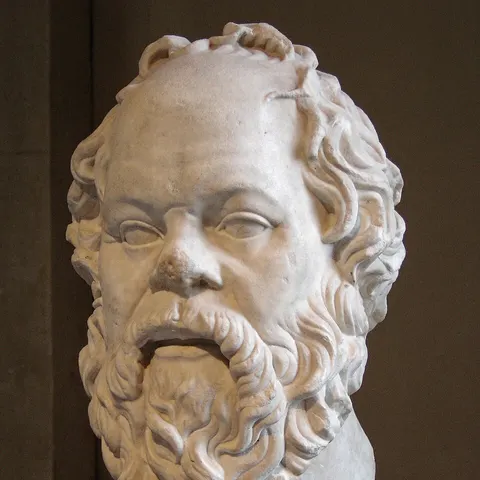 Socrates IQPhilosopher155+
- Confucius IQPhilosopher145+
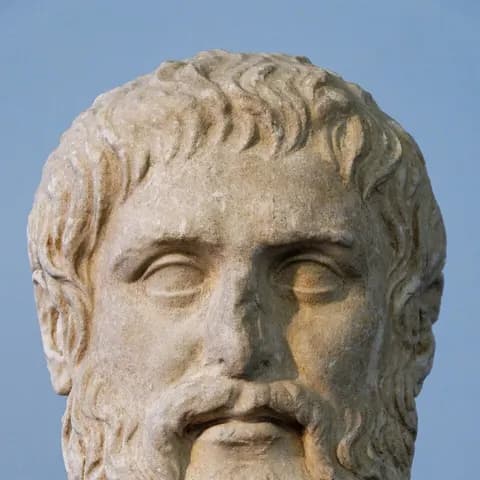 Plato IQPhilosopher160+
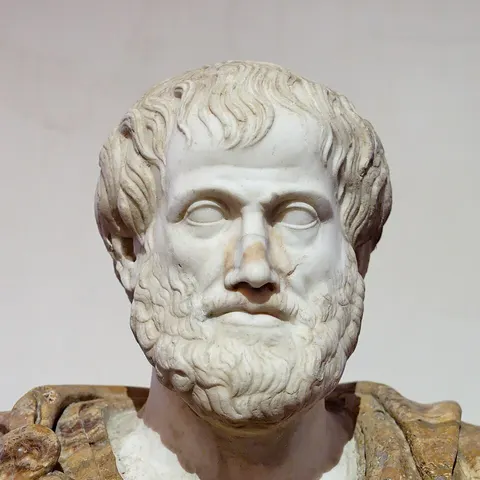 Aristotle IQPhilosopher & Polymath160+
Keep exploring
- All famous IQs, ranked157 figures with ranges and sources
- What an IQ of 160 meansPercentile, rarity and classification
- What an IQ of 180 meansPercentile, rarity and classification
- Quick Pattern RecognitionSigns of high intelligence
- Rapid Learning SpeedSigns of high intelligence
- Einstein IQ testA short visual reasoning challenge
Mill's IQ is 160+. What's yours?
Mill's estimate comes from the historical record. Yours can come from a real test: 25 visual reasoning questions.
25 questions · about 12 minutes
Sources
- John Stuart Mill, Stanford Encyclopedia of Philosophy. Scholarly account of his life, logic, ethics and politics.
- The Early Mental Traits of Three Hundred Geniuses (Cox, 1926), Stanford University Press, via Internet Archive. The original historiometric study. Cox rated 301 eminent people born 1450 to 1850 from records of their childhood and youth.
- Cox's IQ estimates of 301 eminent geniuses, IQ Comparison Site. Secondary tabulation of Cox's corrected estimates, with a version adjusted by about 22 points for the Flynn effect.
- Cox, C. M. (1926). The Early Mental Traits of Three Hundred Geniuses. Stanford University Press.
- Simonton, D. K. (2009). Genius 101. Springer.
- Cattell, R. B. (1971). Abilities: Their Structure, Growth, and Action. Houghton Mifflin.
- Portrait: London Stereoscopic Company · Public domain · Wikimedia Commons
Last reviewed September 2026. How we estimate historical IQ