Francis Galton IQ
Francis Galton's IQ is estimated at about 200 by psychologist Lewis Terman, who studied his childhood letters in 1917. It is a historical estimate on the old ratio scale, not a test. Adjusted by about 22 points for the Flynn effect it is nearer 178.
Galton's IQ is 180+. What's yours?
25 questions · about 12 minutes
Key facts
- Estimated IQ
- 180+
- Known for
- Founding statistical psychology and fingerprint classification
- Lived
- Polymath & Statistician, 1822–1911
- Basis
- Terman 1917 historiometric estimate
- Confidence
- Low. Galton died in 1911. Lewis Terman estimated his childhood IQ in 1917 from letters and records. No test was ever given.
Galton has a published historical estimate from a leading psychometrician, which is stronger than most. It is still an estimate from letters on an old scale.
What was Francis Galton's IQ?
Lewis Terman estimated about 200 in 1917 from Galton's childhood letters and early achievements, putting his mental age at about twice his real age. Galton never took a test. Adjusting by about 22 points for the Flynn effect gives roughly 178, so LifeScore uses 178 to 200.
Was Francis Galton related to Charles Darwin?
Yes. Galton was Darwin's half-cousin, and Darwin's On the Origin of Species (1859) pushed him to study how abilities pass through families. That led to his work on heredity and, later, to the statistical idea of regression to the mean.
What is Galton remembered for?
He helped found statistics and psychology as measuring sciences. He introduced fingerprint classification, drew early weather maps, popularised the questionnaire and developed correlation and regression. He also coined 'eugenics', and that idea did lasting harm. Both sides are part of his record.
Where does the 200 figure come from?
Lewis Terman, who revised the Stanford-Binet test, published an estimate of Galton's childhood IQ in 1917. He read Galton's letters and judged what an average child could do at each age.
A letter Galton wrote at age four says he could read any English book, recite Latin forms and add, and Terman put his mental age at about twice his real age.
That is a ratio estimate from the old scale, so LifeScore also gives a Flynn-adjusted figure near 178 and uses a range of 178 to 200.
How smart was Francis Galton?
- 01
Fingerprint classification
His 1892 book Finger Prints set out the classification system that later police work used. - 02
Early weather maps
He drew some of the first weather maps, showing pressure and wind, and named the anticyclone. - 03
Correlation and regression
He worked out how to measure how two traits vary together, and described regression towards the mean. - 04
Questionnaires and twin studies
He used questionnaires and compared twins to ask how much nature and nurture matter.
How Galton thought
Galton believed that if something varied, it could be measured, and then its pattern could be studied. He measured head size, reaction time, sight, hearing and even the effectiveness of prayer, always looking for a distribution.
The evidence behind the estimate
An estimate built from the historical record, not a recovered test score.
What supports it
- Terman (1917) estimated his childhood IQ at about 200 from his early letters and records.
- He wrote at age four that he could read any English book and recite Latin forms.
- He developed fingerprint classification, early weather maps and the ideas of correlation and regression.
What it cannot prove
- Terman worked from a small number of letters, written to relatives as a small child.
- The estimate sits on the old ratio scale, which runs higher than modern deviation IQ.
- Galton's promotion of eugenics shows that ability and sound judgement are not the same thing.
Galton compared with Darwin, Mill, Newton
| Figure | Estimate | Range |
|---|---|---|
| Francis Galton | 180+ | 178–200 |
| Charles Darwin | 140+ | 140–165 |
| John Stuart Mill | 160+ | 160–180 |
| Isaac Newton | 160+ | 160–190 |
Psychological profile
Francis Galton's IQ is represented here by a retrospective estimate of 180+, not a verified test result. Francis Galton is best known for exceptional measurement. The useful question is what the surviving evidence shows, not whether a precise modern score can be recovered.
Tireless measurer and collector of data. Tried to count anything that could be counted, from fingerprints to weather to human ability.
The dominant archetype here is The Quantifier. This archetype shapes decision patterns: what feels natural, what creates friction, and what blind spots tend to emerge.
Estimated IQ is 180+. This is a rough estimate based on documented accomplishments and contemporary accounts, not a literal measurement.
Key traits
Measurement
He built instruments, such as a whistle to test hearing, and collected data from thousands of visitors at an exhibition.Curiosity
His interest in measuring people helped start psychometrics, the field behind IQ tests.Statistical Thinking
His promotion of eugenics is widely seen as harmful, and it is part of his legacy.
One thing most people do not know
Galton wrote a letter at age four saying he could read any English book and recite 52 lines of Latin poetry.
Francis Galton: common questions
Was Francis Galton a genius?
What personality type was Francis Galton?
What can we learn from Francis Galton?
More famous IQs
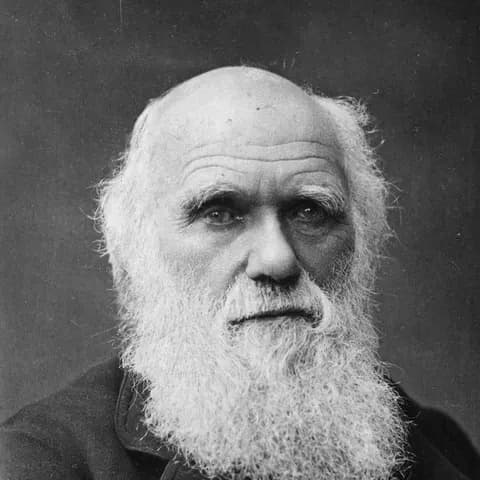 Charles Darwin IQNaturalist & Biologist140+
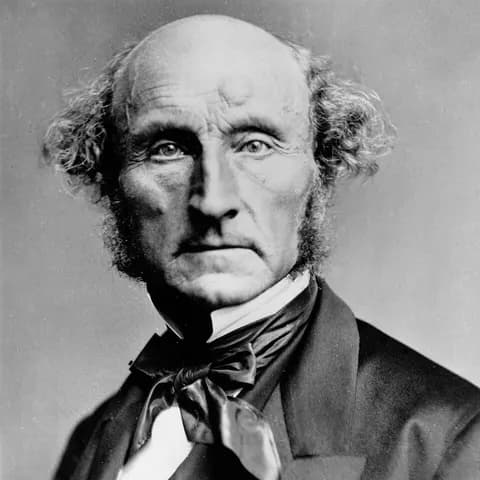 John Stuart Mill IQPhilosopher & Economist160+
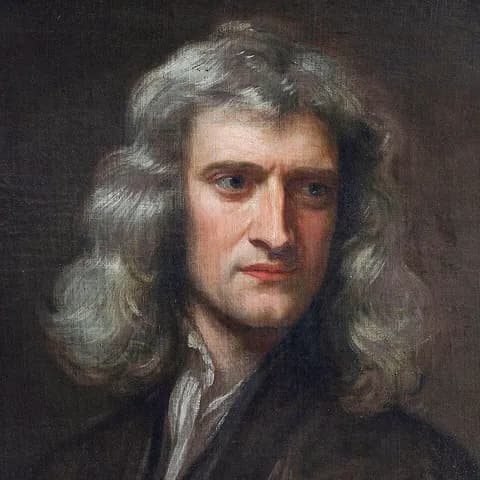 Isaac Newton IQPhysicist & Mathematician160+
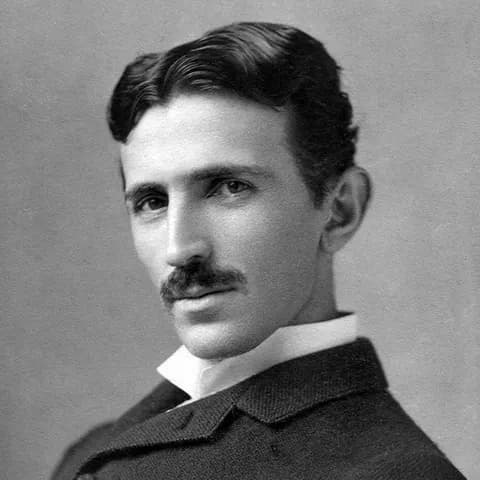 Nikola Tesla IQInventor160+
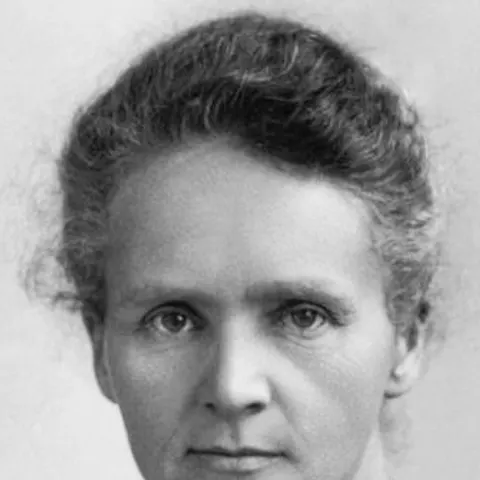 Marie Curie IQPhysicist & Chemist150
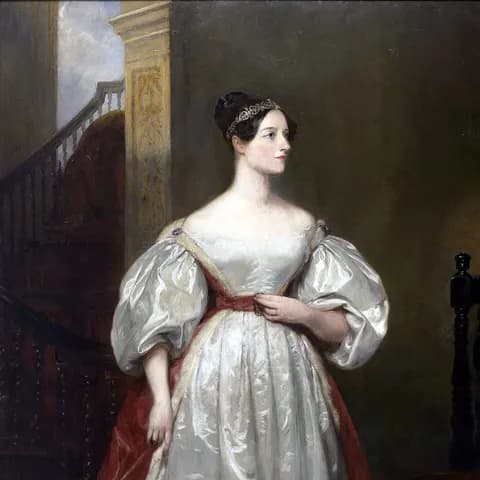 Ada Lovelace IQMathematician (Early Computing)145
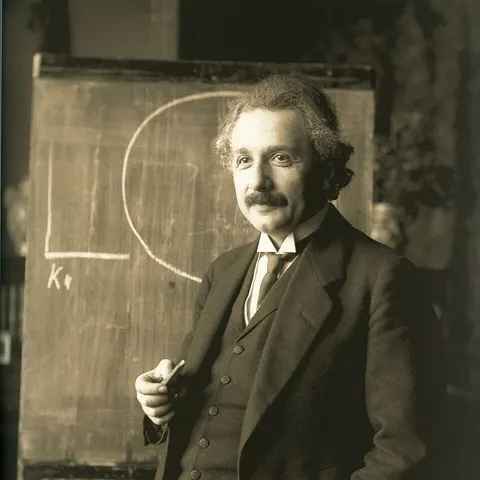 Albert Einstein IQPhysicist160+
 Stephen Hawking IQTheoretical Physicist160+
Keep exploring
- All famous IQs, ranked157 figures with ranges and sources
- What an IQ of 178 meansPercentile, rarity and classification
- What an IQ of 180 meansPercentile, rarity and classification
- What an IQ of 200 meansPercentile, rarity and classification
- Quick Pattern RecognitionSigns of high intelligence
- Rapid Learning SpeedSigns of high intelligence
- Einstein IQ testA short visual reasoning challenge
Galton's IQ is 180+. What's yours?
Galton's estimate comes from the historical record. Yours can come from a real test: 25 visual reasoning questions.
25 questions · about 12 minutes
Sources
- The Intelligence Quotient of Francis Galton in Childhood, American Journal of Psychology, 1917 (Terman). Terman's published estimate of Galton's childhood IQ from his letters.
- Francis Galton, Encyclopaedia Britannica. Biography covering his statistics, fingerprints, weather maps and eugenics.
- Francis Galton, Wikipedia. Covers his family ties to Darwin, his early life and the range of his work.
- Cox, C. M. (1926). The Early Mental Traits of Three Hundred Geniuses. Stanford University Press.
- Simonton, D. K. (2009). Genius 101. Springer.
- Cattell, R. B. (1971). Abilities: Their Structure, Growth, and Action. Houghton Mifflin.
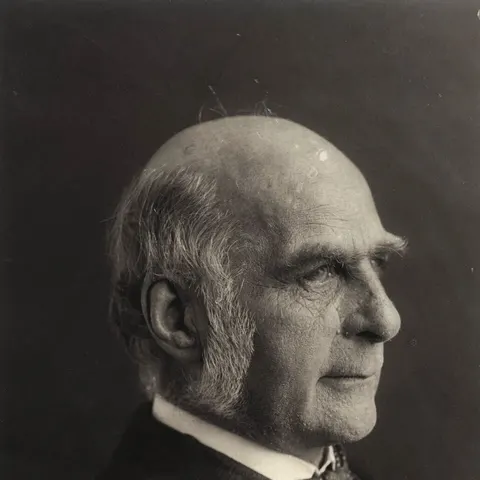
- Portrait: Eveleen Myers (née Tennant) · Public domain · Wikimedia Commons
Last reviewed September 2026. How we estimate historical IQ