The psychologists who built IQ, and their own estimated IQs
Francis Galton has the highest estimate among the 11 psychologists here, 180+. Ironically, almost none of the people who invented intelligence testing ever published their own score, so these figures are estimates; each profile also explains the part of the IQ test that person created.
Francis Galton: 180+. What's yours?
25 questions · about 12 minutes
What would you score? Try question 1.
Which option completes the grid? One tap, no sign-up.
All 11, ranked
| # | Name | Estimate |
|---|---|---|
| 1 | 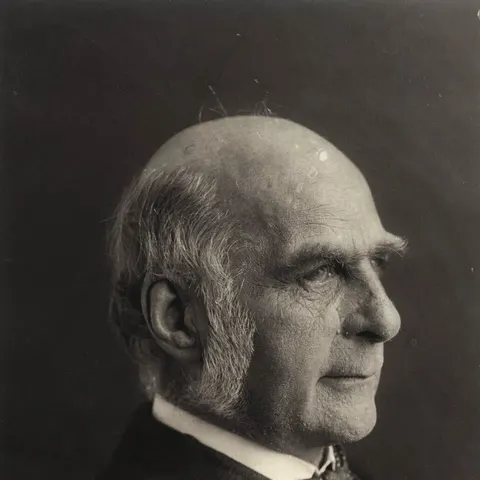 Francis Galton Polymath & Statistician, 1822 to 1911 | 180+ |
| 2 | William James Psychologist & Philosopher, 1842 to 1910 | 155 |
| 3 | Carl Jung Psychiatrist & Psychologist | 150+ |
| 4 | Jean Piaget Developmental Psychologist, 1896 to 1980 | 150 |
| 5 | Alfred Binet Psychologist, 1857 to 1911 | 145 |
| 6 | B. F. Skinner Behavioural Psychologist, 1904 to 1990 | 145 |
| 7 | Charles Spearman Psychologist & Statistician, 1863 to 1945 | 145 |
| 8 | Ivan Pavlov Physiologist, 1849 to 1936 | 145 |
| 9 | David Wechsler Psychologist, 1896 to 1981 | 140 |
| 10 | Lewis Terman Psychologist, 1877 to 1956 | 140 |
| 11 | 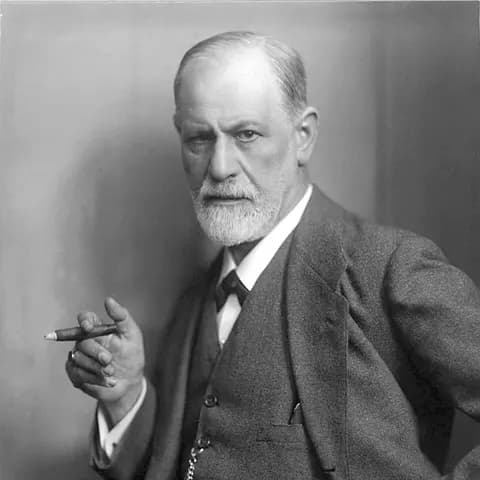 Sigmund Freud Father of Psychoanalysis | 140+ |
Estimate: the working figure on each profile, with its range. None is a measured test score unless the basis says so.
About this list
Every number on this site rests on ideas these people developed. Francis Galton first tried to measure intelligence; Alfred Binet built the first practical test in 1905; Lewis Terman turned it into the Stanford-Binet and the IQ score in 1916; Charles Spearman found the general factor, g, that all good tests measure; David Wechsler replaced mental age with the mean-100, SD-15 scale used today. Terman also directed Catharine Cox's 1926 study of historical geniuses, the source of most famous historical IQs.
Their own estimates follow the same rules as everyone else's. Galton has a figure from Terman's own 1917 analysis of his childhood; the others have editorial markers built from the documented record, labelled with very low confidence.
How would you score?
Where would you land next to Francis Galton?
Francis Galton's 180+ is an estimate from the historical record, with a working range of 178 to 200. On the standard IQ scale an IQ of 180 sits at the 99.9999951st percentile: about 1 in 21 million people score that high. Nobody can test Francis Galton now. You can find out where you sit on the same scale.
- 100Average adult50th percentile
- 130Gifted linetop 2%, about 1 in 44
- 180+Francis Galton's99.9999951st percentile, about 1 in 21 million
- ?Youscored on the same scale
25 questions · about 12 minutes
How a modern IQ score is made
A modern IQ is a comparison, not a quantity. Your raw score is compared with a large sample of people your age, and the result is scaled so that the average is 100 and the standard deviation is 15. That is Wechsler's deviation IQ. A score of 130 means about two standard deviations above average, higher than roughly 98 percent of people.
The items on good tests are chosen because they load on Spearman's g. Matrix puzzles, where you find the missing piece of a visual pattern, are among the best single measures of g, which is why they appear in so many tests, including the LifeScore test.
Binet himself warned that intelligence is not fixed and that a test should help children, not label them. Terman, by contrast, promoted eugenics, and his own gifted study screened out two future Nobel physicists. The history of IQ is a history of useful tools and serious misuse, and both are part of this list.
Frequently asked questions
Who invented the IQ test?
What was Francis Galton's IQ?
What was Freud's IQ?
Is IQ still used by psychologists today?
More IQ rankings
- The highest IQ philosophers in history43 people, ranked with ranges and sources
- The highest IQ scientists in history74 people, ranked with ranges and sources
- The smartest chess players and their IQs6 people, ranked with ranges and sources
- Every historical figure, rankedThe full index with confidence levels
- Famous IQs in historySearch and filter every profile by field and era
- All IQ rankingsPeople, characters, majors and universities
Where would you rank on this list?
Take the test and compare your score with the people above.
25 questions · about 12 minutes