Ivan Pavlov IQ
Ivan Pavlov's IQ is unknown. LifeScore uses about 145 (range 130 to 160) as an editorial marker for the priest's son who won the 1904 Nobel Prize for digestion and discovered the conditioned reflex.
Pavlov's IQ is 145. What's yours?
25 questions · about 12 minutes
Think you're smarter than Ivan Pavlov? Try question 1.
Which option completes the grid? One tap, no sign-up.
Key facts
- Estimated IQ
- IQ 145
- Known for
- Conditioned reflexes and Pavlov's dogs
- Lived
- Physiologist, 1849–1936
- Basis
- No documented estimate; editorial marker from the record
- Confidence
- Very low. Born inside the period Cox 1926 covered, but we could not confirm a Cox figure from an accessible tabulation, so none is quoted. No IQ test was ever given.
Pavlov has no test and no Cox figure. 145 is an editorial marker for a Nobel physiologist whose side observation founded a branch of psychology.
Ivan Pavlov in brief
Ivan Pavlov was born in Ryazan, Russia, in 1849, the son of a village priest, and began training for the priesthood before switching to science. He studied physiology in St Petersburg and Germany and became a professor at the Military Medical Academy. His research on digestion won the 1904 Nobel Prize in Physiology or Medicine. Studying salivation in dogs, he discovered the conditioned reflex, a founding idea of behavioural psychology. He died in 1936.
What was Ivan Pavlov's IQ?
No figure exists. LifeScore lists about 145 as an editorial marker, range 130 to 160. It rests on his Nobel Prize, his surgical and experimental skill and the insight to turn an annoying side effect, dogs drooling early, into a research programme.
What is classical conditioning?
Learning by association. Pavlov's dogs salivated at food. When a neutral signal such as a metronome repeatedly came just before food, the dogs began salivating at the signal alone. That learned response is a conditioned reflex.
Did Pavlov really use a bell?
He used many signals, including metronomes, buzzers and lights. Bells appear in some accounts, but the famous image of a ringing bell owes more to popular retellings than to his main experiments.
Did Pavlov oppose the Soviet government?
Openly, at times. He criticised the Bolsheviks and wrote protests against the persecution of scientists and priests. Lenin nonetheless ordered that he be given good conditions to work, because his science brought prestige. Pavlov kept his laboratory running in the Soviet Union until his death in 1936.
How smart was Ivan Pavlov?
- 01
Nobel Prize 1904
For research on the physiology of digestion. - 02
Conditioned reflexes
A founding discovery of behavioural psychology. - 03
Surgical methods
Chronic experiments on healthy animals with fistulas. - 04
Institute of Experimental Medicine
Led its physiology department for decades.
How Pavlov thought
Pavlov noticed an anomaly, salivation before food arrived, and treated it as a signal rather than a nuisance. Recognising that an unexpected result is the important one is a key step in scientific reasoning.
The evidence behind the estimate
An estimate built from the historical record, not a recovered test score.
What supports it
- He won the 1904 Nobel Prize in Physiology or Medicine.
- His lectures on conditioned reflexes were published in 1927.
- His experimental methods are well documented.
What it cannot prove
- Laboratory success depended on a large team.
- Achievement reflects education, opportunity, persistence and collaboration as well as raw reasoning ability.
- An editorial marker is a comparison aid built from achievement, not a measurement, and two careful readers could place it ten points apart.
Pavlov compared with B. F. Skinner, Darwin, Pasteur
| Figure | Estimate | Range |
|---|---|---|
| Ivan Pavlov | 145 | 130–160 |
| B. F. Skinner | 145 | 130–160 |
| Charles Darwin | 140+ | 140–165 |
| Louis Pasteur | 155+ | 140–165 |
How would you score?
Where would you land next to Ivan Pavlov?
Ivan Pavlov's 145 is an estimate from the historical record, with a working range of 130 to 160. On the standard IQ scale an IQ of 145 sits at the 99.87th percentile: about 1 in 741 people score that high. Nobody can test Pavlov now. You can find out where you sit on the same scale.
- 100Average adult50th percentile
- 130Gifted linetop 2%, about 1 in 44
- 145Pavlov's99.87th percentile, about 1 in 741
- ?Youscored on the same scale
25 questions · about 12 minutes
Psychological profile
Ivan Pavlov's IQ is represented here by a retrospective estimate of 145, not a verified test result. Ivan Pavlov is best known for exceptional precision. The useful question is what the surviving evidence shows, not whether a precise modern score can be recovered.
Meticulous, energetic and outspoken. A scientist who criticised the Soviet government and kept his lab running.
The dominant archetype here is The Experimenter. This archetype shapes decision patterns: what feels natural, what creates friction, and what blind spots tend to emerge.
Estimated IQ is 145. This is a rough estimate based on documented accomplishments and contemporary accounts, not a literal measurement.
Key traits
Precision
He won the Nobel Prize for digestion, not for conditioning.Observation
He used a metronome and other signals, not just a bell.Persistence
He was among the first Russians to win a Nobel Prize.
One thing most people do not know
On his deathbed he reportedly dictated notes on his own symptoms for science.
Ivan Pavlov: common questions
Was Ivan Pavlov a genius?
What personality type was Ivan Pavlov?
What can we learn from Ivan Pavlov?
The IQ-style test the NFL used
Ivan Pavlov's IQ is an estimate. Yours could be real.
Before the draft, NFL teams gave prospects the Wonderlic: 50 questions in 12 minutes, and almost nobody finishes. We collected 241 reported player scores, each with its source. The average working adult scores about 21.
People with similar IQ estimates
Ivan Pavlov's estimate of 145 falls in the genius level IQ range. Want your own number rather than Ivan's? Take the free IQ test or the quick IQ test. See what an IQ of 145 means, place it on the IQ chart or check how rare it is with the IQ rarity calculator.
- Hippocrates' IQPhysician, estimated 145145
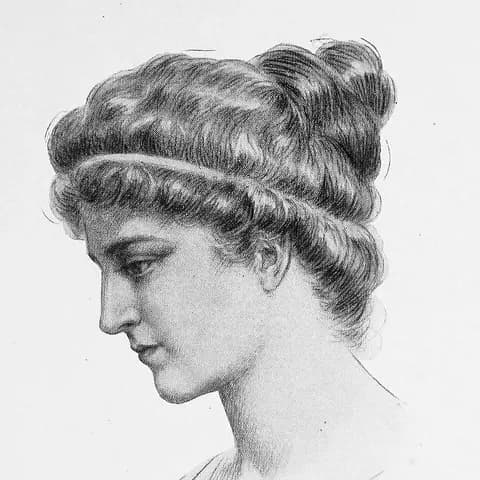 Hypatia's IQMathematician & Philosopher, estimated 145+145+
- Katherine Johnson's IQNASA Mathematician, estimated 145145
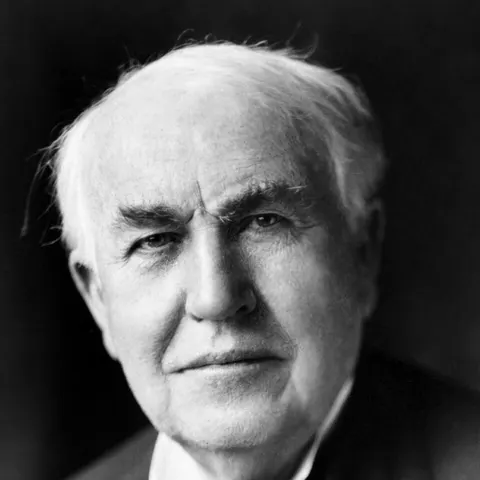 Thomas Edison's IQInventor & Businessman, estimated 145145
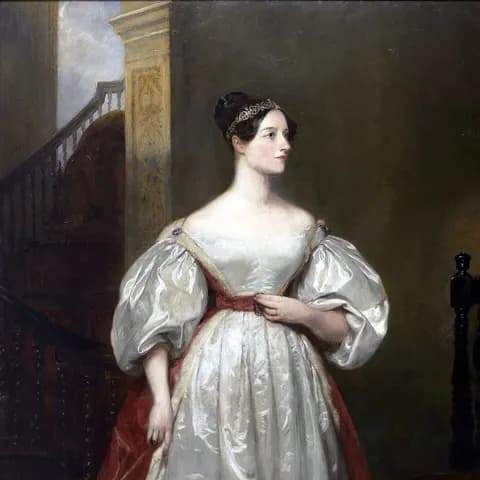 Ada Lovelace's IQMathematician (Early Computing), estimated 145145
Rankings that include Pavlov
- The psychologists who built IQ, and their own estimated IQsRanked 8 of 11
- The highest IQ Nobel Prize winnersRanked 25 of 35
Keep exploring
- Quick Pattern RecognitionSign of high intelligence
- Deep Intellectual CuriositySign of high intelligence
- Dexter (Dexter's Laboratory)'s IQDexter's Laboratory, fan estimate 145
- Doctor Strange's IQMarvel Cinematic Universe, fan estimate 145
People also search for
All 307 historical IQ estimates, ranked with ranges and sources.
Pavlov's IQ is 145. What's yours?
Pavlov's estimate comes from the historical record. Yours can come from a real test: 25 visual reasoning questions.
25 questions · about 12 minutes
Sources
- Ivan Pavlov, biographical, Nobel Prize. Official biography covering his education and research.
- Ivan Pavlov, Encyclopaedia Britannica. Summarises his life, Nobel work and conditioning research.
- Cox, C. M. (1926). The Early Mental Traits of Three Hundred Geniuses. Stanford University Press.
- Simonton, D. K. (2009). Genius 101. Springer.
- Cattell, R. B. (1971). Abilities: Their Structure, Growth, and Action. Houghton Mifflin.
Last reviewed October 2026. How we estimate historical IQ