Hippocrates IQ
Hippocrates' IQ is unknown. He lived around 460 to 370 BC, and even his writings are mixed with his school's. LifeScore uses about 145 (range 130 to 160) as an editorial marker for the founder of rational medicine.
Hippocrates' IQ is 145. What's yours?
25 questions · about 12 minutes
Think you're smarter than Hippocrates? Try question 1.
Which option completes the grid? One tap, no sign-up.
Key facts
- Estimated IQ
- IQ 145
- Known for
- The father of Western medicine; the Hippocratic Oath
- Lived
- Physician, c. 460–c. 370 BC
- Basis
- No documented estimate; editorial marker from the record
- Confidence
- Very low. Lived long before IQ testing and before the period Cox 1926 covered. No test or published estimate exists.
Hippocrates has no test or published estimate, and even his own writings are hard to separate from his school's. 145 is an editorial marker.
Hippocrates in brief
Hippocrates was born on the Greek island of Kos around 460 BC and taught medicine there. Plato and Aristotle mention him as a famous physician, but little else about his life is certain. About 60 medical texts, the Hippocratic Corpus, are linked to his school, though most were written by different authors over a century or more. Their core idea was that disease has natural causes that can be observed.
What was Hippocrates' IQ?
No figure exists. LifeScore lists about 145 as an editorial marker, range 130 to 160, with very low confidence. It rests on his reputation in ancient sources and on the Hippocratic method, which explained illness by natural causes and careful observation.
Did Hippocrates write the Hippocratic Oath?
Probably not personally. The Oath is part of the Hippocratic Corpus, a collection of about 60 texts by many authors. Scholars cannot say which texts, if any, Hippocrates wrote himself. Doctors today take modern versions of the oath.
What was Hippocrates' theory of disease?
The Hippocratic school held that health was a balance of four humours: blood, phlegm, yellow bile and black bile. The theory was wrong, but it assumed illness had natural causes in the body and environment, which was a decisive break from religious explanations.
Did Hippocrates write the Hippocratic Oath?
Probably not. The oath is part of the Hippocratic Corpus, about 60 texts written by different authors over a long period, and scholars cannot say which, if any, Hippocrates wrote himself. Modern medical schools usually use revised versions; the original swears by Apollo and forbids cutting for stones.
How smart was Hippocrates?
- 01
Rational medicine
Disease explained by natural causes rather than gods. - 02
Case histories
Detailed records of patients' illnesses day by day. - 03
Prognosis
Predicting the course of an illness from its signs. - 04
The Oath
A code of medical ethics still echoed in medical schools.
How Hippocrates thought
The Hippocratic method was observation before theory: watch the patient, note the signs, compare with other cases, then predict. That is inductive reasoning from many examples to a general rule.
The evidence behind the estimate
An estimate built from the historical record, not a recovered test score.
What supports it
- Plato and Aristotle name him as a leading physician of his time.
- The Hippocratic Corpus shows systematic observation of patients.
- His school's approach shaped medicine for more than 2,000 years.
What it cannot prove
- We cannot tell which texts he wrote himself.
- The humoral theory at the centre of the tradition was wrong.
- An editorial marker is a comparison aid built from achievement, not a measurement, and two careful readers could place it ten points apart.
Hippocrates compared with Aristotle, Sina), Socrates
| Figure | Estimate | Range |
|---|---|---|
| Hippocrates | 145 | 130–160 |
| Aristotle | 160+ | 145–170 |
| Avicenna (Ibn Sina) | 165 | 150–180 |
| Socrates | 155+ | 145–165 |
How would you score?
Where would you land next to Hippocrates?
Hippocrates' 145 is an estimate from the historical record, with a working range of 130 to 160. On the standard IQ scale an IQ of 145 sits at the 99.87th percentile: about 1 in 741 people score that high. Nobody can test Hippocrates now. You can find out where you sit on the same scale.
- 100Average adult50th percentile
- 130Gifted linetop 2%, about 1 in 44
- 145Hippocrates'99.87th percentile, about 1 in 741
- ?Youscored on the same scale
25 questions · about 12 minutes
Psychological profile
Hippocrates's IQ is represented here by a retrospective estimate of 145, not a verified test result. Hippocrates is best known for exceptional bedside observation. The useful question is what the surviving evidence shows, not whether a precise modern score can be recovered.
Observant and practical. The figure behind a tradition that looked for natural causes and wrote down what happened to patients.
The dominant archetype here is The Healer. This archetype shapes decision patterns: what feels natural, what creates friction, and what blind spots tend to emerge.
Estimated IQ is 145. This is a rough estimate based on documented accomplishments and contemporary accounts, not a literal measurement.
Key traits
Bedside Observation
The Hippocratic texts describe diseases by their course: onset, crisis and outcome.Rational Explanation
They rejected the idea that epilepsy was a "sacred disease" sent by gods.Ethics
The Oath named after him may have been written by his followers.
One thing most people do not know
Clubbed fingertips are still sometimes called "Hippocratic fingers" because his school described them.
Hippocrates: common questions
Was Hippocrates a genius?
What personality type was Hippocrates?
What can we learn from Hippocrates?
The IQ-style test the NFL used
Hippocrates' IQ is an estimate. Yours could be real.
Before the draft, NFL teams gave prospects the Wonderlic: 50 questions in 12 minutes, and almost nobody finishes. We collected 241 reported player scores, each with its source. The average working adult scores about 21.
People with similar IQ estimates
Hippocrates' estimate of 145 falls in the genius level IQ range. Want your own number rather than Hippocrates's? Take the free IQ test or the quick IQ test. See what an IQ of 145 means, place it on the IQ chart or check how rare it is with the IQ rarity calculator.
- Gregor Mendel's IQScientist & Augustinian Friar, estimated 145145
- Katherine Johnson's IQNASA Mathematician, estimated 145145
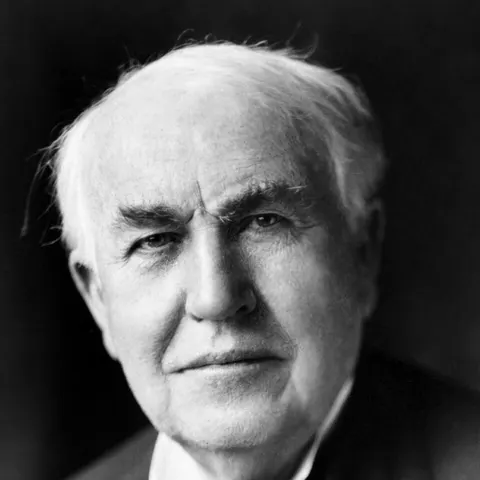 Thomas Edison's IQInventor & Businessman, estimated 145145
 Ada Lovelace's IQMathematician (Early Computing), estimated 145145
- Alfred Binet's IQPsychologist, estimated 145145
Rankings that include Hippocrates
- The highest IQ scientists in historyRanked 66 of 74
Keep exploring
- Strong Logical ReasoningSign of high intelligence
- High Mental FlexibilitySign of high intelligence
- Dexter (Dexter's Laboratory)'s IQDexter's Laboratory, fan estimate 145
- Doctor Strange's IQMarvel Cinematic Universe, fan estimate 145
People also search for
All 307 historical IQ estimates, ranked with ranges and sources.
Hippocrates' IQ is 145. What's yours?
Hippocrates' estimate comes from the historical record. Yours can come from a real test: 25 visual reasoning questions.
25 questions · about 12 minutes
Sources
- Hippocrates, Encyclopaedia Britannica. Summarises his life, the Corpus and his influence.
- Hippocratic Corpus, Wikipedia. Describes the collection of texts and its authorship.
- Cox, C. M. (1926). The Early Mental Traits of Three Hundred Geniuses. Stanford University Press.
- Simonton, D. K. (2009). Genius 101. Springer.
- Cattell, R. B. (1971). Abilities: Their Structure, Growth, and Action. Houghton Mifflin.
Last reviewed October 2026. How we estimate historical IQ