Gregor Mendel IQ
Gregor Mendel's IQ is unknown; no test or confirmed study figure exists. LifeScore uses about 145 (range 130 to 160) as an editorial marker for the friar whose pea experiments founded genetics.
Mendel's IQ is 145. What's yours?
25 questions · about 12 minutes
Think you're smarter than Gregor Mendel? Try question 1.
Which option completes the grid? One tap, no sign-up.
Key facts
- Estimated IQ
- IQ 145
- Known for
- The laws of inheritance, from experiments on pea plants
- Lived
- Scientist & Augustinian Friar, 1822–1884
- Basis
- No documented estimate; editorial marker from the record
- Confidence
- Very low. Born inside the period Cox 1926 covered, but we could not confirm a Cox figure from an accessible tabulation, so none is quoted. No IQ test was ever given.
Mendel has no test and no confirmed Cox figure. 145 is an editorial marker for a friar who saw a mathematical law in thousands of pea plants.
Gregor Mendel in brief
Gregor Mendel was born in 1822 to a farming family in Silesia, then part of the Austrian Empire. Poverty pushed him into the Augustinian abbey of St Thomas in Brno, which sent him to the University of Vienna to study science. Between about 1856 and 1863 he bred and counted thousands of pea plants in the abbey garden. His 1866 paper was ignored, and he became abbot in 1868. He died in 1884.
What was Gregor Mendel's IQ?
No figure exists. LifeScore lists about 145 as an editorial marker, range 130 to 160. It rests on his experimental design and his leap to a mathematical rule of inheritance. He also failed his teacher examinations, a reminder that exams and discovery measure different things.
What did Mendel discover?
He found that traits pass from parents to offspring in discrete units, now called genes, and that they appear in predictable ratios such as 3 to 1 in the second generation. These became the laws of segregation and independent assortment.
Why was Mendel ignored?
His 1866 paper appeared in a small local journal and used statistics most biologists of the day did not use. Darwin never read it. Around 1900, Hugo de Vries, Carl Correns and Erich von Tschermak independently reached similar results and found his paper.
How smart was Gregor Mendel?
- 01
Laws of inheritance
Segregation and independent assortment, published in 1866. - 02
Experimental design
Pure-breeding lines, controlled crosses and large counts. - 03
Statistical biology
He applied ratios and probability to living things. - 04
Abbot of St Thomas
He led the abbey in Brno from 1868.
How Mendel thought
Mendel chose a simple system, pea traits that come in two clear forms, and counted relentlessly. The 3 to 1 ratio would have been invisible in a handful of plants; with thousands, it became a law. That is pattern-finding through disciplined data collection.
The evidence behind the estimate
An estimate built from the historical record, not a recovered test score.
What supports it
- His 1866 paper "Experiments on Plant Hybridization" survives and set out the laws of inheritance.
- His experiments used thousands of plants over several years.
- Three botanists independently confirmed his results in 1900.
What it cannot prove
- He failed formal teacher examinations, which complicates any simple picture of his ability.
- Statisticians later argued some of his ratios fit suspiciously well.
- An editorial marker is a comparison aid built from achievement, not a measurement, and two careful readers could place it ten points apart.
Mendel compared with Darwin, Pasteur, Linnaeus
| Figure | Estimate | Range |
|---|---|---|
| Gregor Mendel | 145 | 130–160 |
| Charles Darwin | 140+ | 140–165 |
| Louis Pasteur | 155+ | 140–165 |
| Carl Linnaeus | 150 | 135–165 |
How would you score?
Where would you land next to Gregor Mendel?
Gregor Mendel's 145 is an estimate from the historical record, with a working range of 130 to 160. On the standard IQ scale an IQ of 145 sits at the 99.87th percentile: about 1 in 741 people score that high. Nobody can test Mendel now. You can find out where you sit on the same scale.
- 100Average adult50th percentile
- 130Gifted linetop 2%, about 1 in 44
- 145Mendel's99.87th percentile, about 1 in 741
- ?Youscored on the same scale
25 questions · about 12 minutes
Psychological profile
Gregor Mendel's IQ is represented here by a retrospective estimate of 145, not a verified test result. Gregor Mendel is best known for exceptional quantitative thinking. The useful question is what the surviving evidence shows, not whether a precise modern score can be recovered.
Patient, modest and numerical. A monk who brought statistics to biology before biology was ready.
The dominant archetype here is The Counter. This archetype shapes decision patterns: what feels natural, what creates friction, and what blind spots tend to emerge.
Estimated IQ is 145. This is a rough estimate based on documented accomplishments and contemporary accounts, not a literal measurement.
Key traits
Quantitative Thinking
He failed the examination to become a certified science teacher, more than once.Patience
He grew and counted roughly 28,000 pea plants over about seven years.Experimental Design
His work was rediscovered in 1900 by three botanists working independently.
One thing most people do not know
Late in life he spent much of his energy on a tax dispute between the abbey and the government.
Gregor Mendel: common questions
Was Gregor Mendel a genius?
What personality type was Gregor Mendel?
What can we learn from Gregor Mendel?
The IQ-style test the NFL used
Gregor Mendel's IQ is an estimate. Yours could be real.
Before the draft, NFL teams gave prospects the Wonderlic: 50 questions in 12 minutes, and almost nobody finishes. We collected 241 reported player scores, each with its source. The average working adult scores about 21.
People with similar IQ estimates
Gregor Mendel's estimate of 145 falls in the genius level IQ range. Want your own number rather than Gregor's? Take the free IQ test or the quick IQ test. See what an IQ of 145 means, place it on the IQ chart or check how rare it is with the IQ rarity calculator.
- Edwin Hubble's IQAstronomer, estimated 145145
- Fibonacci's IQMathematician, estimated 145145
- Hippocrates' IQPhysician, estimated 145145
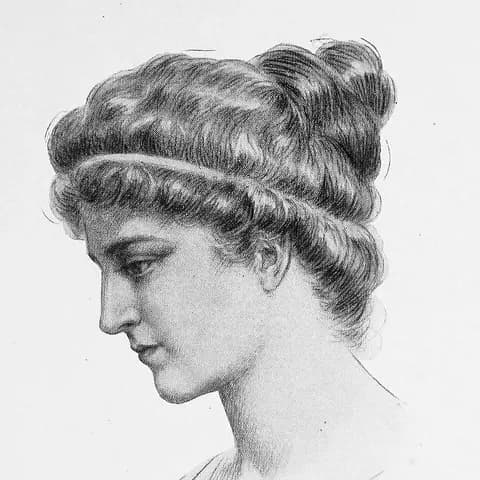 Hypatia's IQMathematician & Philosopher, estimated 145+145+
- Ivan Pavlov's IQPhysiologist, estimated 145145
Rankings that include Mendel
- The highest IQ scientists in historyRanked 65 of 74
Keep exploring
- Efficient Information ProcessingSign of high intelligence
- Emotional Signs of High IntelligenceSign of high intelligence
- Dexter (Dexter's Laboratory)'s IQDexter's Laboratory, fan estimate 145
- Doctor Strange's IQMarvel Cinematic Universe, fan estimate 145
People also search for
All 307 historical IQ estimates, ranked with ranges and sources.
Mendel's IQ is 145. What's yours?
Mendel's estimate comes from the historical record. Yours can come from a real test: 25 visual reasoning questions.
25 questions · about 12 minutes
Sources
- Gregor Mendel, Encyclopaedia Britannica. Summarises his life, experiments and rediscovery.
- Gregor Mendel, Wikipedia. Covers his education, teaching exams and abbey career.
- Cox, C. M. (1926). The Early Mental Traits of Three Hundred Geniuses. Stanford University Press.
- Simonton, D. K. (2009). Genius 101. Springer.
- Cattell, R. B. (1971). Abilities: Their Structure, Growth, and Action. Houghton Mifflin.
Last reviewed October 2026. How we estimate historical IQ