Carl Linnaeus IQ
Carl Linnaeus' IQ is unknown; no test or confirmed study figure exists. LifeScore uses about 150 (range 135 to 165) as an editorial marker for the botanist who gave every species a two-part name.
Linnaeus' IQ is 150. What's yours?
25 questions · about 12 minutes
Think you're smarter than Carl Linnaeus? Try question 1.
Which option completes the grid? One tap, no sign-up.
Key facts
- Estimated IQ
- IQ 150
- Known for
- Two-part scientific names (binomial nomenclature)
- Lived
- Botanist, 1707–1778
- Basis
- No documented estimate; editorial marker from the record
- Confidence
- Very low. Born inside the period Cox 1926 covered, but we could not confirm a Cox figure from an accessible tabulation, so none is quoted. No IQ test was ever given.
Linnaeus has no test and no Cox figure we could confirm. 150 is an editorial marker for the naturalist who organised life into the system biology still uses.
Carl Linnaeus in brief
Carl Linnaeus was born in southern Sweden in 1707, the son of a pastor with a love of gardening. He studied medicine at Lund and Uppsala, travelled through Lapland collecting plants, and took a medical degree in the Netherlands, where he published Systema Naturae in 1735. Back in Sweden he became professor at Uppsala, sent students around the world to collect specimens and created the system of two-part names still used for every species.
What was Carl Linnaeus' IQ?
No figure exists. LifeScore lists about 150 as an editorial marker, range 135 to 165. It reflects his classification of thousands of species, a system simple enough to spread worldwide, and an enormous memory for plants and their features.
What is binomial nomenclature?
It is the system of giving each species a two-part Latin name: the genus and the species, as in Homo sapiens. Linnaeus applied it consistently to plants in 1753 and to animals in 1758. It replaced long descriptive names that ran to many words.
Who did Linnaeus send around the world?
His students, called his apostles, joined voyages to Asia, Africa, the Americas and the Pacific, including Daniel Solander on Captain Cook's first voyage. Several died on their travels. Their specimens fed his growing catalogue of life.
How smart was Carl Linnaeus?
- 01
Systema Naturae (1735)
A classification of plants, animals and minerals. - 02
Species Plantarum (1753)
The starting point of modern plant names. - 03
Binomial names
Two-part names for every species, still the global standard. - 04
Homo sapiens
He placed humans among the primates and gave our species its name.
How Linnaeus thought
Linnaeus thought in hierarchies. He sorted organisms by a few countable features, such as the number of stamens in a flower, and nested groups inside groups. That kind of rule-based classification is close to what figure-sorting and odd-one-out puzzles test.
The evidence behind the estimate
An estimate built from the historical record, not a recovered test score.
What supports it
- Systema Naturae and Species Plantarum survive as the foundations of naming.
- He became professor of medicine and botany at Uppsala.
- His system spread rapidly across European science in his lifetime.
What it cannot prove
- His plant groups based on sexual organs were artificial and later replaced.
- His classification of humans included prejudiced descriptions that modern science rejects.
- An editorial marker is a comparison aid built from achievement, not a measurement, and two careful readers could place it ten points apart.
Linnaeus compared with Darwin, Humboldt, Mendel
| Figure | Estimate | Range |
|---|---|---|
| Carl Linnaeus | 150 | 135–165 |
| Charles Darwin | 140+ | 140–165 |
| Alexander von Humboldt | 165+ | 165–185 |
| Gregor Mendel | 145 | 130–160 |
How would you score?
Where would you land next to Carl Linnaeus?
Carl Linnaeus' 150 is an estimate from the historical record, with a working range of 135 to 165. On the standard IQ scale an IQ of 150 sits at the 99.96th percentile: about 1 in 2,330 people score that high. Nobody can test Linnaeus now. You can find out where you sit on the same scale.
- 100Average adult50th percentile
- 130Gifted linetop 2%, about 1 in 44
- 150Linnaeus'99.96th percentile, about 1 in 2,330
- ?Youscored on the same scale
25 questions · about 12 minutes
Psychological profile
Carl Linnaeus's IQ is represented here by a retrospective estimate of 150, not a verified test result. Carl Linnaeus is best known for exceptional classification. The useful question is what the surviving evidence shows, not whether a precise modern score can be recovered.
Confident, organised and enthusiastic. A classifier who believed naming things correctly was the beginning of knowledge.
The dominant archetype here is The Classifier. This archetype shapes decision patterns: what feels natural, what creates friction, and what blind spots tend to emerge.
Estimated IQ is 150. This is a rough estimate based on documented accomplishments and contemporary accounts, not a literal measurement.
Key traits
Classification
His teachers once suggested he train as a shoemaker; a physician saw his talent and redirected him.Memory
Systema Naturae grew from 11 pages in 1735 to over 2,000 pages in later editions.Organisation
He named about 12,000 species of plants and animals.
One thing most people do not know
In 1959 he was designated the type specimen of Homo sapiens, the reference individual for our species.
Carl Linnaeus: common questions
Was Carl Linnaeus a genius?
What personality type was Carl Linnaeus?
What can we learn from Carl Linnaeus?
The IQ-style test the NFL used
Carl Linnaeus' IQ is an estimate. Yours could be real.
Before the draft, NFL teams gave prospects the Wonderlic: 50 questions in 12 minutes, and almost nobody finishes. We collected 241 reported player scores, each with its source. The average working adult scores about 21.
People with similar IQ estimates
Carl Linnaeus' estimate of 150 falls in the genius level IQ range. Want your own number rather than Carl's? Take the free IQ test or the quick IQ test. See what an IQ of 150 means, place it on the IQ chart or check how rare it is with the IQ rarity calculator.
 Antoine Lavoisier's IQChemist, estimated 150+150+
- Barbara McClintock's IQGeneticist, estimated 150150
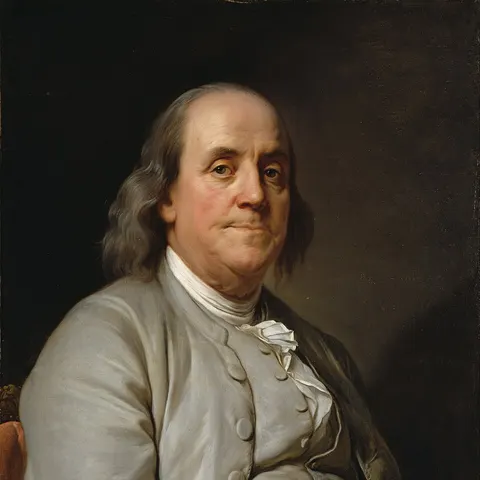 Benjamin Franklin's IQPolymath & Founding Father, estimated 150+150+
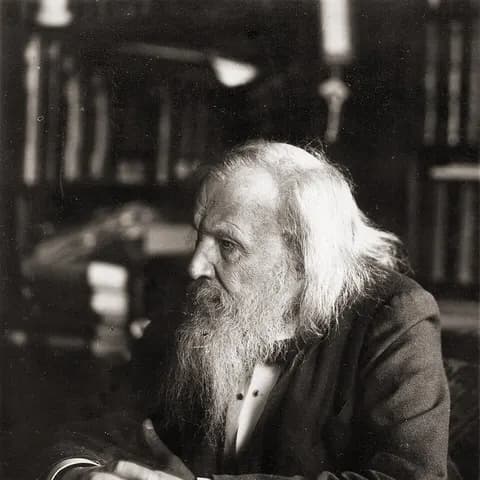 Dmitri Mendeleev's IQChemist, estimated 150+150+
- Dorothy Hodgkin's IQChemist, estimated 150150
Rankings that include Linnaeus
- The highest IQ scientists in historyRanked 49 of 74
Keep exploring
- Efficient Information ProcessingSign of high intelligence
- Complex Problem DecompositionSign of high intelligence
- Tyrion Lannister's IQGame of Thrones, fan estimate 150
- Erwin Smith's IQAttack on Titan, fan estimate 150
People also search for
All 307 historical IQ estimates, ranked with ranges and sources.
Linnaeus' IQ is 150. What's yours?
Linnaeus' estimate comes from the historical record. Yours can come from a real test: 25 visual reasoning questions.
25 questions · about 12 minutes
Sources
- Carolus Linnaeus, Encyclopaedia Britannica. Summarises his life, system and influence.
- Carl Linnaeus, Wikipedia. Covers his education, travels and students.
- Cox, C. M. (1926). The Early Mental Traits of Three Hundred Geniuses. Stanford University Press.
- Simonton, D. K. (2009). Genius 101. Springer.
- Cattell, R. B. (1971). Abilities: Their Structure, Growth, and Action. Houghton Mifflin.
Last reviewed October 2026. How we estimate historical IQ