Alfred Binet IQ
Alfred Binet's IQ was never measured. LifeScore uses about 145 (range 130 to 160) as an editorial marker for the self-taught French psychologist who, with Théodore Simon, created the first practical intelligence test in 1905.
Binet's IQ is 145. What's yours?
25 questions · about 12 minutes
Think you're smarter than Alfred Binet? Try question 1.
Which option completes the grid? One tap, no sign-up.
Key facts
- Estimated IQ
- IQ 145
- Known for
- Creating the first practical intelligence test in 1905
- Lived
- Psychologist, 1857–1911
- Basis
- No documented estimate; editorial marker from the record
- Confidence
- Very low. Born after 1850, so outside the Cox 1926 study. No IQ test result is known.
Binet was never given his own test. 145 is an editorial marker for the self-taught psychologist who invented the intelligence test and warned against misusing it.
Alfred Binet in brief
Alfred Binet was born in Nice in 1857. He trained in law, then taught himself psychology in the Paris National Library and worked with the neurologist Jean-Martin Charcot. He studied his own two daughters' thinking and became director of the psychology laboratory at the Sorbonne. Asked by the French government to identify children who needed extra help at school, he and Théodore Simon published the Binet-Simon scale in 1905, the first practical intelligence test. He died in 1911.
What was Alfred Binet's IQ?
No score exists; nobody tested the inventor of the test. LifeScore lists about 145 as an editorial marker, range 130 to 160. It rests on his self-taught entry into psychology, his productive laboratory and the design of a test that still shapes intelligence testing today.
Did Binet invent the IQ score?
Not the number itself. Binet measured mental level. The German psychologist William Stern proposed dividing mental age by actual age in 1912, and Lewis Terman multiplied by 100 in his 1916 Stanford-Binet revision, creating the IQ score.
Why was the first IQ test created?
France made schooling compulsory in 1882, and the government wanted a fair way to identify children who needed special help, rather than relying on teachers' opinions. Binet and Simon's 1905 scale was the answer.
How smart was Alfred Binet?
- 01
The Binet-Simon scale (1905)
The first practical intelligence test, revised in 1908 and 1911. - 02
Mental level
The idea behind mental age and the later IQ ratio. - 03
L'Année psychologique
Founded the first French journal of psychology in 1894. - 04
Studies of experts
Research on chess players, calculators and his own daughters.
How Binet thought
Binet worked empirically. Rather than define intelligence first, he collected tasks, tried them on many children and kept those that separated age groups. That practical, data-led approach is still how test items are chosen today, including the items in a modern reasoning test.
The evidence behind the estimate
An estimate built from the historical record, not a recovered test score.
What supports it
- The 1905, 1908 and 1911 versions of his scale are published.
- He directed the Sorbonne's laboratory of physiological psychology.
- His warnings about fixed-intelligence views are documented in his writing.
What it cannot prove
- No IQ score of this researcher has been published, so the page cannot apply their own method to them.
- Achievement reflects education, opportunity, persistence and collaboration as well as raw reasoning ability.
- An editorial marker is a comparison aid built from achievement, not a measurement, and two careful readers could place it ten points apart.
Binet compared with Terman, Galton, Piaget
| Figure | Estimate | Range |
|---|---|---|
| Alfred Binet | 145 | 130–160 |
| Lewis Terman | 140 | 125–155 |
| Francis Galton | 180+ | 178–200 |
| Jean Piaget | 150 | 135–165 |
How would you score?
Where would you land next to Alfred Binet?
Alfred Binet's 145 is an estimate from the historical record, with a working range of 130 to 160. On the standard IQ scale an IQ of 145 sits at the 99.87th percentile: about 1 in 741 people score that high. Nobody can test Binet now. You can find out where you sit on the same scale.
- 100Average adult50th percentile
- 130Gifted linetop 2%, about 1 in 44
- 145Binet's99.87th percentile, about 1 in 741
- ?Youscored on the same scale
25 questions · about 12 minutes
Psychological profile
Alfred Binet's IQ is represented here by a retrospective estimate of 145, not a verified test result. Alfred Binet is best known for exceptional empirical method. The useful question is what the surviving evidence shows, not whether a precise modern score can be recovered.
Curious, careful and humane. A scientist who thought intelligence could grow and feared his test being used to label children.
The dominant archetype here is The Measurer. This archetype shapes decision patterns: what feels natural, what creates friction, and what blind spots tend to emerge.
Estimated IQ is 145. This is a rough estimate based on documented accomplishments and contemporary accounts, not a literal measurement.
Key traits
Empirical Method
His test used tasks of rising difficulty to find a child's "mental level", later called mental age.Caution
He argued that intelligence is not fixed and that schooling could raise it.Curiosity
He also studied chess masters playing blindfold and calculating prodigies.
One thing most people do not know
He wrote plays for the Grand Guignol horror theatre in Paris.
Alfred Binet: common questions
Was Alfred Binet a genius?
What personality type was Alfred Binet?
What can we learn from Alfred Binet?
The IQ-style test the NFL used
Alfred Binet's IQ is an estimate. Yours could be real.
Before the draft, NFL teams gave prospects the Wonderlic: 50 questions in 12 minutes, and almost nobody finishes. We collected 241 reported player scores, each with its source. The average working adult scores about 21.
People with similar IQ estimates
Alfred Binet's estimate of 145 falls in the genius level IQ range. Want your own number rather than Alfred's? Take the free IQ test or the quick IQ test. See what an IQ of 145 means, place it on the IQ chart or check how rare it is with the IQ rarity calculator.
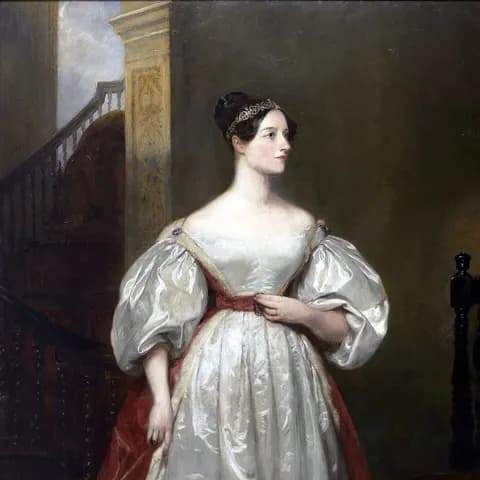 Ada Lovelace's IQMathematician (Early Computing), estimated 145145
- Gregor Mendel's IQScientist & Augustinian Friar, estimated 145145
- Hippocrates' IQPhysician, estimated 145145
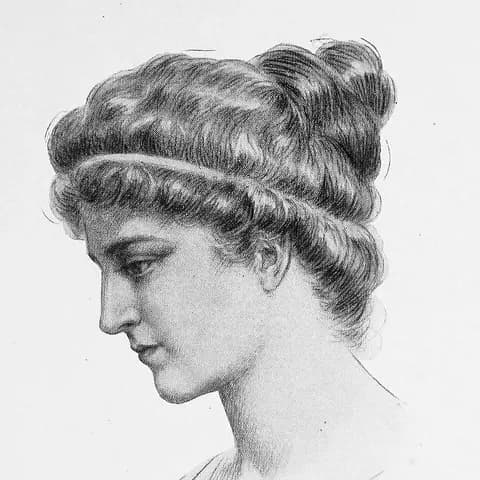 Hypatia's IQMathematician & Philosopher, estimated 145+145+
- Ivan Pavlov's IQPhysiologist, estimated 145145
Rankings that include Binet
Keep exploring
- Strong Logical ReasoningSign of high intelligence
- Signs of Genius-Level IntelligenceSign of high intelligence
- Dexter (Dexter's Laboratory)'s IQDexter's Laboratory, fan estimate 145
- Doctor Strange's IQMarvel Cinematic Universe, fan estimate 145
People also search for
All 307 historical IQ estimates, ranked with ranges and sources.
Binet's IQ is 145. What's yours?
Binet's estimate comes from the historical record. Yours can come from a real test: 25 visual reasoning questions.
25 questions · about 12 minutes
Sources
- Alfred Binet, Encyclopaedia Britannica. Summarises his career and the Binet-Simon scale.
- Binet-Simon test, Wikipedia. Describes the 1905 scale and its revisions.
- Cox, C. M. (1926). The Early Mental Traits of Three Hundred Geniuses. Stanford University Press.
- Simonton, D. K. (2009). Genius 101. Springer.
- Cattell, R. B. (1971). Abilities: Their Structure, Growth, and Action. Houghton Mifflin.
Last reviewed October 2026. How we estimate historical IQ