Rachel Carson IQ
Rachel Carson's IQ is unknown. LifeScore uses about 140 (range 125 to 155) as an editorial marker for the marine biologist whose 1962 book Silent Spring exposed pesticide damage and launched modern environmentalism.
Carson's IQ is 140. What's yours?
25 questions · about 12 minutes
Think you're smarter than Rachel Carson? Try question 1.
Which option completes the grid? One tap, no sign-up.
Key facts
- Estimated IQ
- IQ 140
- Known for
- Silent Spring and the modern environmental movement
- Lived
- Marine Biologist & Author, 1907–1964
- Basis
- No documented estimate; editorial marker from the record
- Confidence
- Very low. Born after 1850, so outside the Cox 1926 study. No IQ test result is known.
Carson has no test score. 140 is an editorial marker for a scientist-writer who turned complex evidence into a book that changed policy.
Rachel Carson in brief
Rachel Carson was born in Springdale, Pennsylvania, in 1907. She studied biology at the Pennsylvania College for Women and Johns Hopkins and worked as a scientist and editor for the US Fish and Wildlife Service. Her books on the ocean made her a bestselling author. In 1962 Silent Spring documented the harm of synthetic pesticides such as DDT and helped start the modern environmental movement. She died of cancer in 1964.
What was Rachel Carson's IQ?
No figure exists. LifeScore lists about 140 as an editorial marker, range 125 to 155. It rests on her ability to synthesise hundreds of scientific studies into a clear argument and to write about science well enough to change law.
What did Silent Spring argue?
That synthetic pesticides, especially DDT, were building up in food chains, killing birds and fish and threatening human health, and that companies and officials were spreading them with little testing. It called for caution and better science, not a ban on all pesticides.
Was DDT banned because of Rachel Carson?
Her book drove public concern and a 1963 presidential science report that largely backed her. The US Environmental Protection Agency banned most uses of DDT in 1972, eight years after her death.
Was DDT banned because of Silent Spring?
The book led to a presidential science advisory report in 1963 and to growing public pressure. The US Environmental Protection Agency banned most agricultural uses of DDT in 1972, eight years after Carson's death. Limited use for malaria control is still allowed in some countries under international rules.
How smart was Rachel Carson?
- 01
Silent Spring (1962)
A book that reshaped environmental policy. - 02
The Sea Around Us
National Book Award winner in 1952. - 03
Government science
Fifteen years as a biologist and editor at the Fish and Wildlife Service. - 04
Presidential Medal of Freedom
Awarded posthumously in 1980.
How Carson thought
Carson reasoned from many sources to one conclusion, then tested it against objections. She anticipated how the chemical industry would attack her and checked every claim with experts before publishing. That is careful, evidence-weighing reasoning.
The evidence behind the estimate
An estimate built from the historical record, not a recovered test score.
What supports it
- Silent Spring cited dozens of pages of scientific references.
- A 1963 President's Science Advisory Committee report supported her main findings.
- She held a master's degree in zoology from Johns Hopkins.
What it cannot prove
- Some later critics argue the book's influence on DDT use abroad was overstated or misused.
- She worked against formal barriers to women in science, so her recorded output understates what she could have done with equal access.
- An editorial marker is a comparison aid built from achievement, not a measurement, and two careful readers could place it ten points apart.
Carson compared with Darwin, Maathai, Marie Curie
| Figure | Estimate | Range |
|---|---|---|
| Rachel Carson | 140 | 125–155 |
| Charles Darwin | 140+ | 140–165 |
| Wangari Maathai | 140+ | 125–150 |
| Marie Curie | 150 | 140–160 |
How would you score?
Where would you land next to Rachel Carson?
Rachel Carson's 140 is an estimate from the historical record, with a working range of 125 to 155. On the standard IQ scale an IQ of 140 sits at the 99.62nd percentile: about 1 in 261 people score that high. Nobody can test Carson now. You can find out where you sit on the same scale.
- 100Average adult50th percentile
- 130Gifted linetop 2%, about 1 in 44
- 140Carson's99.62nd percentile, about 1 in 261
- ?Youscored on the same scale
25 questions · about 12 minutes
Psychological profile
Rachel Carson's IQ is represented here by a retrospective estimate of 140, not a verified test result. Rachel Carson is best known for exceptional scientific writing. The useful question is what the surviving evidence shows, not whether a precise modern score can be recovered.
Quiet, rigorous and courageous. A careful scientist who wrote like a poet and stood up to an industry.
The dominant archetype here is The Witness. This archetype shapes decision patterns: what feels natural, what creates friction, and what blind spots tend to emerge.
Estimated IQ is 140. This is a rough estimate based on documented accomplishments and contemporary accounts, not a literal measurement.
Key traits
Scientific Writing
She first enrolled to study English and switched to biology.Evidence Synthesis
The Sea Around Us (1951) won the National Book Award and stayed on the bestseller list for 86 weeks.Courage
She wrote Silent Spring while undergoing treatment for cancer.
One thing most people do not know
Chemical companies threatened legal action before Silent Spring was published; the publisher went ahead.
Rachel Carson: common questions
Was Rachel Carson a genius?
What personality type was Rachel Carson?
What can we learn from Rachel Carson?
The IQ-style test the NFL used
Rachel Carson's IQ is an estimate. Yours could be real.
Before the draft, NFL teams gave prospects the Wonderlic: 50 questions in 12 minutes, and almost nobody finishes. We collected 241 reported player scores, each with its source. The average working adult scores about 21.
People with similar IQ estimates
Rachel Carson's estimate of 140 falls in the genius level IQ range. Want your own number rather than Rachel's? Take the free IQ test or the quick IQ test. See what an IQ of 140 means, place it on the IQ chart or check how rare it is with the IQ rarity calculator.
- Wangari Maathai's IQEnvironmentalist & Activist, estimated 140+140+
- Booker T. Washington's IQEducator & Leader, estimated 140140
- Guglielmo Marconi's IQInventor, estimated 140140
- Hedy Lamarr's IQActress & Inventor, estimated 140140
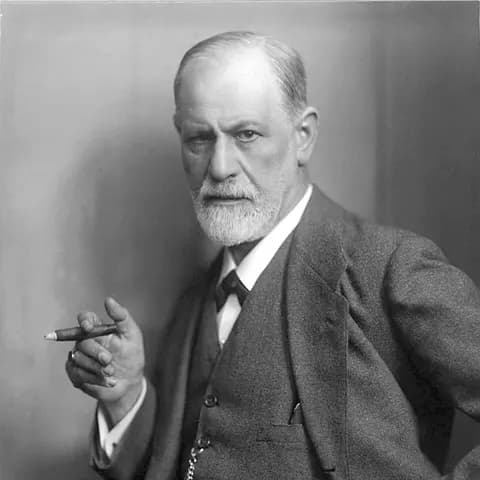 Sigmund Freud's IQFather of Psychoanalysis, estimated 140+140+
Rankings that include Carson
- The smartest women in historyRanked 33 of 39
Keep exploring
- Emotional Signs of High IntelligenceSign of high intelligence
- Rapid Verbal ProcessingSign of high intelligence
- Armin Arlert's IQAttack on Titan, fan estimate 140
- Izaya Orihara's IQDurarara!!, fan estimate 140
People also search for
All 307 historical IQ estimates, ranked with ranges and sources.
Carson's IQ is 140. What's yours?
Carson's estimate comes from the historical record. Yours can come from a real test: 25 visual reasoning questions.
25 questions · about 12 minutes
Sources
- Rachel Carson, Encyclopaedia Britannica. Summarises her life, books and influence.
- Silent Spring, Wikipedia. Describes the book, the reaction to it and its legacy.
- Cox, C. M. (1926). The Early Mental Traits of Three Hundred Geniuses. Stanford University Press.
- Simonton, D. K. (2009). Genius 101. Springer.
- Cattell, R. B. (1971). Abilities: Their Structure, Growth, and Action. Houghton Mifflin.
Last reviewed October 2026. How we estimate historical IQ