Thomas Young IQ
Thomas Young's IQ is unknown; no test or confirmed study figure exists. LifeScore uses about 165 (range 150 to 180) as an editorial marker for the physician who showed light is a wave and helped decode hieroglyphs.
Young's IQ is 165. What's yours?
25 questions · about 12 minutes
Think you're smarter than Thomas Young? Try question 1.
Which option completes the grid? One tap, no sign-up.
Key facts
- Estimated IQ
- IQ 165
- Known for
- The double-slit experiment and early work on the Rosetta Stone
- Lived
- Physician & Polymath, 1773–1829
- Basis
- No documented estimate; editorial marker from the record
- Confidence
- Very low. Born inside the period Cox 1926 covered, but we could not confirm a Cox figure from an accessible tabulation, so none is quoted. No IQ test was ever given.
Young has no test and no Cox figure we could confirm. 165 is an editorial marker for a polymath called "the last man who knew everything".
Thomas Young in brief
Thomas Young was born in Somerset in 1773 into a Quaker family and was reading fluently by the age of two. He studied medicine in London, Edinburgh, Göttingen and Cambridge and practised as a physician. Alongside medicine he showed that light behaves as a wave, described how the eye focuses and sees colour, defined elasticity, and made early breakthroughs on Egyptian hieroglyphs. He died in London in 1829.
What was Thomas Young's IQ?
No figure exists. LifeScore lists about 165 as an editorial marker, range 150 to 180. Unlike most historical figures he has strong childhood evidence, fluent reading at two and many languages in his teens, plus original work in physics, physiology and linguistics.
What was the double-slit experiment?
Young shone light through two narrow slits and saw bands of light and dark on a screen. The bands only make sense if light is a wave whose crests and troughs add up or cancel. He reported the work around 1801 to 1803, against the authority of Newton's particle view.
Did Thomas Young decode the Rosetta Stone?
He made the first real progress, identifying the cartouches that contain royal names and several hieroglyphic signs by 1819. Jean-François Champollion completed the decipherment in 1822, and the two men disputed credit.
How smart was Thomas Young?
- 01
Wave theory of light
His interference experiments showed light behaves as a wave. - 02
Young's modulus
The measure of stiffness used throughout engineering. - 03
Colour vision
He proposed that the eye sees colour with three types of receptor. - 04
Egyptian hieroglyphs
Early decipherment of names and signs on the Rosetta Stone.
How Young thought
Young moved between fields by analogy. He noticed that sound waves interfere, asked whether light might do the same, and designed an experiment to check. That habit of carrying a pattern from one domain to another is one of the clearest signs of high general ability.
The evidence behind the estimate
An estimate built from the historical record, not a recovered test score.
What supports it
- Childhood precocity in reading and languages is well documented by biographers.
- His interference experiments and lectures are published in his own works.
- He made original contributions to physics, physiology, engineering and Egyptology.
What it cannot prove
- Champollion, not Young, completed the decipherment of hieroglyphs.
- Some of his ideas were dismissed in his lifetime and vindicated later by others.
- An editorial marker is a comparison aid built from achievement, not a measurement, and two careful readers could place it ten points apart.
Young compared with Franklin, Leibniz, Humboldt
| Figure | Estimate | Range |
|---|---|---|
| Thomas Young | 165 | 150–180 |
| Benjamin Franklin | 150+ | 140–160 |
| Gottfried Leibniz | 170+ | 170–205 |
| Alexander von Humboldt | 165+ | 165–185 |
How would you score?
Where would you land next to Thomas Young?
Thomas Young's 165 is an estimate from the historical record, with a working range of 150 to 180. On the standard IQ scale an IQ of 165 sits at the 99.99926th percentile: about 1 in 136,000 people score that high. Nobody can test Young now. You can find out where you sit on the same scale.
- 100Average adult50th percentile
- 130Gifted linetop 2%, about 1 in 44
- 165Young's99.99926th percentile, about 1 in 136,000
- ?Youscored on the same scale
25 questions · about 12 minutes
Psychological profile
Thomas Young's IQ is represented here by a retrospective estimate of 165, not a verified test result. Thomas Young is best known for exceptional range. The useful question is what the surviving evidence shows, not whether a precise modern score can be recovered.
Prodigious, modest and wide-ranging. He moved from optics to Egyptology to life insurance tables without apparent effort.
The dominant archetype here is The Polymath. This archetype shapes decision patterns: what feels natural, what creates friction, and what blind spots tend to emerge.
Estimated IQ is 165. This is a rough estimate based on documented accomplishments and contemporary accounts, not a literal measurement.
Key traits
Range
He reportedly read fluently at two and had read the Bible twice by four.Experimental Insight
By his teens he had studied Latin, Greek, French, Italian, Hebrew and several other languages.Language Learning
Andrew Robinson's biography of him is titled The Last Man Who Knew Everything.
One thing most people do not know
He wrote over 60 articles for the Encyclopaedia Britannica, many anonymously.
Thomas Young: common questions
Was Thomas Young a genius?
What personality type was Thomas Young?
What can we learn from Thomas Young?
The IQ-style test the NFL used
Thomas Young's IQ is an estimate. Yours could be real.
Before the draft, NFL teams gave prospects the Wonderlic: 50 questions in 12 minutes, and almost nobody finishes. We collected 241 reported player scores, each with its source. The average working adult scores about 21.
People with similar IQ estimates
Thomas Young's estimate of 165 falls in the profoundly gifted IQ range. Want your own number rather than Thomas's? Take the free IQ test or the quick IQ test. See what an IQ of 165 means, place it on the IQ chart or check how rare it is with the IQ rarity calculator.
- Henri Poincaré's IQMathematician & Physicist, estimated 165165
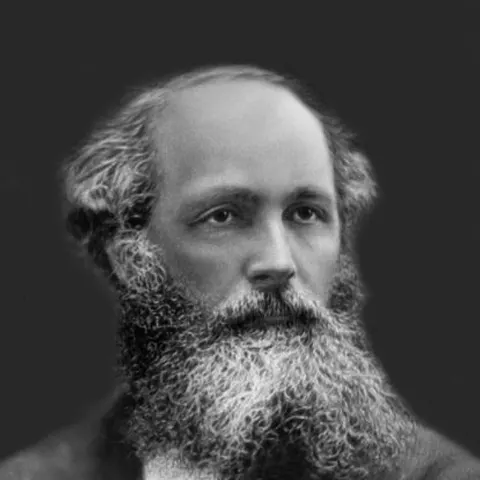 James Clerk Maxwell's IQTheoretical Physicist, estimated 165+165+
- Joseph-Louis Lagrange's IQMathematician, estimated 165165
- Lev Landau's IQPhysicist, estimated 165165
- Murray Gell-Mann's IQPhysicist, estimated 165165
Rankings that include Young
- The highest IQ scientists in historyRanked 13 of 74
Keep exploring
- Abstract Conceptual ThinkingSign of high intelligence
- Hidden Signs You're Highly IntelligentSign of high intelligence
- Sherlock Holmes' IQSherlock Holmes (canon), fan estimate 165
- Bruce Banner's IQMarvel Cinematic Universe, fan estimate 165
People also search for
All 307 historical IQ estimates, ranked with ranges and sources.
Young's IQ is 165. What's yours?
Young's estimate comes from the historical record. Yours can come from a real test: 25 visual reasoning questions.
25 questions · about 12 minutes
Sources
- Thomas Young, Encyclopaedia Britannica. Summarises his work on light, vision, elasticity and hieroglyphs.
- Thomas Young, Wikipedia. Covers his education, polymathy and the Rosetta Stone work.
- Cox, C. M. (1926). The Early Mental Traits of Three Hundred Geniuses. Stanford University Press.
- Simonton, D. K. (2009). Genius 101. Springer.
- Cattell, R. B. (1971). Abilities: Their Structure, Growth, and Action. Houghton Mifflin.
Last reviewed October 2026. How we estimate historical IQ